Cha caChả cá
What the dish is
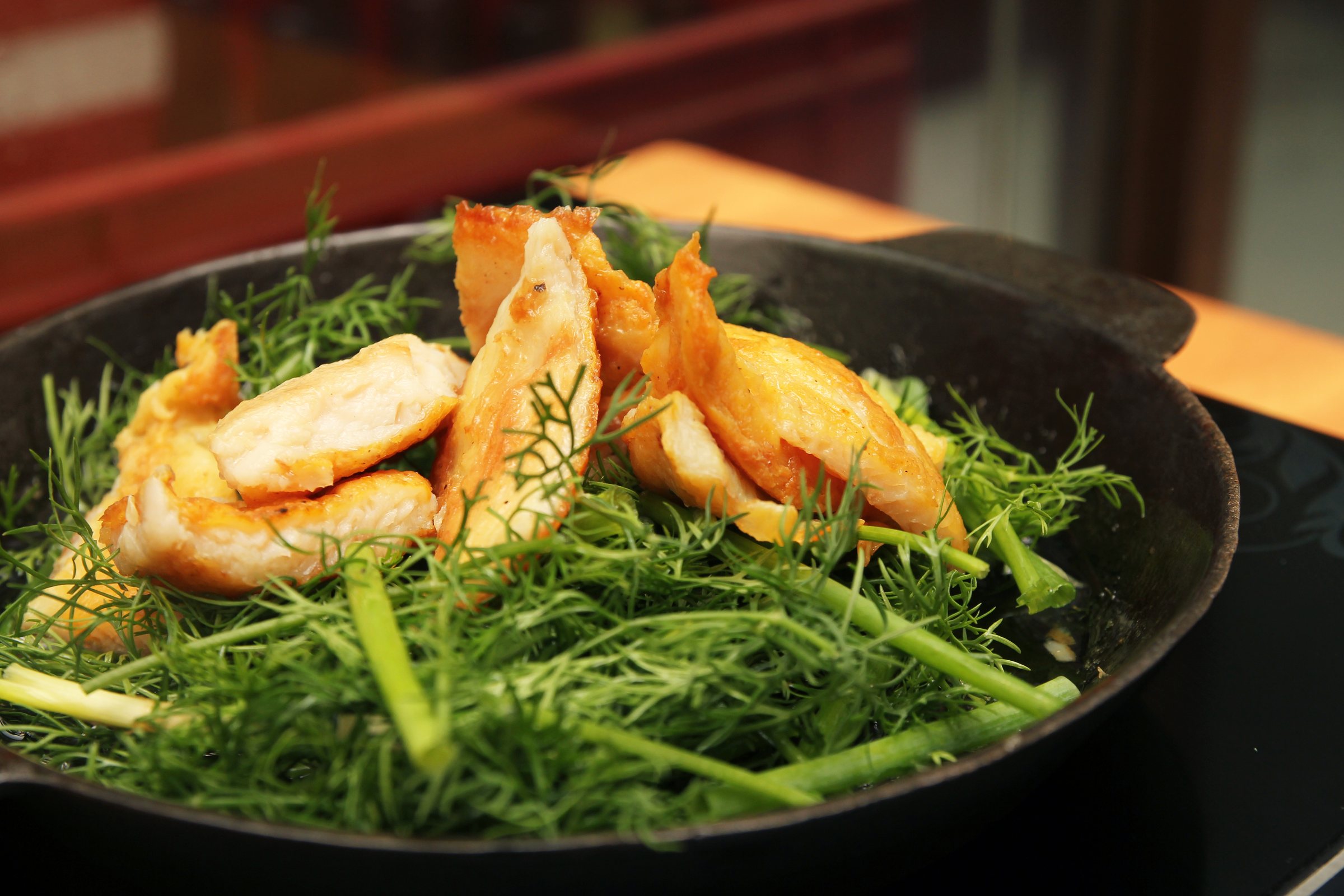
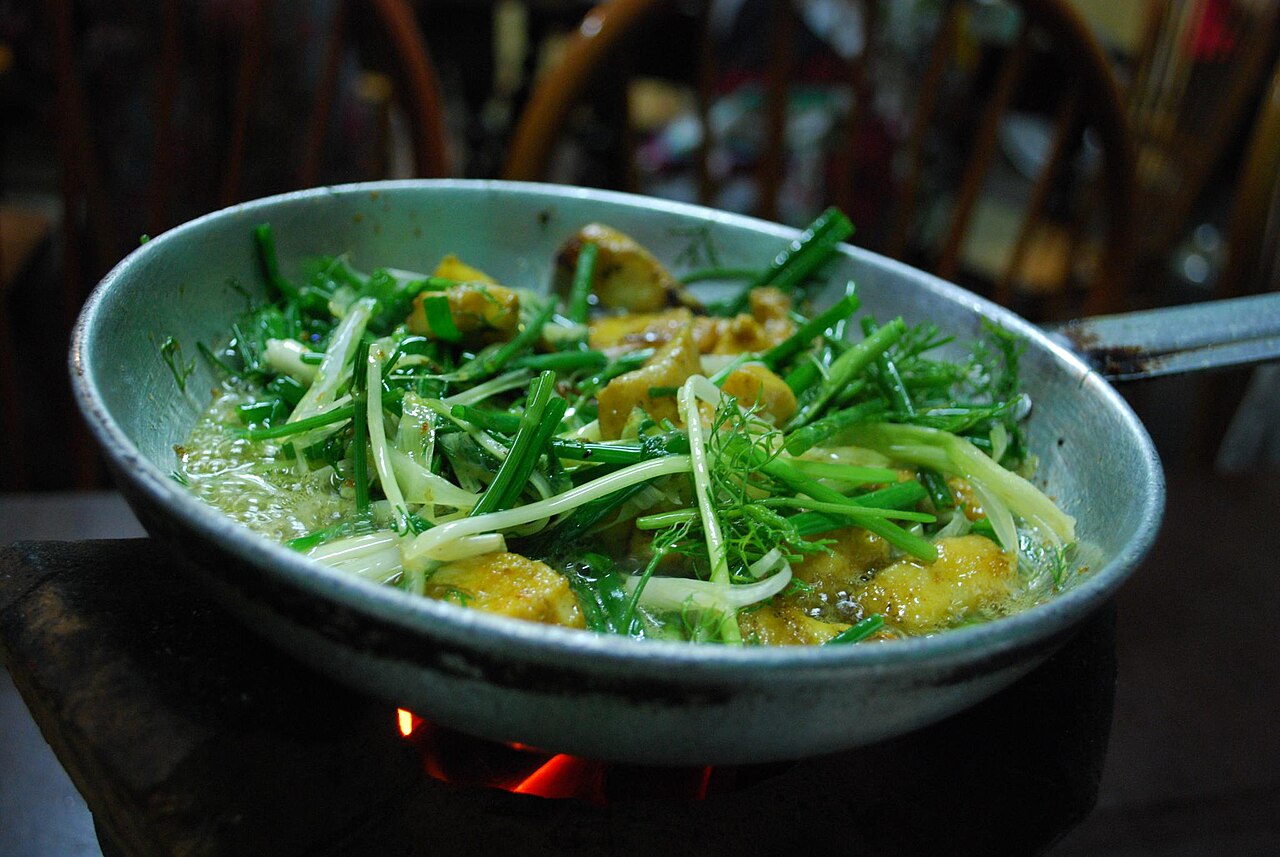
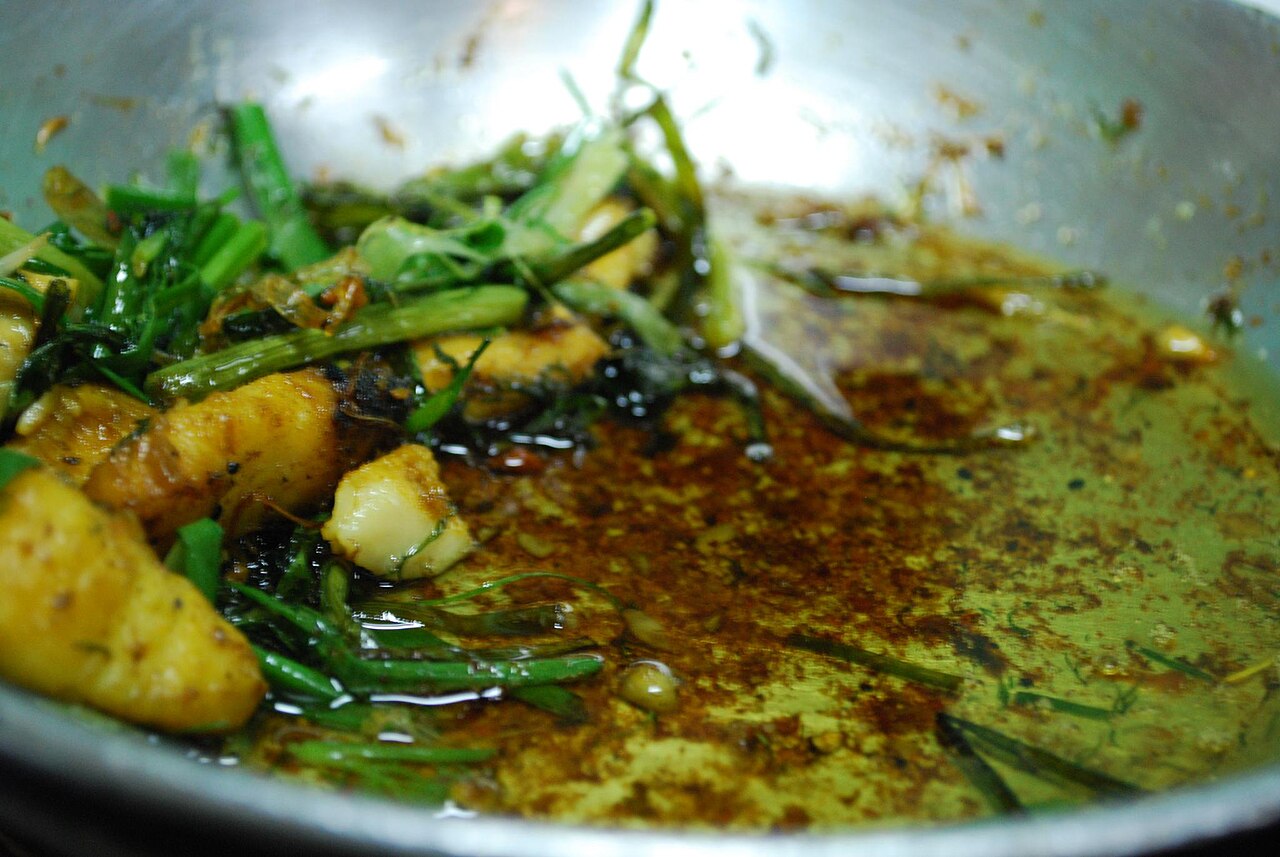
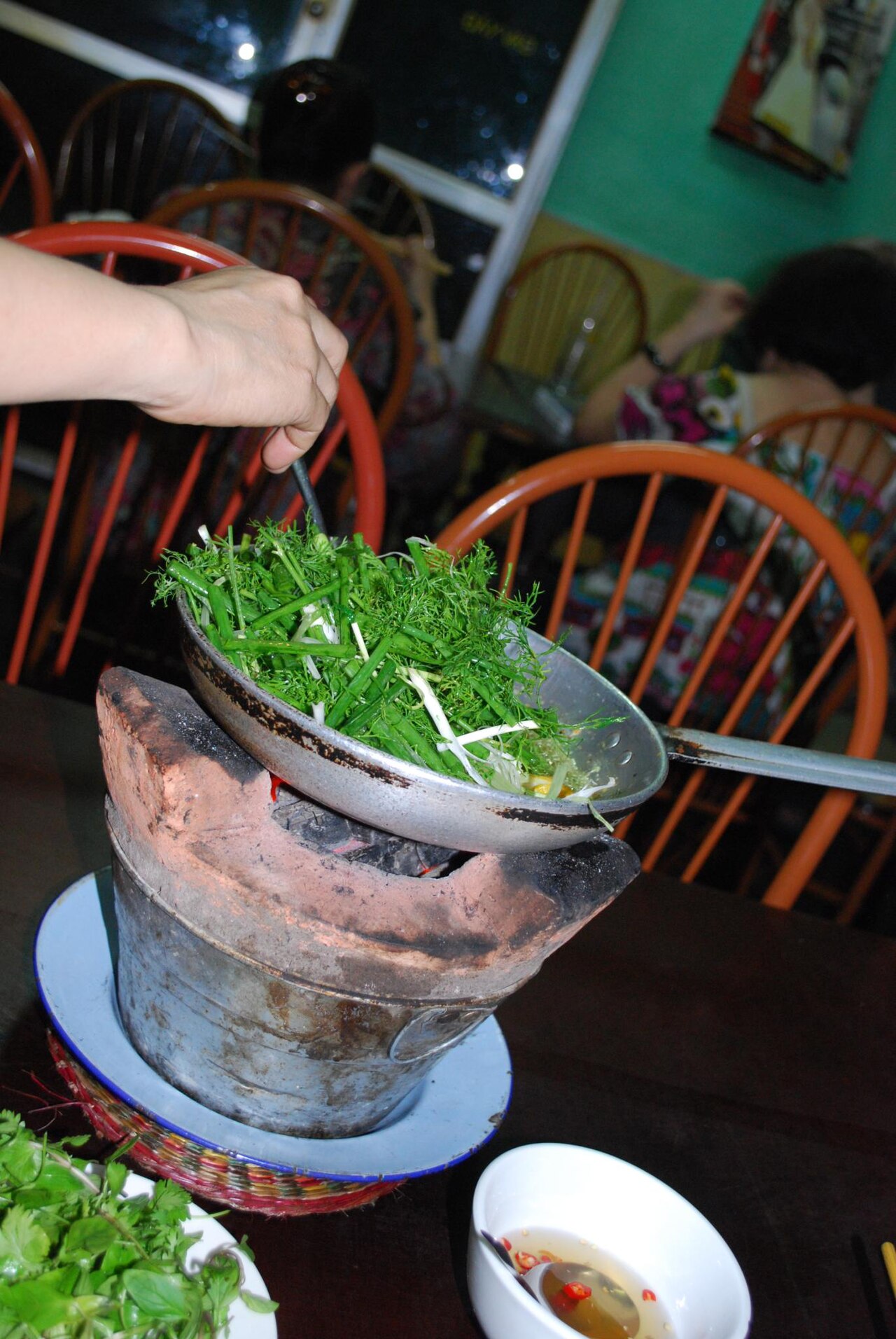
Chả cá consists of firm white fish — most commonly snakehead fish (cá lóc) or hemibagrus catfish (cá lăng) — cut into thick fillets and marinated in turmeric, galangal, shrimp paste and fish sauce before being grilled over charcoal. The pre-grilled pieces are then brought to the table and finished in a pan of hot oil alongside an amount of fresh dill and sliced spring onion that is, by any regional comparison, unusually large. The dill wilts into the oil and becomes inseparable from the fish. Diners compose their own bowls from the pan, adding rice vermicelli (bún), roasted peanuts, and fresh herbs.
The role of dill
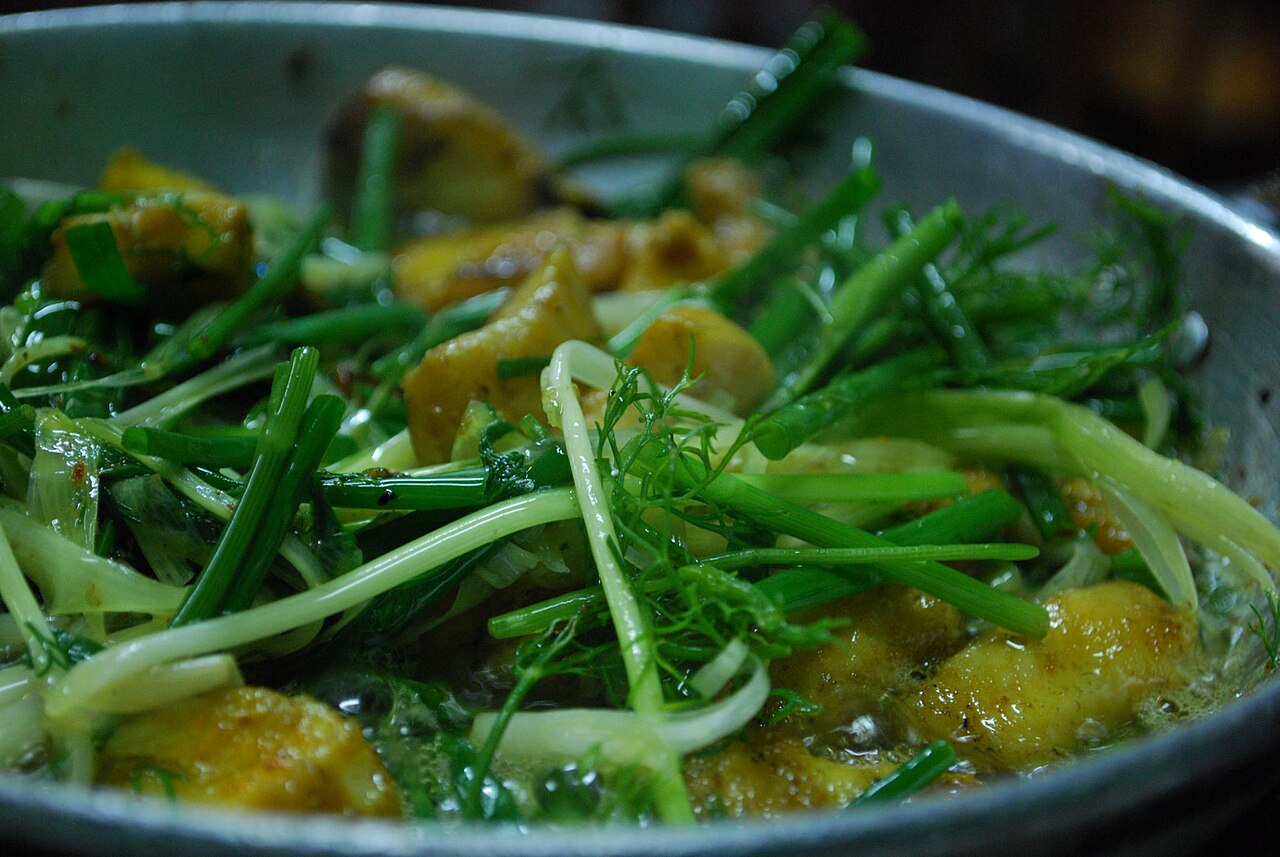
Dill (thì là) is not a common herb across Vietnamese cooking as a whole, but it is central to Northern Vietnamese cuisine in a way it is not in the south or centre. In chả cá it is used in quantities closer to a vegetable than a garnish: a typical serving involves several large handfuls added to the pan in stages as the fish cooks. The herb's anise-like flavour softens in the oil and provides the dish's most distinctive aromatic note. Some cooks also include fresh dill scattered over the finished bowl.
Mắm tôm and other accompaniments
The condiment that most defines the dish for newcomers is mắm tôm, a thick, purple-grey fermented shrimp paste with a sharp, ammoniac smell and a deeply savoury flavour. It is typically loosened at the table with lime juice, sugar and a small amount of spirit or oil, which lightens its colour and mellows its intensity. Diners unfamiliar with fermented shrimp pastes sometimes find it confrontational; those accustomed to it regard it as essential. Fish sauce (nước chấm) is sometimes offered as an alternative dipping condiment. Roasted peanuts add texture, and fresh herbs such as perilla and Vietnamese coriander are common accompaniments.
Hàng Sơn Street and the Đoàn family
Chả cá is so closely identified with a single street in Hanoi that the street was renamed after the dish itself. Hàng Sơn Street in the Old Quarter became Chả Cá Street (phố Chả Cá), a rare instance of a Vietnamese street being named after a food rather than a trade or historical figure. The dish is attributed to the Đoàn family, who are said to have been serving it from their house on that street since the late nineteenth century. The family's restaurant, Chả Cá Lã Vọng, takes its name from a figure in Vietnamese legend and remains the most historically cited establishment associated with the dish, though numerous other restaurants now serve versions of it across the city.
Preparation and table-side cooking
The two-stage cooking process — charcoal grill followed by table-top pan — is fundamental to the dish's character rather than incidental to it. The initial grilling over charcoal firms the fish and gives it a lightly smoky edge; the second cooking in oil at the table allows the fish to crisp at its edges while the dill and spring onion cook around it. A small brazier or portable gas burner is set at the centre of the table. Diners add fish and herbs to the pan themselves and eat directly from it in rounds. The process is slow enough that conversation and eating are interleaved rather than sequential.
Place within northern cuisine
Chả cá occupies a specific position within Northern Vietnamese cuisine as a dish that is both strongly regional and unusually well-known outside its region. Unlike many Hanoi specialities that remain primarily local, chả cá has been exported to Vietnamese communities internationally, though versions outside Hanoi frequently modify the fish species, the marinade or the condiments to suit available ingredients. Within Vietnam, the dish is understood as distinctively Hanoian in the same way that bún bò Huế belongs to Huế or bánh xèo to the south. It is listed in various international food references as one of the defining dishes of Vietnamese cooking.
Comes from
참조 페이지
출처 목록
- Vietnam National Authority of Tourism — VNAT 접근됨 29 August 2026
Supports: the rules and definitions on this page - Chả cá Lã Vọng — Wikipedia (CC BY-SA 4.0) 접근됨 31 August 2026
Supports: background - Chả cá — Wikipedia (Vietnamese) (CC BY-SA 4.0) 접근됨 31 August 2026
Supports: background, Vietnamese edition
Current 마지막 확인: 31 August 2026. Rules, fares and prices change — check the official source before acting on anything here. Report a mistake.
Picture credits (5)
Photo: t4nkyong / Adobe Stock, asset 98133435 · Fish and dill for 2 - Cha Ca La Vong VND120000 each, avlxyz, CC BY-SA 2.0, Wikimedia Commons · Fish and dill for 2 - close-up - Cha Ca La Vong VND120000 each, avlxyz, CC BY-SA 2.0, Wikimedia Commons · Turmeric and oil - Cha Ca La Vong, avlxyz, CC BY-SA 2.0, Wikimedia Commons · Waitress adding dill - Cha Ca La Vong, avlxyz, CC BY-SA 2.0, Wikimedia Commons