Cao lauCao lầu
What cao lầu is
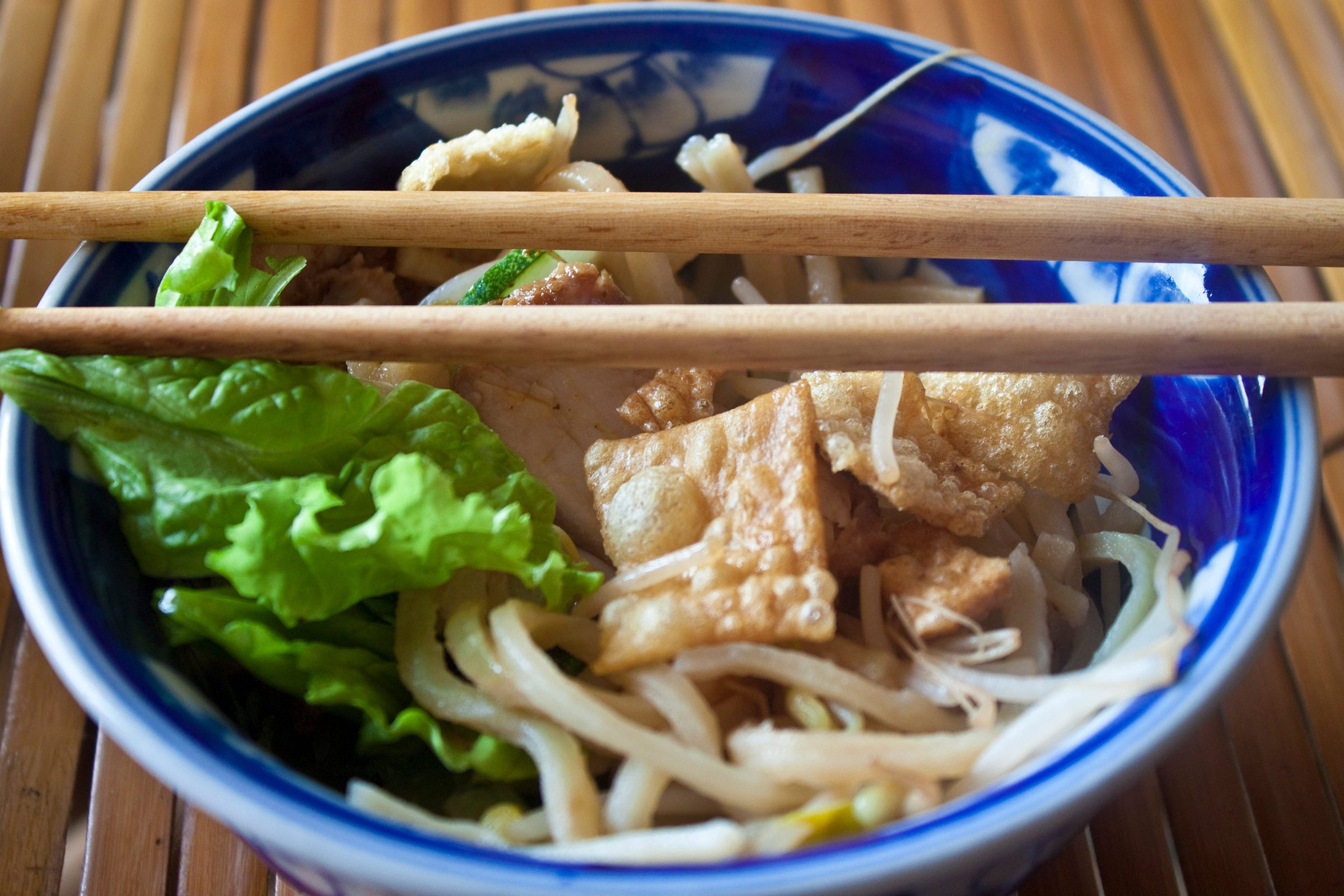
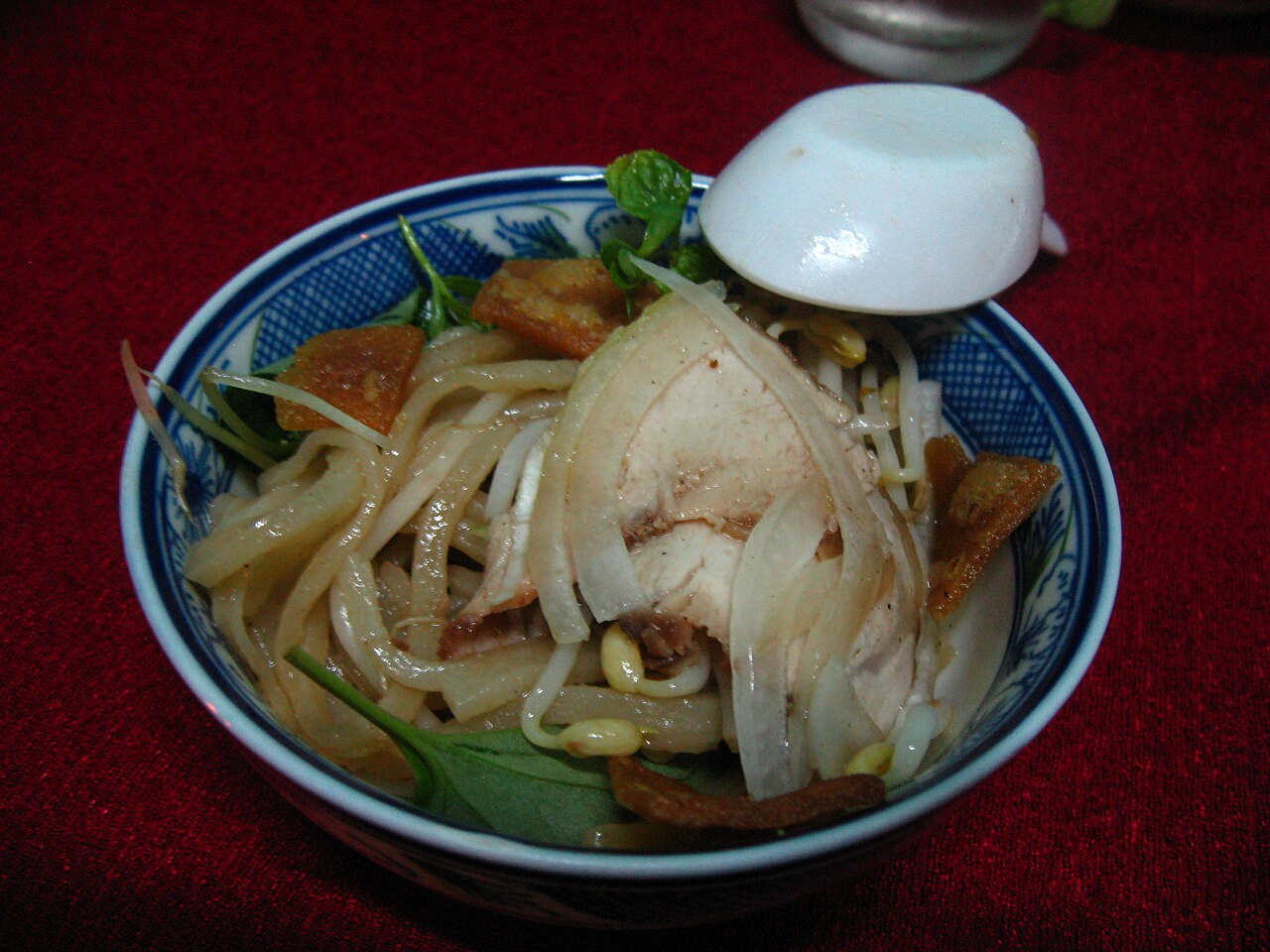
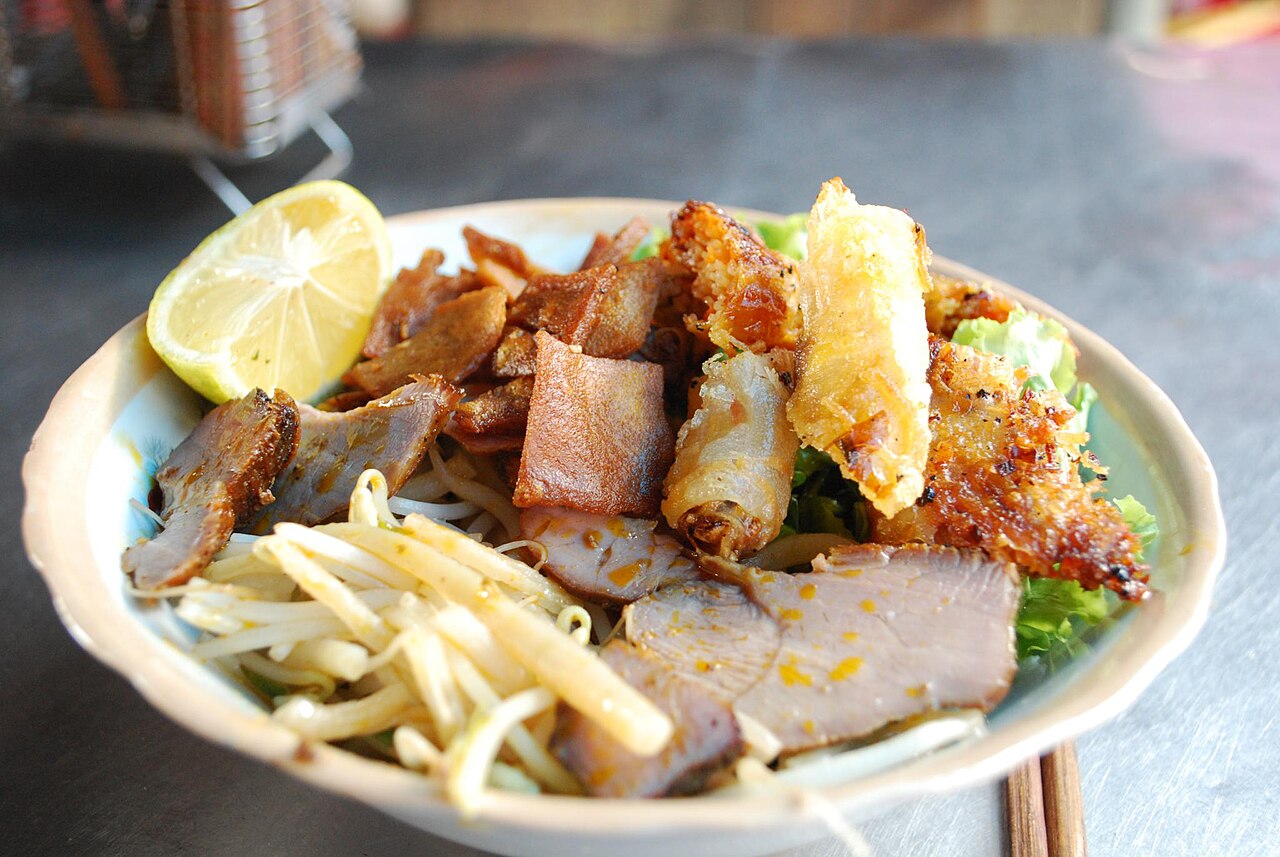
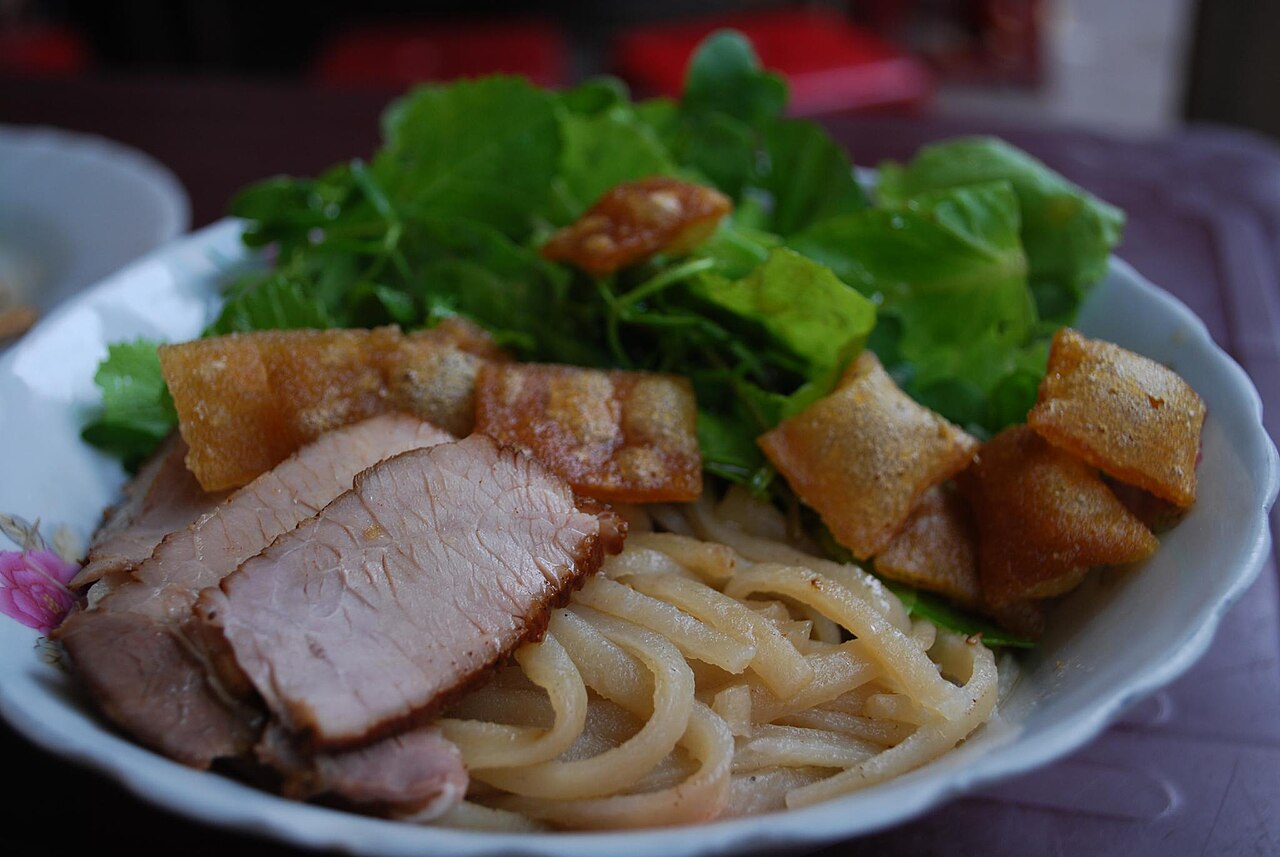
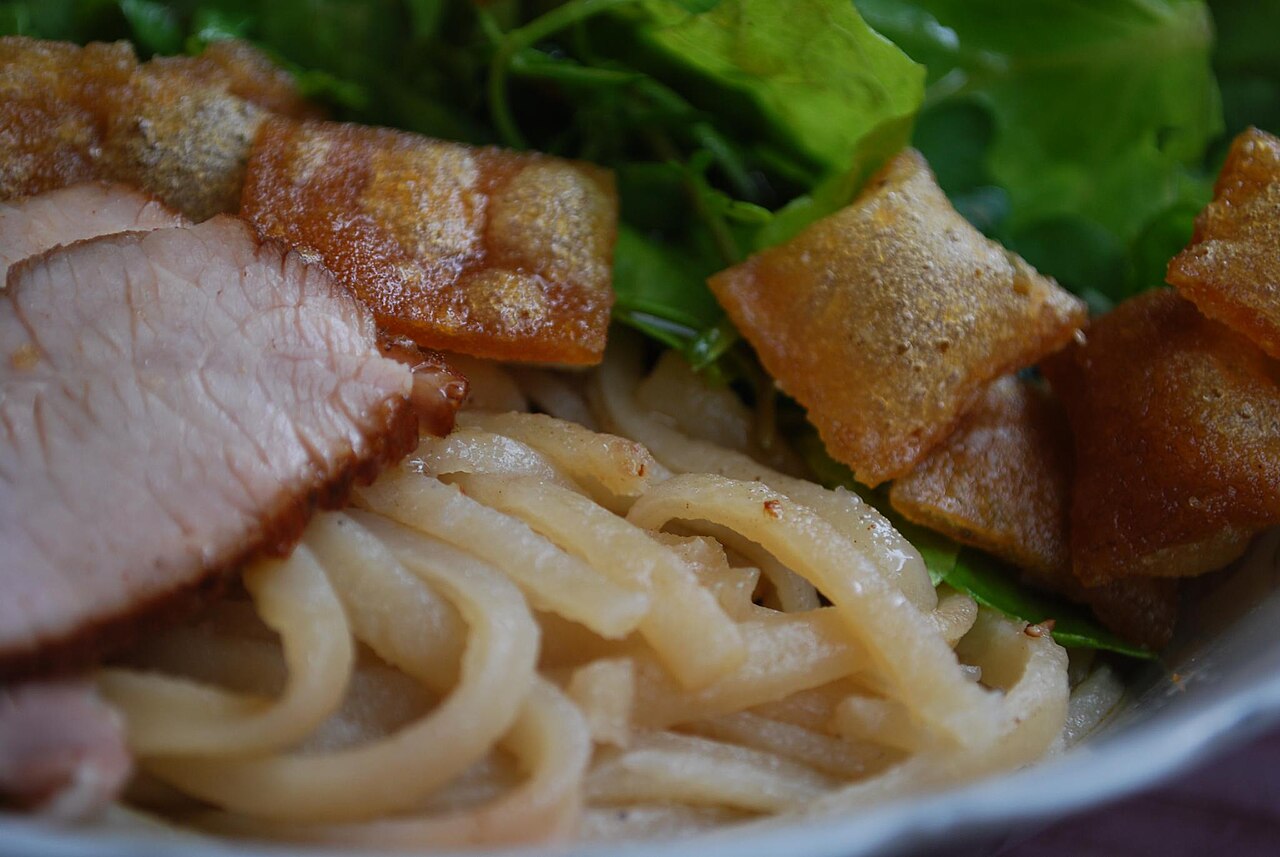
Cao lầu is a dry-style noodle dish assembled from several distinct components: thick, grey-yellow noodles with a firm, slightly chewy texture; slices of char siu pork (roasted or barbecued in a sweetened marinade); raw and blanched greens including bean sprouts and local herbs; and shards of bánh đa, a rice cracker that adds crunch. A small ladleful of concentrated pork broth is poured over rather than filling the bowl, so the dish is closer to a dressed noodle than a soup. The balance between the yielding noodle, tender meat, fresh greenery and crackling texture is central to the dish's character.
Why cao lầu is specific to Hoi An
Cao lầu is produced nowhere else in Vietnam in its authentic form, and this is widely attributed to the noodle-making process. Traditional producers use water drawn from the Bá Lễ well, a centuries-old brick well in Hoi An whose water has a particular mineral composition. The raw noodle dough is treated with lye ash — wood ash leached in water to produce an alkaline liquid — which gives the noodles their distinctive firm bite, grey-yellow colour and slight chew. Attempts to reproduce the noodle outside Hoi An using different water and ash sources are generally considered to yield an inferior result, though whether this is principally the water, the ash type or accumulated craft knowledge is debated among food writers and producers.
Japanese and Chinese influences
Hoi An was one of Southeast Asia's most active international trading ports from roughly the 15th to the 18th century, with permanent settlements of Chinese and Japanese merchants. Cao lầu shows the marks of both communities. The thick alkaline noodle is structurally similar to Japanese udon and to certain noodles associated with the Ise region of Japan; a persistent local tradition holds that the technique arrived with Japanese traders. The char siu pork and the use of Chinese five-spice in the marinade reflect the long presence of Fujianese and Cantonese merchants in the town's Chinese quarters. The dish is therefore often cited as a practical example of central Vietnamese cuisine's capacity to absorb outside influences into a locally specific form.
How cao lầu differs from mì quảng
Mì quảng and cao lầu are both noodle dishes associated with central Vietnam and both use a restrained amount of broth, but they differ considerably. Mì quảng uses wide, flat, turmeric-yellow rice noodles and accommodates a wide range of toppings — pork, shrimp, chicken or frog, depending on the version — with roasted peanuts and a rice cracker on the side. Cao lầu uses thicker, wheat-based alkaline noodles and is almost always served with char siu pork specifically. Mì quảng is eaten across Quảng Nam and Đà Nẵng; cao lầu is geographically fixed to Hoi An. The broth in mì quảng tends to be more prominent in flavour, while in cao lầu it functions more as a seasoning glaze.
Where and how it is eaten
Cao lầu is eaten at dedicated noodle stalls and small restaurants throughout Hoi An, from early morning through to the afternoon; it is less commonly served in the evening. Street-level stalls and market vendors — particularly in and around the covered Hoi An Central Market — are long-established sources, alongside sit-down restaurants in the old town. The dish is typically a solo meal rather than part of a shared spread, and bowl sizes are generally modest. Diners mix the components themselves before eating, distributing the broth and ensuring the crackling is eaten before it softens.
Comes from
参照元
出典
- Vietnam National Authority of Tourism — VNAT アクセス日 29 August 2026
Supports: the rules and definitions on this page - Cao lầu — Wikipedia (CC BY-SA 4.0) アクセス日 31 August 2026
Supports: background - Cao lầu — Wikipedia (Vietnamese) (CC BY-SA 4.0) アクセス日 31 August 2026
Supports: background, Vietnamese edition
Current 最終確認: 31 August 2026. Rules, fares and prices change — check the official source before acting on anything here. Report a mistake.
Picture credits (5)
Photo: Matyas Rehak / Adobe Stock, asset 60389878 · Cao Lau Hoi An, Dragfyre, CC BY-SA 3.0, Wikimedia Commons · Cao Lau + Spring Rolls VND20000, avlxyz, CC BY-SA 2.0, Wikimedia Commons · Cao Lau - Ba Be, Hoi An Market VND15000, avlxyz, CC BY-SA 2.0, Wikimedia Commons · Cao Lau - close-up - Ba Be, Hoi An Market VND15000, avlxyz, CC BY-SA 2.0, Wikimedia Commons