Bun rieuBún riêu
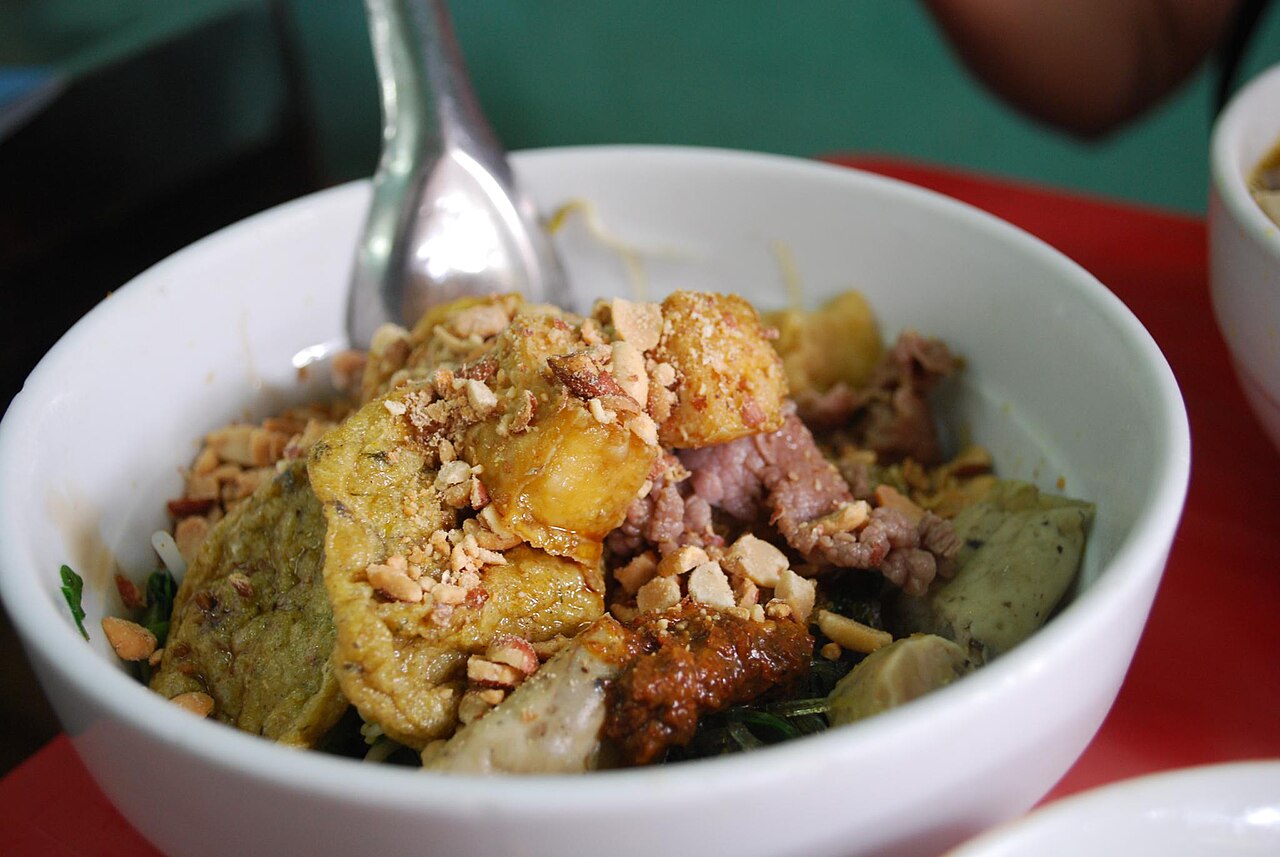
What bún riêu is
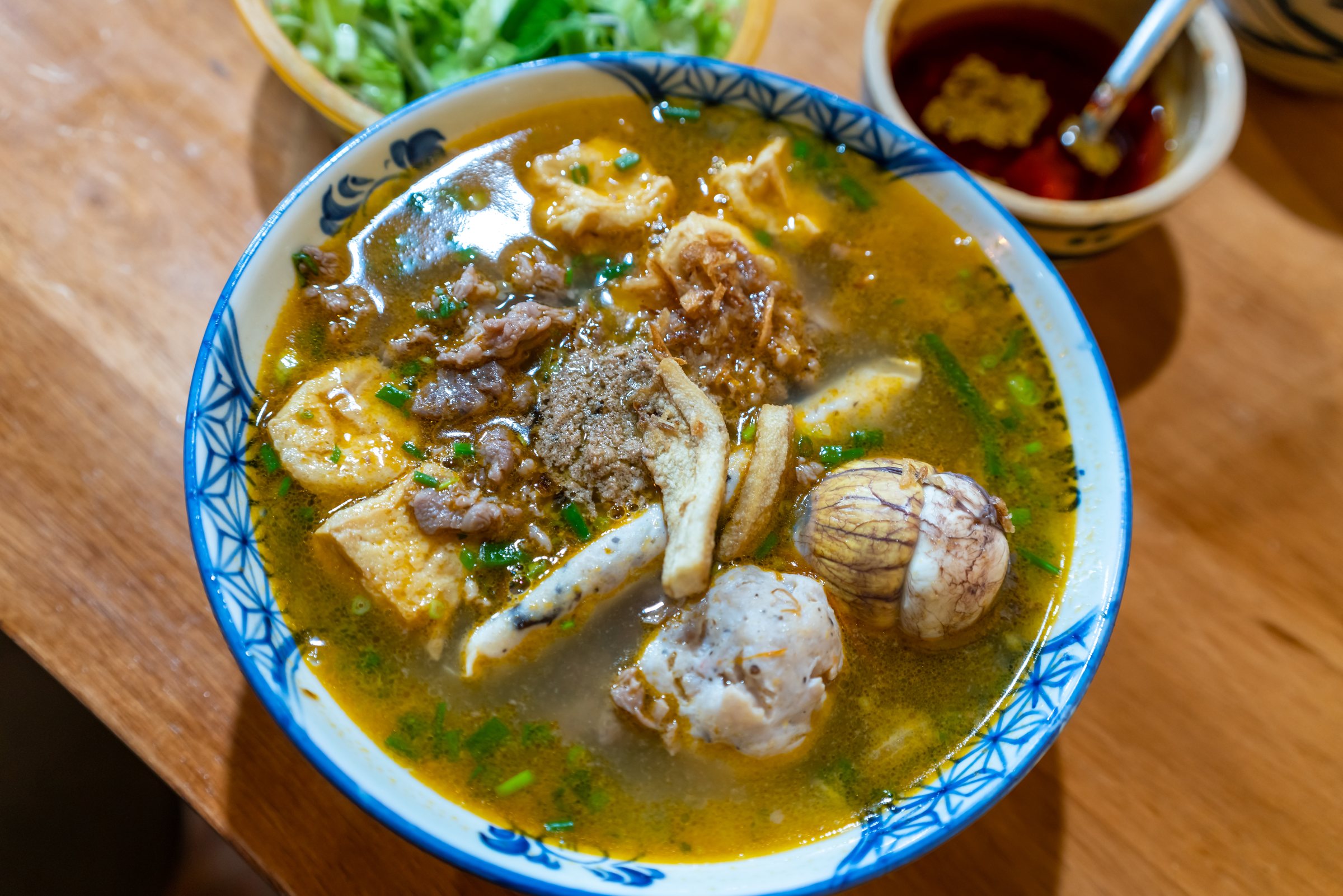
Bún riêu is a rice-vermicelli soup whose identity rests on two things: a broth sharpened with tomato and a protein paste made from pounded freshwater crab (cua đồng). The paste is stirred into simmering stock and sets into soft, savoury clumps that float across the surface. The tomatoes give the soup its characteristic rust-red colour and an acidity that sets it apart from the richer, clearer broths of other Vietnamese noodle dishes.
The dish is associated with Hanoi and the broader northern Vietnamese culinary tradition, where freshwater crabs from rice paddies have long been a rural staple. It has since spread across the country, acquiring regional variations as it travelled south.
The broth and its base
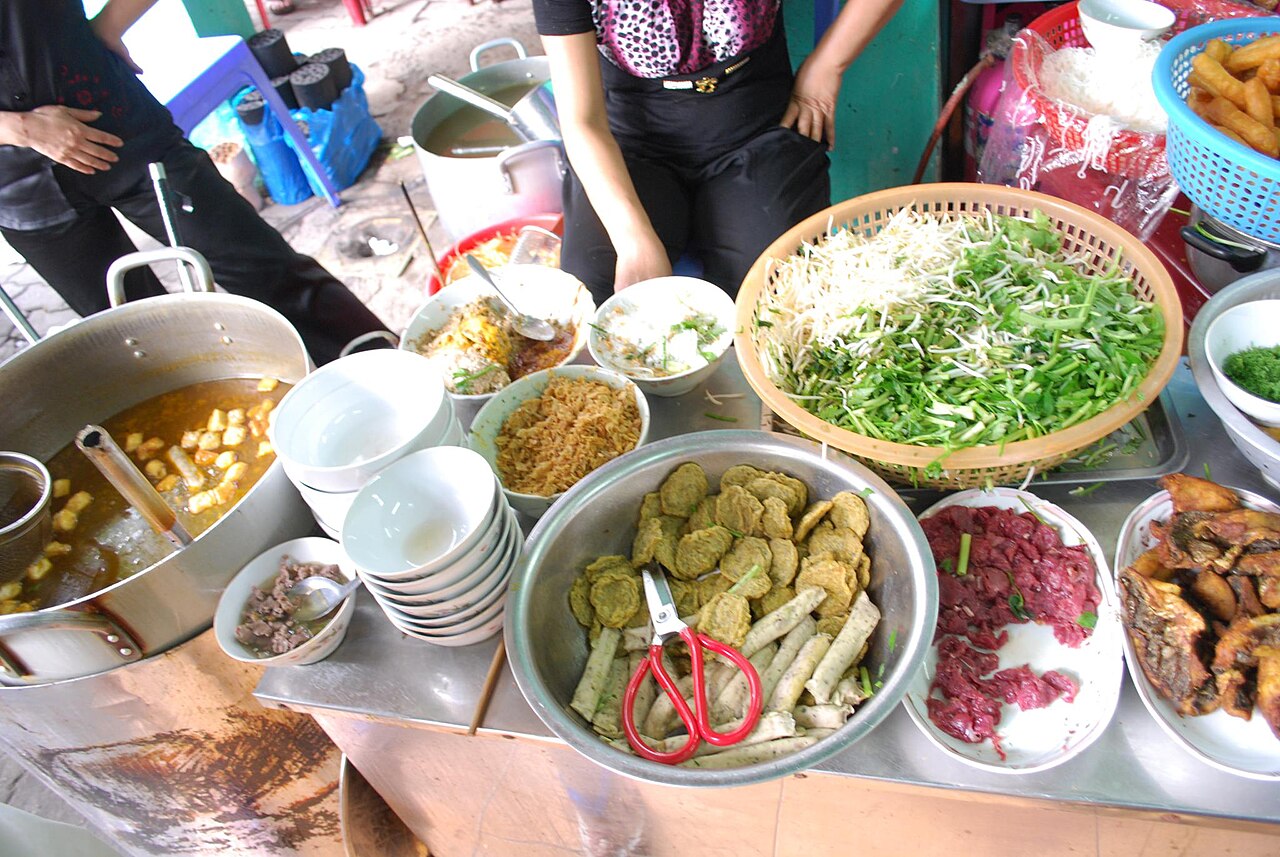
The stock is typically made from pork bones or a combination of pork and dried shrimp, simmered for several hours before the tomatoes and crab paste are added. Ripe tomatoes — usually stir-fried briefly in oil beforehand — dissolve into the broth and provide both colour and tartness. Some cooks add tamarind or vinegar to deepen the sour note.
Fermented shrimp paste (mắm tôm) is the defining seasoning. It is pungent and intensely savoury, and is often served on the side so diners can stir in as much or as little as they prefer. The combination of tomato acidity, crab umami and fermented shrimp paste is the flavour signature of the dish.
Toppings and garnishes
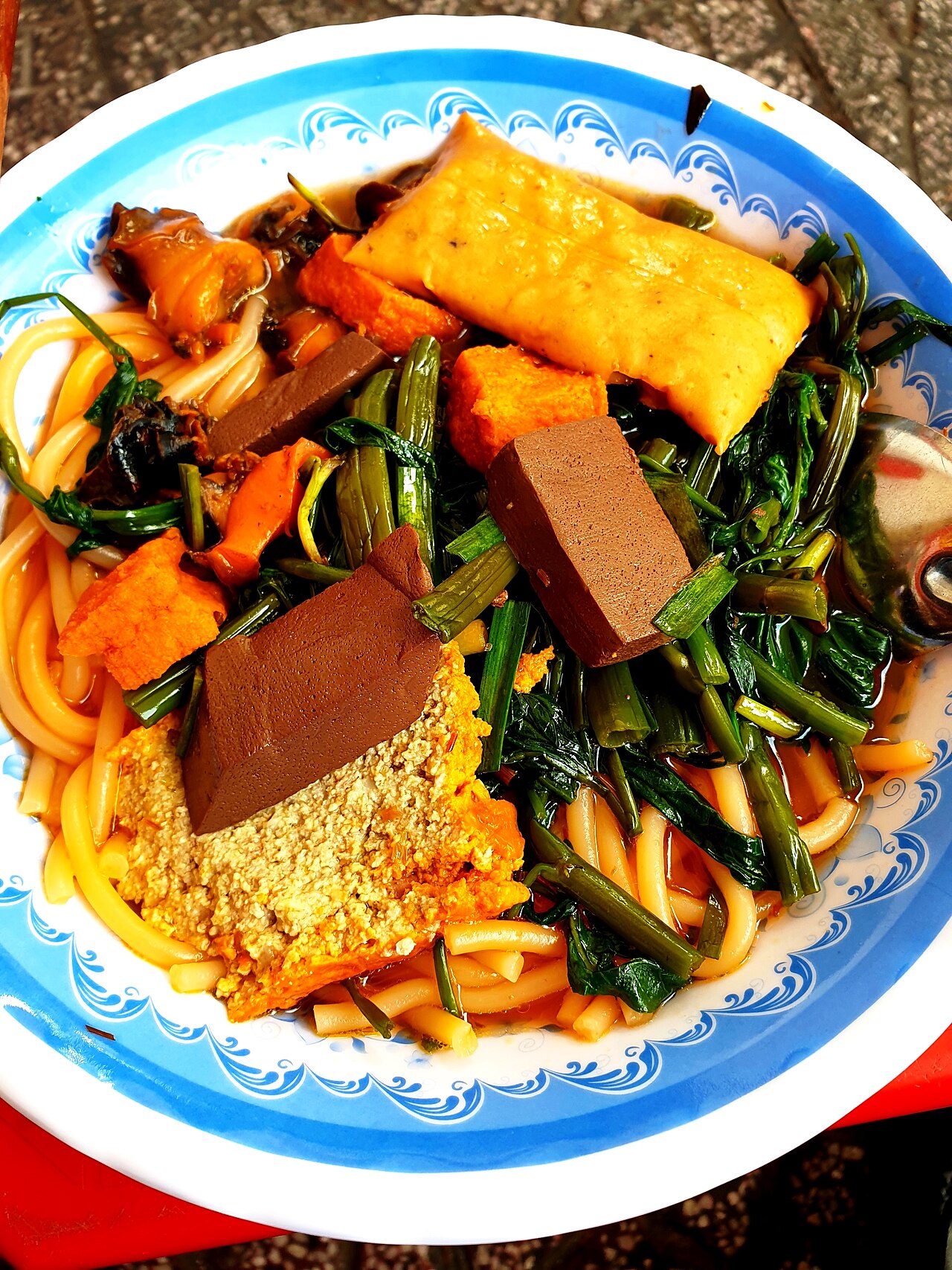
Beyond the crab paste clumps, a standard bowl of bún riêu contains several additional components. Fried tofu — cut into triangles and often pre-fried until the skin is golden and slightly chewy — is a consistent presence. Congealed pork blood cake (tiết canh đông or simply huyết), cut into cubes, is traditional in northern versions, though it is sometimes omitted in southern adaptations.
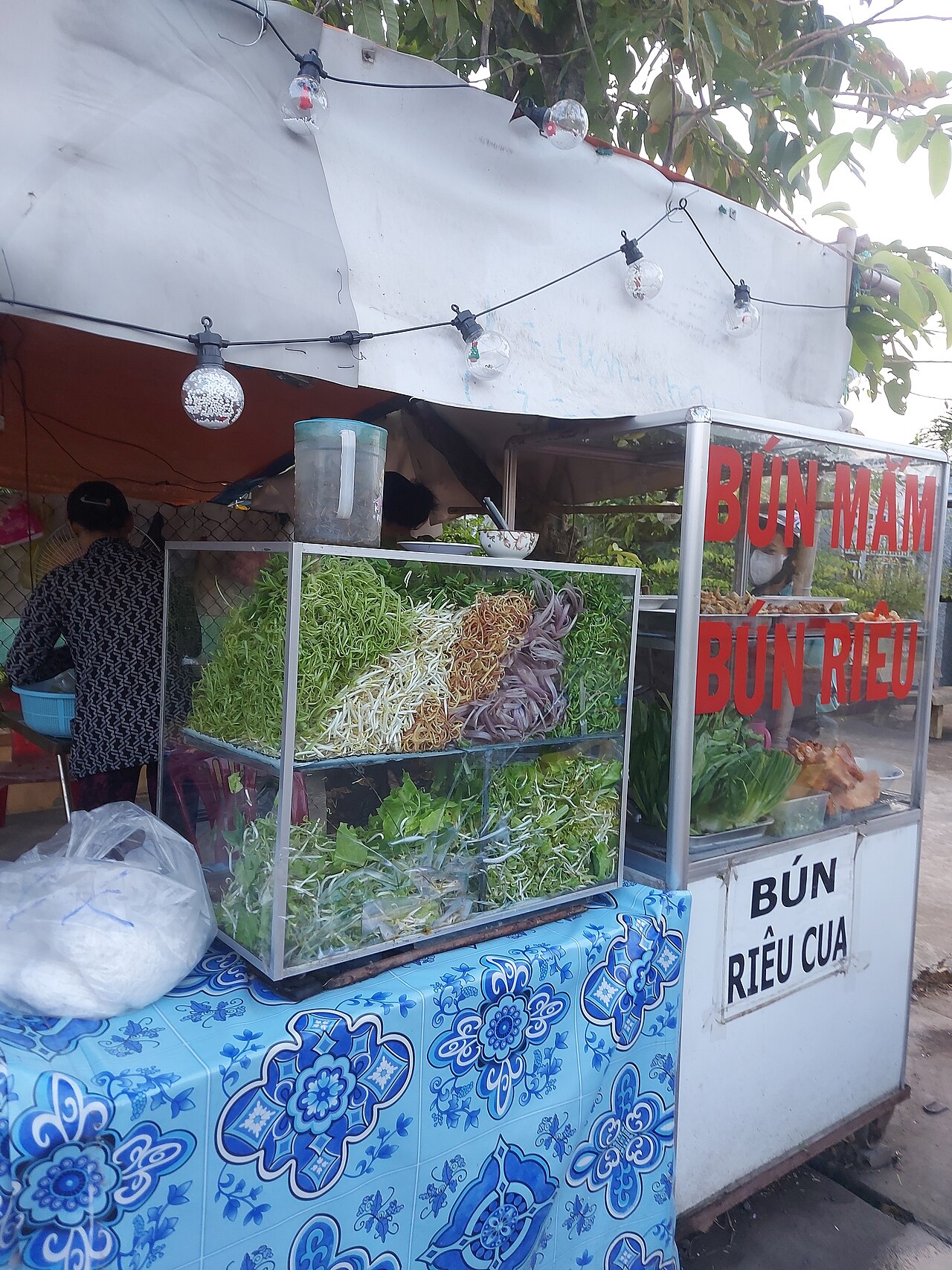
Garnishes placed on or beside the bowl typically include fresh herbs such as perilla and Vietnamese balm (kinh giới), shredded banana blossom, bean sprouts, and sliced chilli. A wedge of lime may accompany the bowl. Diners assemble their own balance of garnish and seasoning at the table.
Regional variations
As bún riêu spread southward, cooks adapted it to local ingredients and preferences. Southern versions, particularly those found in Ho Chi Minh City, tend to be sweeter and more generously topped, sometimes including prawns, crab sticks, or processed fish cake alongside the crab paste. Blood cake is less common in the south, and the herb plate is typically more elaborate.
Central Vietnamese preparations often sit between the two, retaining some of the northern austerity while incorporating local aromatics. The fermented shrimp paste remains a constant across regions, though its pungency can vary. Some vendors offer a milder version of mắm tôm blended with lime juice and sugar to make it more approachable.
The crab element in detail
The freshwater field crab (cua đồng) used in traditional bún riêu is small and bony. Whole crabs are cleaned, ground or pounded — shell included in many traditional methods — and then strained to extract a paste rich in protein. When this paste hits hot broth it coagulates into irregular, textured curds. The result is neither smooth nor firm, but somewhere between a soft dumpling and a broken omelette.
In urban settings and in many commercial operations, prepared crab paste sold in tubs has largely replaced the labour-intensive process of pounding whole crabs. The flavour profile is similar but the texture of the cooked clumps may differ. Some vendors use a mixture of crab paste and egg to improve cohesion.
Context and availability
Bún riêu is eaten at any time of day but is particularly common as a breakfast or early-lunch dish. It is served by dedicated street vendors, in small neighbourhood restaurants, and in larger establishments that specialise in northern Vietnamese cooking. In Hanoi, vendors often focus on a single noodle soup and serve it from early morning until the pot is empty.
The dish is also made at home, particularly for family gatherings, though the preparation of broth and crab paste from scratch is time-consuming. Ready-made seasonings and instant broth bases marketed specifically for bún riêu are widely available in Vietnamese supermarkets and grocery shops.
Comes from
被以下页面引用
来源
- Vietnam National Authority of Tourism — VNAT 访问于 29 August 2026
Supports: the rules and definitions on this page - Bún riêu — Wikipedia (CC BY-SA 4.0) 访问于 31 August 2026
Supports: background - Bún riêu cua — Wikipedia (Vietnamese) (CC BY-SA 4.0) 访问于 31 August 2026
Supports: background, Vietnamese edition
Current 最后核实: 31 August 2026. Rules, fares and prices change — check the official source before acting on anything here. Report a mistake.
Picture credits (5)
Photo: Quang Ho / Adobe Stock, asset 555653763 · Bún riêu cua khô, Alpha, CC BY-SA 2.0, Wikimedia Commons · Ingredients of bún riêu cua, Alpha, CC BY-SA 2.0, Wikimedia Commons · Bún mắm bún riêu xóm đình, Nguyengc1712, CC0, Wikimedia Commons · Tô bún riêu (canh bún) ng12th8n2022 (1), Phương Huy, CC0, Wikimedia Commons