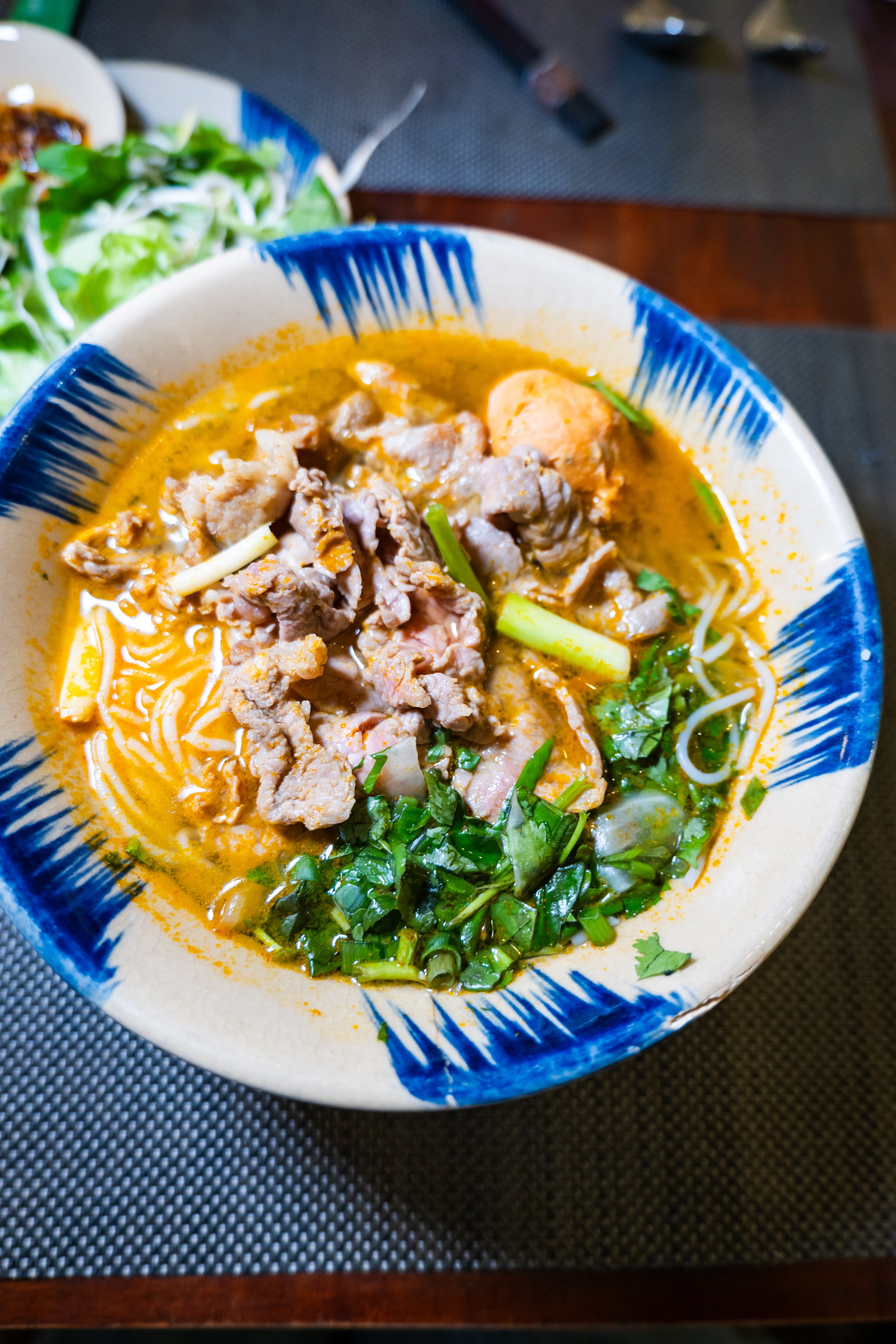
Bun bo HueBún bò Huế
What it is
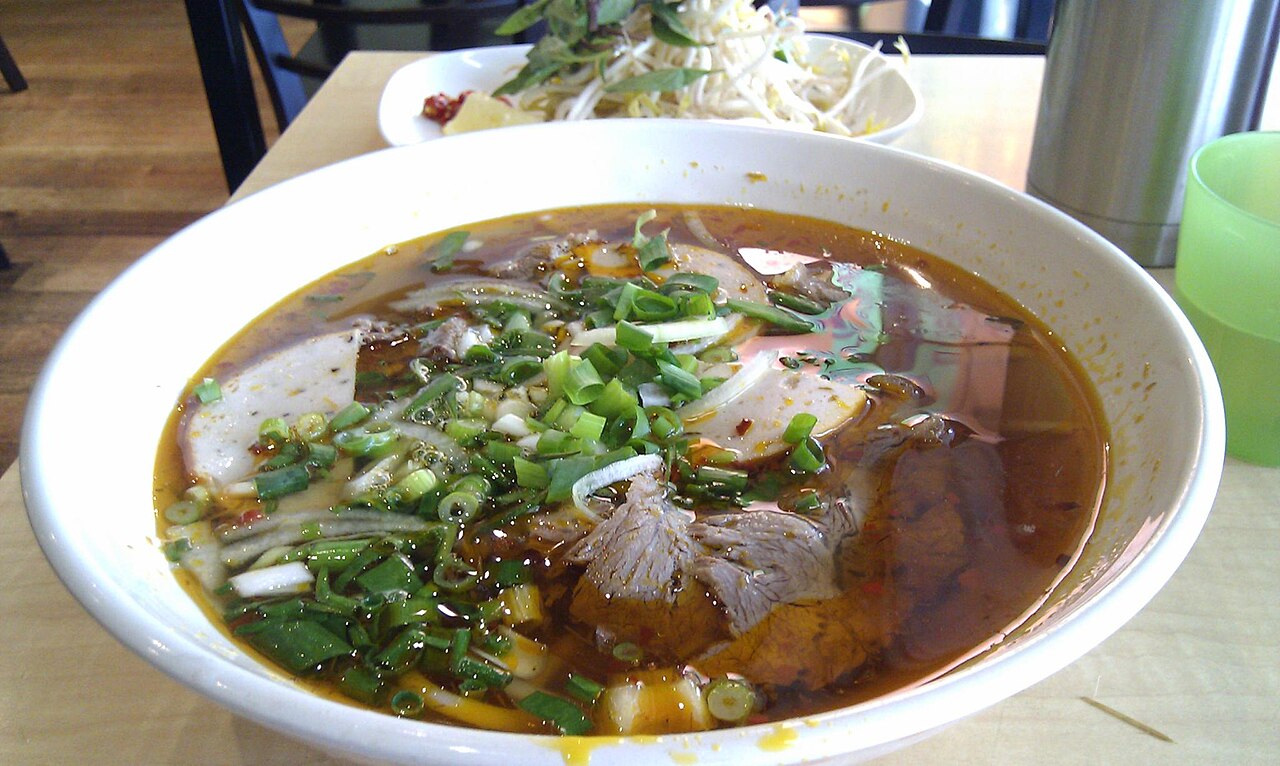
Bún bò Huế is a soup of thick, round rice noodles (bún) served in a broth built from beef bones simmered for several hours with lemongrass stalks and mắm ruốc, a pungent fermented shrimp paste specific to central Vietnam. The paste is not merely a seasoning: it defines the broth's character, giving it a depth and salinity that distinguishes it sharply from the cleaner, star-anise-forward broth of northern phở. The soup originates in Hue and remains most closely associated with that city.
The broth
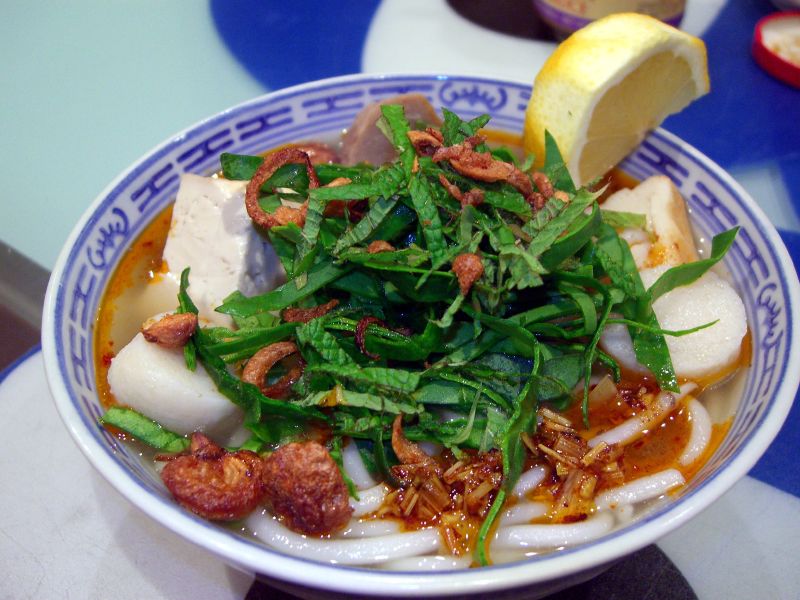
The foundation is a long-cooked beef bone stock, into which lemongrass is added in quantity — typically bruised and tied in bundles so it infuses without fragmenting through the liquid. Annatto seeds (hạt điều) are used to achieve the broth's distinctive reddish-orange colour. Dried chilli and fresh chilli oil are added at different stages, producing a heat that builds gradually rather than arriving all at once. The balance between the fermented saltiness of mắm ruốc, the citrus-floral quality of lemongrass, and the chilli heat is the technical measure of a well-made bowl.
Toppings and cuts of meat
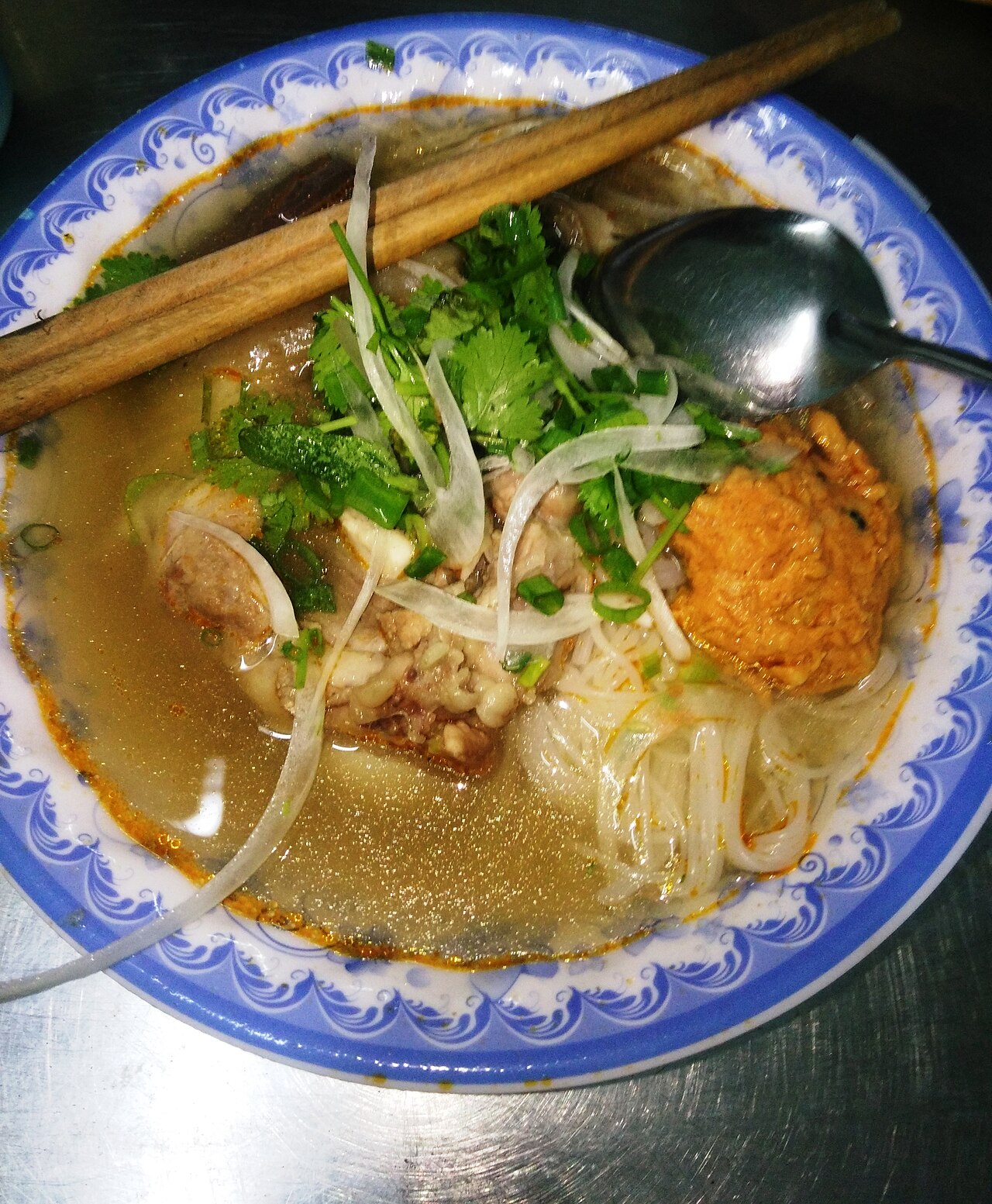
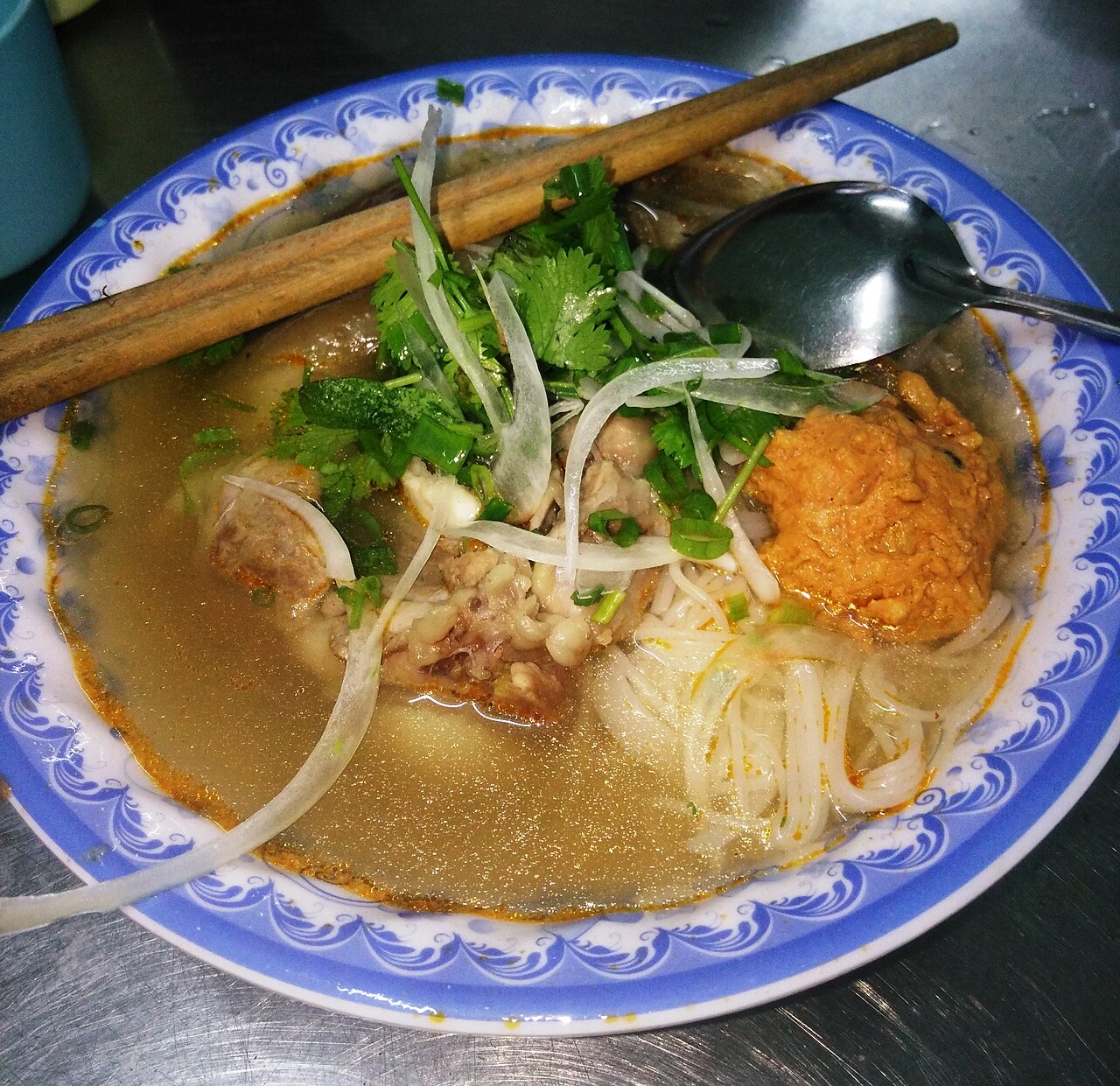
A standard serving includes several components beyond the noodles and broth. Sliced beef shank and thin-cut beef are common, as is braised pork knuckle (giò heo), which is often presented in thick cross-sections showing both skin and bone. Chả Huế, a firm steamed pork sausage particular to the city, is usually added. Congealed pork or beef blood (tiết), cut into cubes, is a traditional inclusion, though it is sometimes omitted in versions made for audiences unfamiliar with the ingredient. The bowl is finished with raw bean sprouts, shredded banana blossom, fresh herbs including perilla and sawtooth coriander, and wedges of lime.
Spice level and regional character
Bún bò Huế is substantially spicier than most dishes from northern Vietnam and noticeably more so than many southern Vietnamese soups. This reflects a broader pattern in central Vietnamese cuisine, where chilli use is more assertive than in either the north or south of the country. The reasons are debated: one explanation points to the influence of the royal court in Hue, which demanded elaborate and intensely flavoured food; another notes the mountainous hinterland and historical trade routes that made dried chillies a practical, lasting ingredient. Whatever the cause, the heat in bún bò Huế is considered intrinsic rather than optional.
Royal-capital heritage
Hue served as the imperial capital of Vietnam under the Nguyễn dynasty from 1802 until 1945, and its culinary identity was shaped by the demands of court life. Dishes were expected to be visually refined, technically precise and flavourally complex. Bún bò Huế fits this pattern: the layered broth, the careful balance of fermented, aromatic and spiced elements, and the variety of specifically prepared meat components reflect a cooking tradition that valued technique and specificity. The dish is sometimes described as aristocratic in origin, though it has long been a street-level staple eaten by all sections of Hue society.
Regional variation
Versions served outside Hue, particularly in Ho Chi Minh City and abroad, frequently reduce the quantity of mắm ruốc in the broth and lower the chilli level to suit local preferences. Blood cake is commonly absent from these adaptations. Purists from Hue regard such adjustments as producing a fundamentally different dish. Within Hue itself, individual cooks and establishments maintain distinct ratios of lemongrass, shrimp paste and chilli, and longtime residents often have strong preferences for specific vendors.
Comes from
Verwezen door
Bronnen
- Vietnam National Authority of Tourism — VNAT geraadpleegd 29 August 2026
Supports: the rules and definitions on this page - Bún bò Huế — Wikipedia (CC BY-SA 4.0) geraadpleegd 31 August 2026
Supports: background - Bún bò Huế — Wikipedia (Vietnamese) (CC BY-SA 4.0) geraadpleegd 31 August 2026
Supports: background, Vietnamese edition
Current Laatst geverifieerd: 31 August 2026. Rules, fares and prices change — check the official source before acting on anything here. Report a mistake.
Picture credits (5)
Photo: Marius Karp / Adobe Stock, asset 2024333421 · Bún bò Huế, Alpha from Melbourne, Australia, CC BY-SA 2.0, Wikimedia Commons · Bun Bo Hue, Flickr.com user "avlxyz", CC BY-SA 2.0, Wikimedia Commons · Bún bò Huế ở Đông Hà (Liễu Quán) 2018 (1), Phương Huy ( thảo luận ), Public domain, Wikimedia Commons · Bún bò Huế ở Đông Hà (Liễu Quán) 2018 (2), Phương Huy ( thảo luận ), Public domain, Wikimedia Commons