Bia hoiBia hơi
What bia hơi is
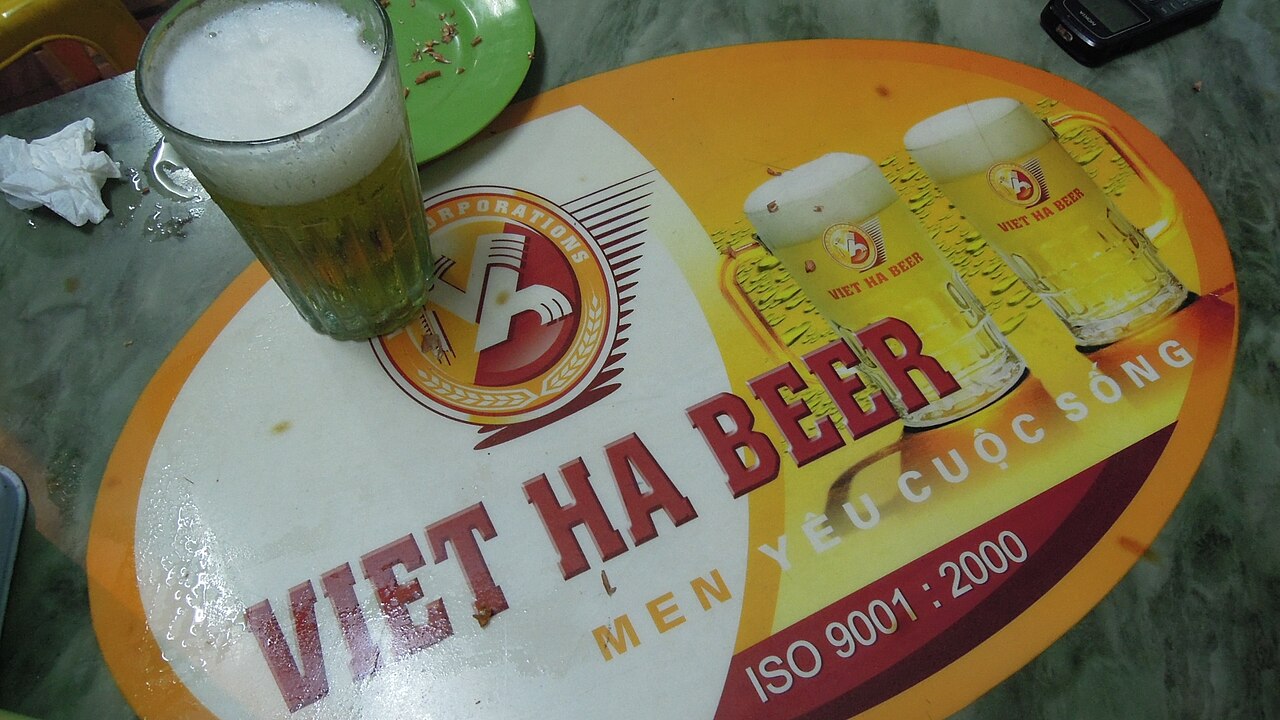
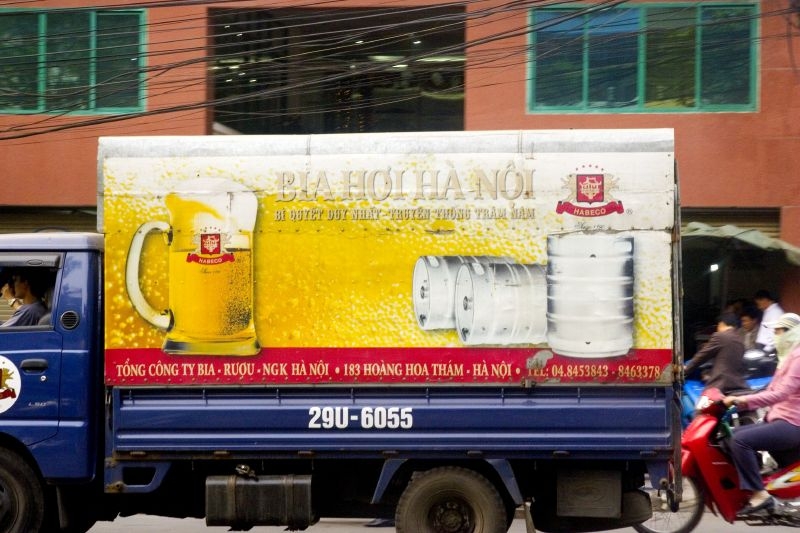
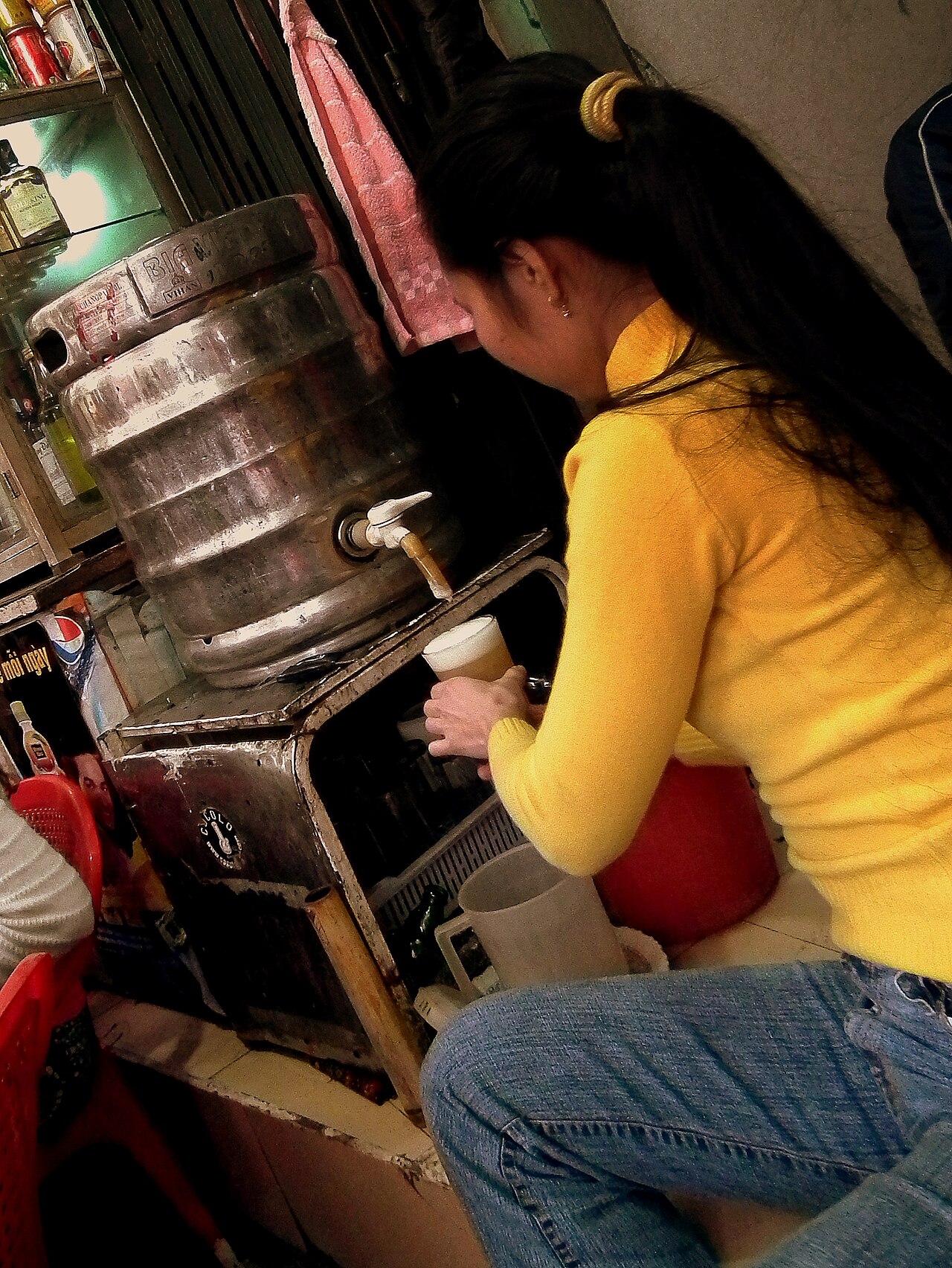
Bia hơi — the diacritics render it roughly bee-ah huh — is a style of draught beer brewed without pasteurisation and consumed within a day or two of production. The name translates literally as fresh beer or gas beer, a reference to its light carbonation. Because it is not pasteurised and contains no preservatives, batches are brewed in small quantities, delivered to vendors each morning, and expected to be sold out by nightfall. Any unsold beer is discarded rather than kept over.
The liquid itself is pale, low in alcohol relative to commercial lagers, and noticeably lighter in body. The flavour is mild and slightly grainy. These qualities are features rather than flaws: bia hơi is designed to be drunk in quantity over a long sitting in hot weather.
Origins and geography
Bia hơi has its clearest roots in Hanoi, where Czech brewing techniques introduced in the mid-twentieth century during the period of socialist cooperation were adapted to local ingredients, infrastructure and tastes. The style became embedded in Hanoi's street life during the decades when imported or commercial beer was scarce or expensive, and state-run bia hơi outlets became neighbourhood fixtures.
The drink remains most strongly associated with the north of Vietnam. It is present throughout the country but the density of dedicated street-corner stalls, the rituals around drinking it, and the culture of the bia hơi corner are concentrated in northern cities and towns. In the south, commercial bottled and canned lagers have historically dominated, though bia hơi stalls exist there too.
The street-corner setting
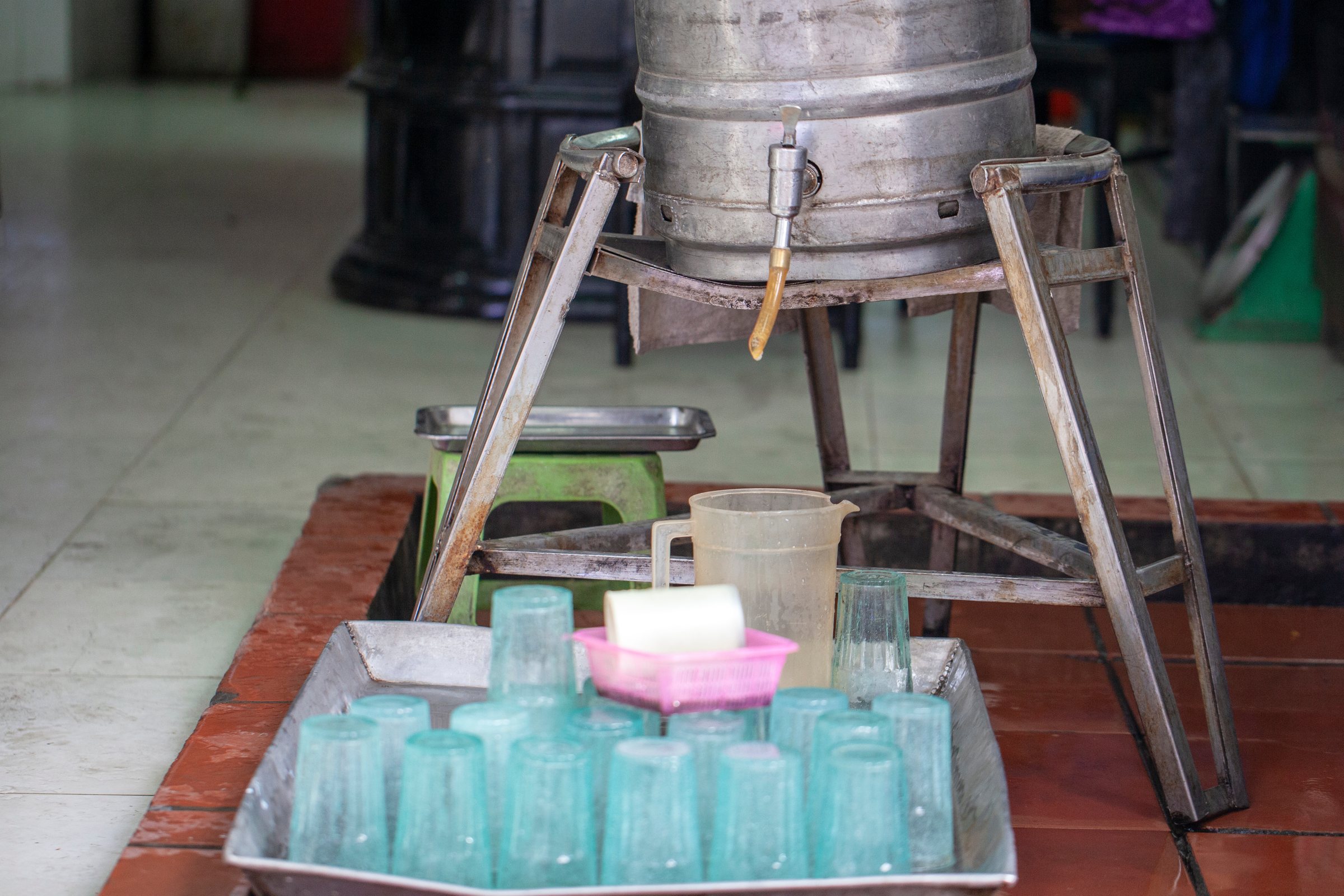
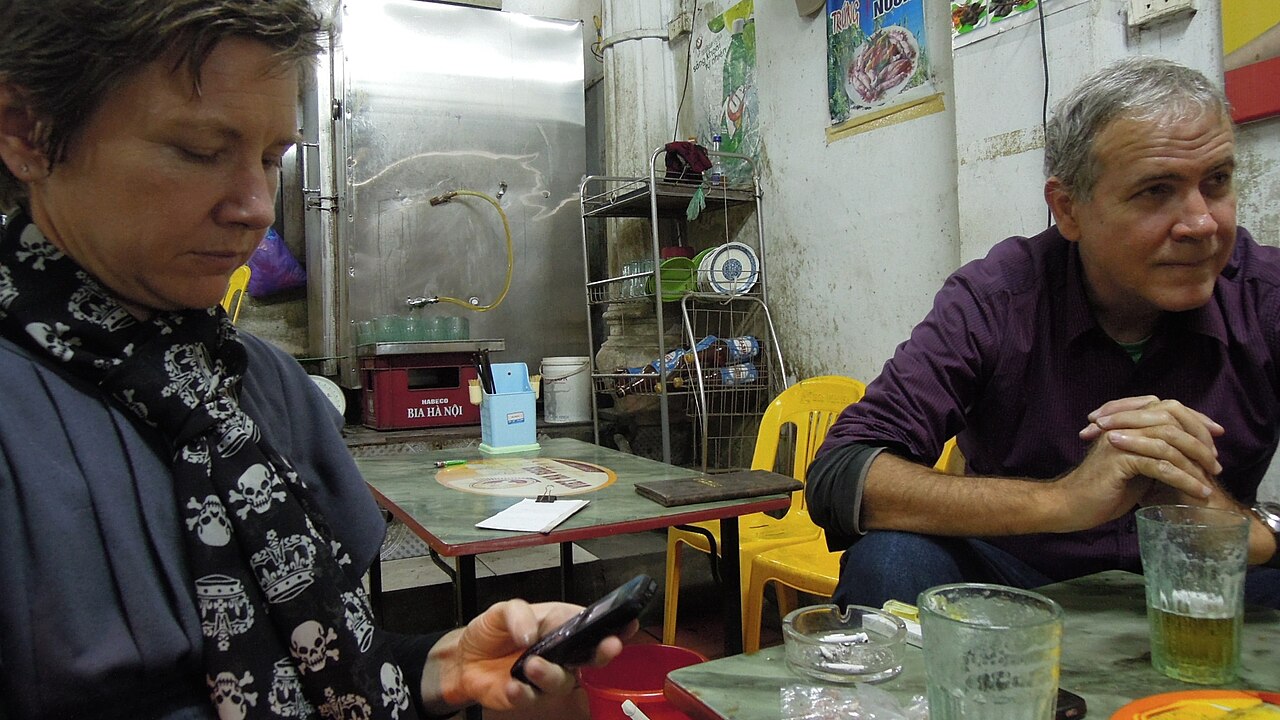
The typical bia hơi setting is spare: a section of pavement, a plastic barrel or metal keg connected to a simple tap, and rows of low plastic stools around equally low plastic tables. There is rarely a written menu beyond a handwritten list of snacks on a board or wall. The aesthetic is functional rather than decorative.
The intersection known informally as Bia Hơi Corner in Hanoi's Old Quarter — at the junction of Lương Ngọc Quyến and Tạ Hiện streets — is the most visited concentration of such stalls, though it caters substantially to tourists and the atmosphere differs from neighbourhood stalls elsewhere in the city. Locals tend to have a regular stall close to home or work.
Rhythm and hours
Bia hơi stalls generally open in the early to mid-afternoon, once the lunch rush has ended and the day begins to cool slightly. Business peaks in the late afternoon and early evening, when workers finish for the day. Many stalls are cleared up and closed by nine or ten in the evening, earlier than bars or restaurants serving commercial beer. The rhythm is tied directly to the daily brew cycle: once the keg is empty, the stall is done.
Midweek afternoons tend to draw an older, local crowd. Fridays and weekends bring larger, louder gatherings. The culture involves long, unhurried sessions: glasses are small, refills are frequent, and the social function of the sitting is as important as the drinking itself.
Food served alongside
Food at bia hơi stalls is simple and intended to accompany drinking rather than constitute a full meal. Common items include lạc rang (dry-fried peanuts, sometimes with garlic or chilli), nem rán (fried spring rolls), đậu phụ rán (fried tofu with shrimp paste on the side), grilled corn, and various small plates of pickled or fresh vegetables. Some stalls also offer more substantial dishes such as grilled meat skewers or steamed snails depending on the season and the vendor's particular offer.
Prices for both beer and food vary by vendor and location. No standard pricing exists across stalls, and costs at tourist-facing corners differ from those at neighbourhood spots. Prices are held separately on this site with an observation date.
Social and cultural context
Bia hơi drinking is a collective activity. The phrase một, hai, ba, dô — a counting toast meaning roughly one, two, three, cheers — is a fixed ritual at many tables, spoken before glasses are drained together. Strangers at adjacent tables are often drawn into conversation; the low, shared seating and open pavement setting encourage interaction in a way that enclosed bar interiors do not.
The drink occupies an ambiguous position in Vietnamese public life. It is thoroughly ordinary — a daily habit for many working men in particular — yet it has also become a marker of authenticity for visitors seeking something outside hotel bars and tourist restaurants. This dual status has intensified since the 1990s as international travel to Vietnam expanded. Some observers note that the most-photographed bia hơi corners have shifted in character as a result, though the institution itself remains largely unchanged in areas away from tourist concentrations.
Where it is
Also known as / see also
Comes from
مُشار إليه من
المصادر
- Vietnam National Authority of Tourism — VNAT تم الوصول إليه 29 August 2026
Supports: the rules and definitions on this page - Bia hơi — Wikipedia (CC BY-SA 4.0) تم الوصول إليه 31 August 2026
Supports: background
Current آخر تحقق: 31 August 2026. Rules, fares and prices change — check the official source before acting on anything here. Report a mistake.
Picture credits (5)
Photo: evgenii / Adobe Stock, asset 301440789 · Helen & Mark at their local Bia hoi, Hanoi (7069090993), David McKelvey from Brisbane, Australia, CC BY 2.0, Wikimedia Commons · Viet Ha Beer at the Bia hoi, Tay Ho, Vietnam (6923012212), David McKelvey from Brisbane, Australia, CC BY 2.0, Wikimedia Commons · Hanoi bia hoi shipping truck, audrey_sel, CC BY-SA 2.0, Wikimedia Commons · FRESH BEER HANOI VIETNAM FEB 2012 (6833111598), calflier001, Public domain, Wikimedia Commons