Banh xeoBánh xèo
The name and the sizzle
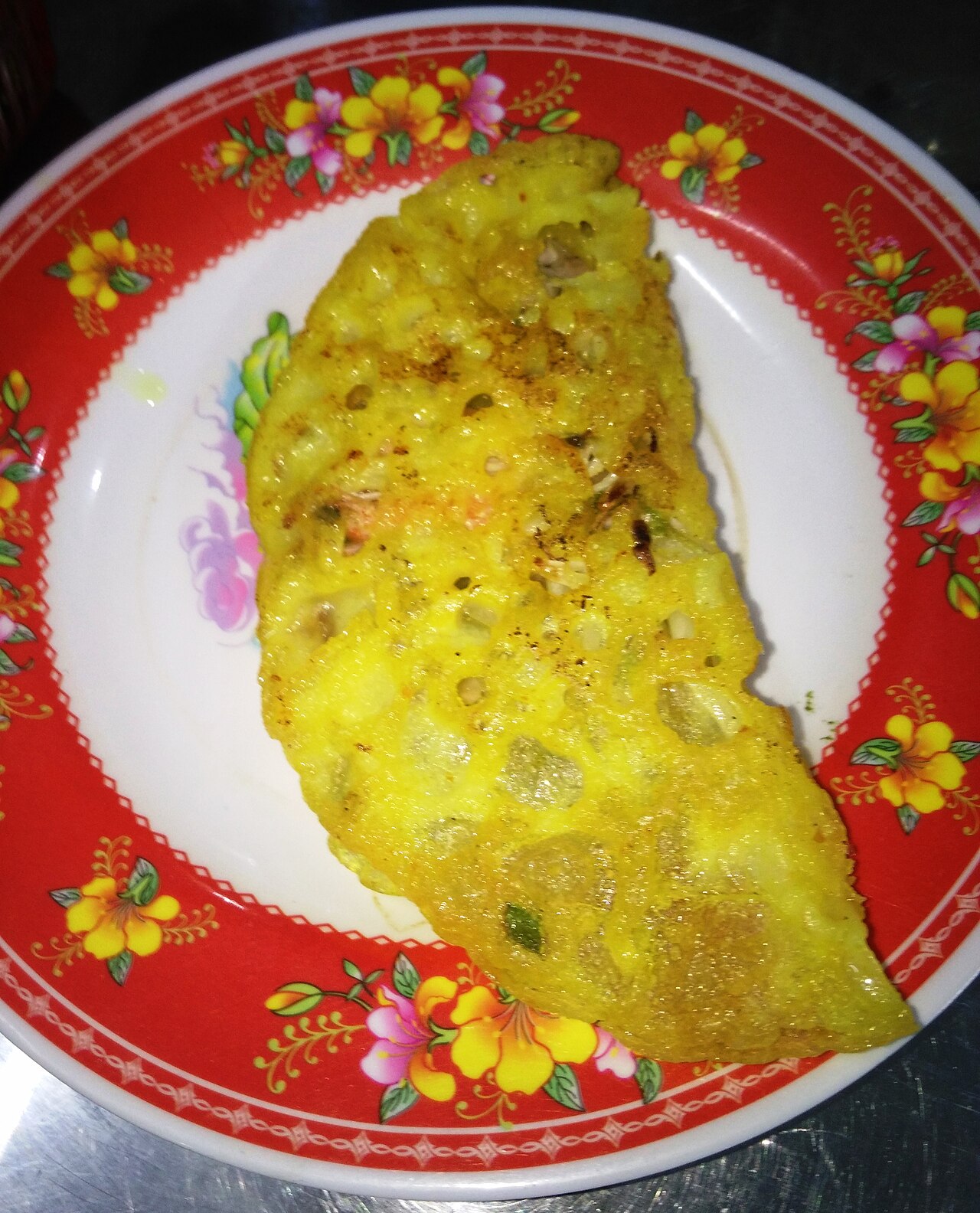
Bánh xèo translates literally as 'sizzling cake'. The name is onomatopoeic: when a ladle of loose, turmeric-tinted rice-flour batter meets a very hot, lightly oiled pan, it produces the sharp hiss — xèo — that the dish is named for. A well-made bánh xèo requires a pan hot enough to produce that sound immediately; if the batter settles silently, the heat is insufficient and the crepe will turn soft rather than lacy and crisp at the edges. Coconut milk is frequently added to the batter in southern versions, contributing a faint sweetness and helping the crepe achieve its characteristic golden crispness.
Regional variations: south versus centre
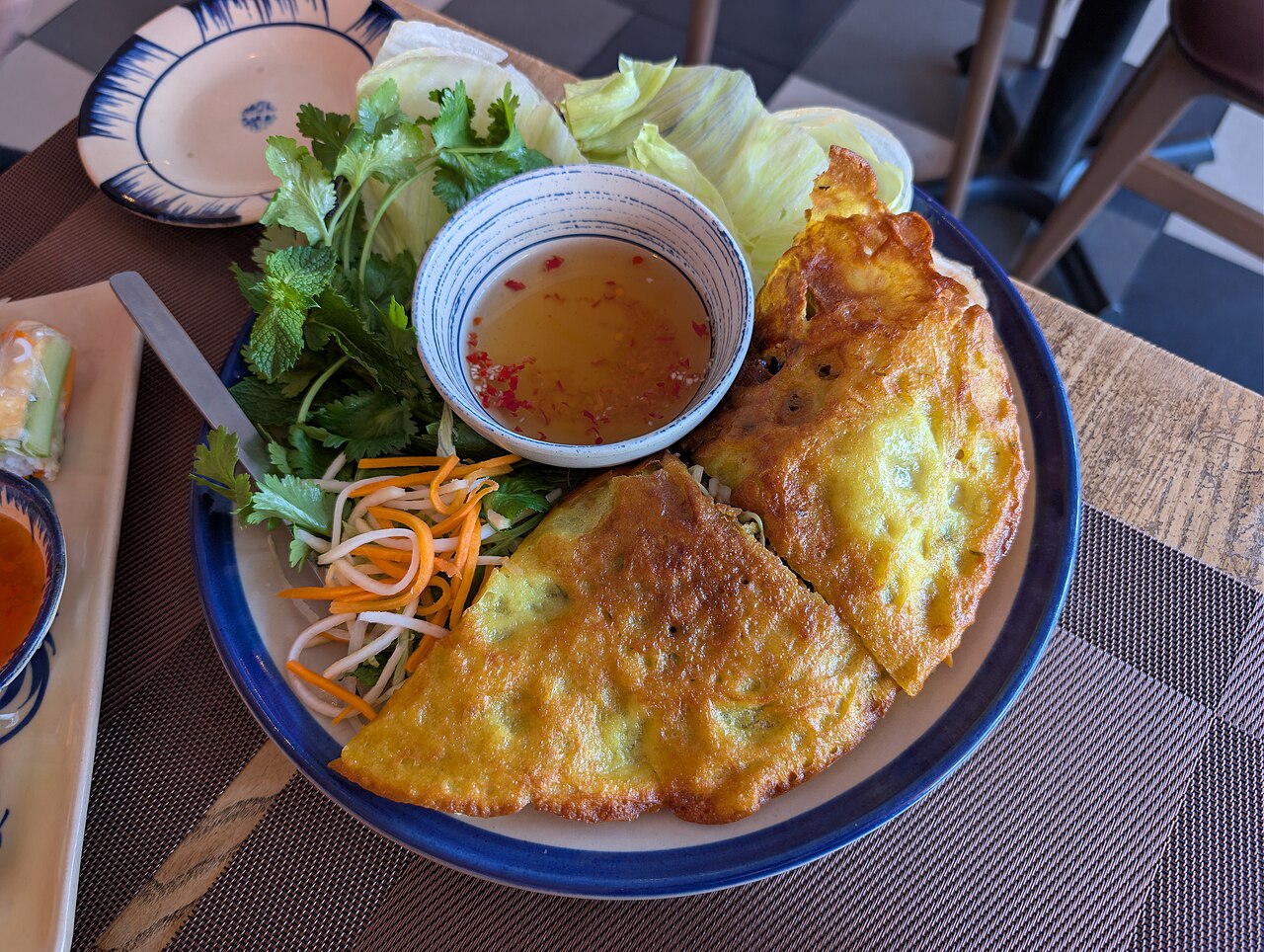
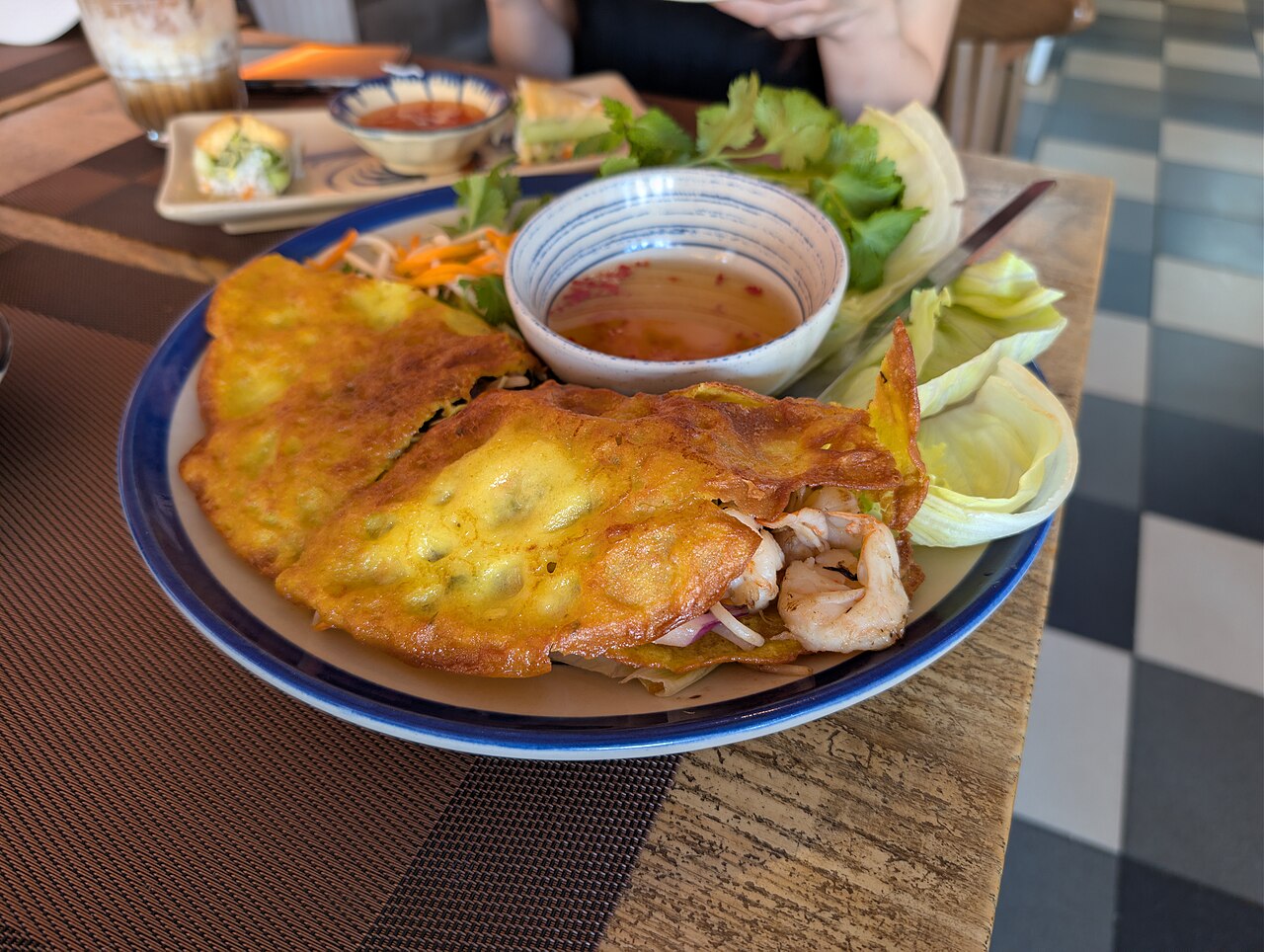
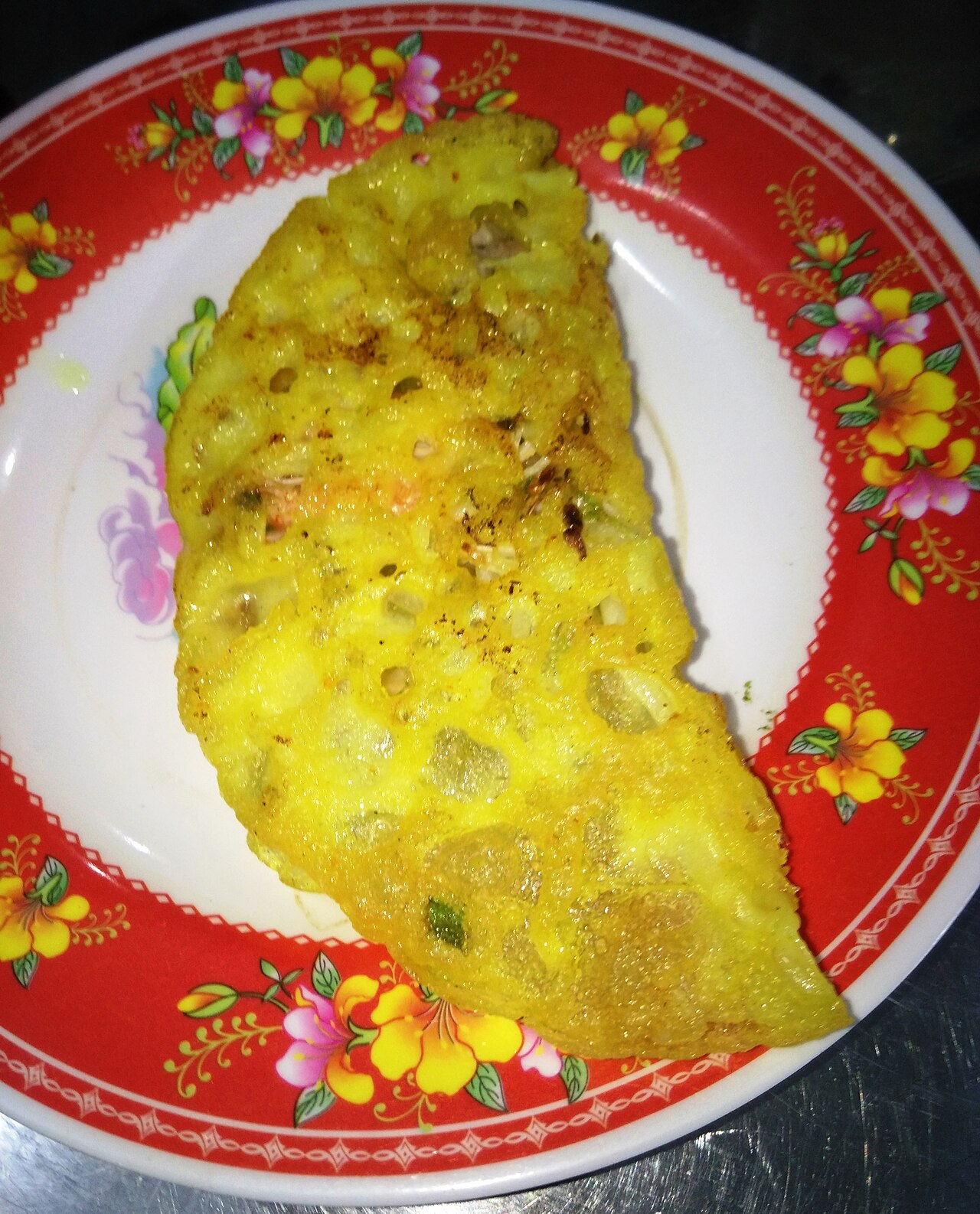
Two distinct styles of bánh xèo exist, and the differences are considerable. The southern version, associated with Ho Chi Minh City and the Mekong Delta, is large — often thirty centimetres or more across — cooked in a wide pan, and folded in half over its filling. It is meant to be torn apart at the table and shared.
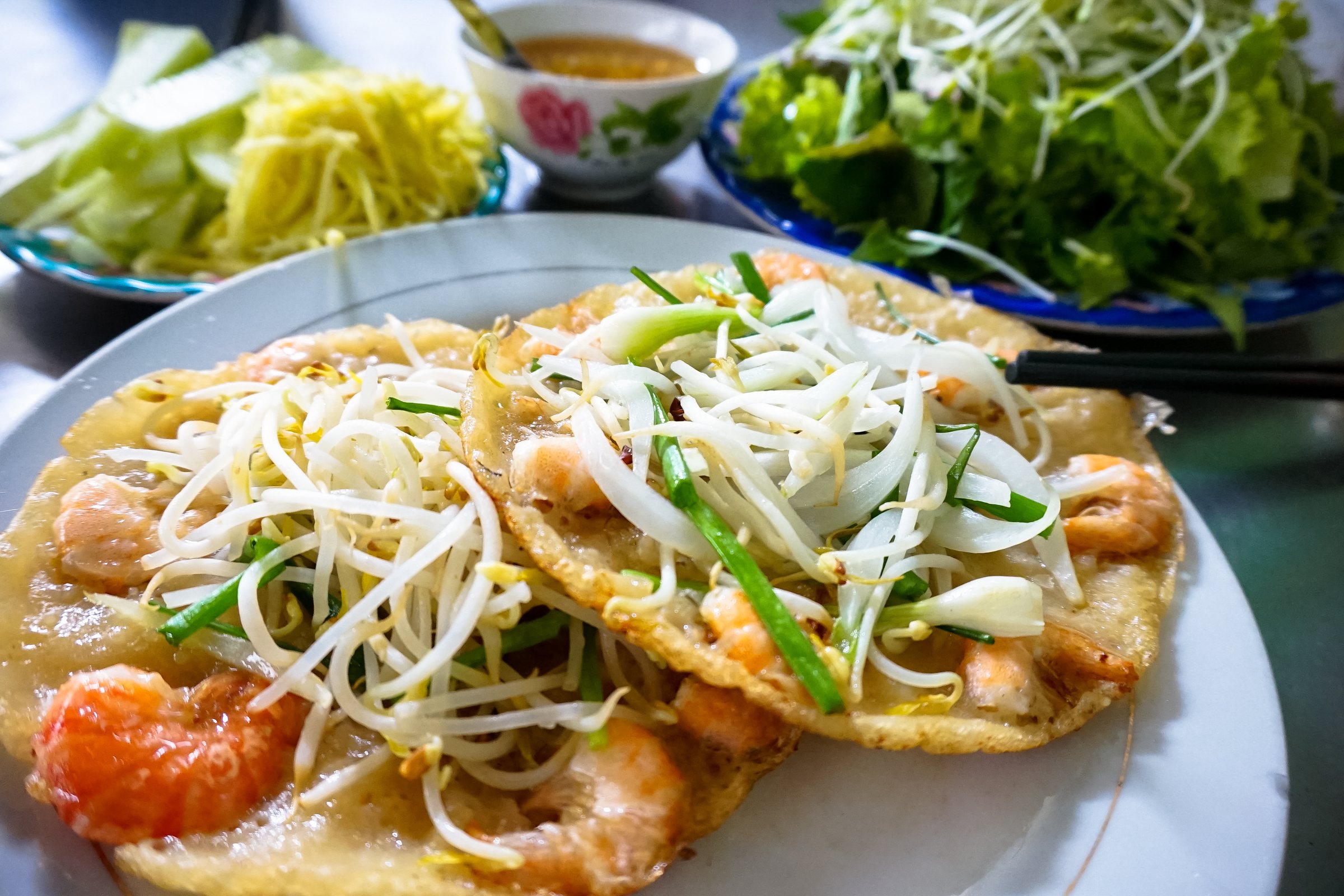
The central Vietnamese version, found in provinces such as Bình Định and Quảng Nam, is much smaller, sometimes only the width of a palm. These miniature crepes are eaten whole rather than torn, and the batter tends to be thinner and crispier. The filling proportions differ too: central versions often use mung beans in addition to pork and seafood, and the overall flavour profile is less rich than the coconut-milk-heavy southern style.
Filling and ingredients
The standard filling of bánh xèo consists of three main components: sliced pork belly or shoulder, whole or halved prawns, and a generous quantity of fresh bean sprouts. The pork and prawns are typically cooked briefly in the pan before the batter is poured over them, so they are partially set into the crepe rather than sitting loosely on top. The bean sprouts are added raw just before the crepe is folded, so they retain their crunch inside the finished dish.
Sliced onion and spring onion are common additions. In coastal areas, squid or small clams may replace or supplement the prawns. The turmeric in the batter serves both a colouring function — producing the characteristic deep yellow — and a mild flavouring role, though its flavour is not dominant in the finished dish.
Wrapping and eating
Bánh xèo is not eaten with chopsticks alone. A plate of accompaniments arrives alongside the crepe: sheets of dried or fresh rice paper, whole lettuce leaves, and a substantial pile of fresh herbs. The herbs typically include perilla (tía tô), mint, Vietnamese balm (kinh giới), and fish wort (diếp cá), though the precise selection varies by region and by what the kitchen considers correct.
To eat, a piece of crepe is placed on a sheet of rice paper or a lettuce leaf, herbs are added, and the whole is rolled into a tight parcel. That parcel is then dipped in sauce. The double texture — the crisp crepe against the soft rice paper and fresh herbs — is a defining characteristic of the dish. Some diners use lettuce alone rather than rice paper.
Dipping sauce
The dipping sauce served with bánh xèo is nước chấm, a mixture of fish sauce, lime juice, sugar, water, garlic and fresh chilli. The balance between saltiness, sourness, sweetness and heat varies between kitchens, and some cooks add a small amount of fermented shrimp paste (mắm tôm) or a splash of rice vinegar. The sauce is thinned considerably with water so that the herb-and-crepe parcels can be dipped without the flavour overwhelming the filling.
In some central Vietnamese establishments, a thicker, peanut-based hoisin sauce is offered instead of or alongside nước chấm, a practice more commonly associated with dishes such as bánh cuốn or gỏi cuốn but occasionally applied here too.
Vegetarian version
Vegetarian bánh xèo is prepared and sold widely, particularly near Buddhist temples and in neighbourhoods with large vegetarian-leaning populations, especially around the first and fifteenth days of the lunar month when many Vietnamese avoid meat. The batter itself contains no animal products, so the adaptation requires only changing the filling. Pork and prawns are replaced with a combination of ingredients that may include tofu, wood-ear mushrooms, shiitake, mung bean, julienned carrot, and additional bean sprouts.
The dipping sauce is adjusted accordingly: fish sauce is replaced with soy sauce or a mushroom-based sauce, and the overall seasoning is recalibrated to compensate for the loss of the fish sauce's depth. The wrapping method and the herb plate remain the same as in the standard version. Vegetarian bánh xèo is a recognised subcategory within southern Vietnamese cuisine rather than a novel adaptation.
Comes from
Được tham chiếu bởi
Các nguồn
- Vietnam National Authority of Tourism — VNAT đã truy cập 29 August 2026
Supports: the rules and definitions on this page - Bánh xèo — Wikipedia (CC BY-SA 4.0) đã truy cập 31 August 2026
Supports: background - Bánh xèo — Wikipedia (Vietnamese) (CC BY-SA 4.0) đã truy cập 31 August 2026
Supports: background, Vietnamese edition
Current Đã xác minh lần cuối: 31 August 2026. Rules, fares and prices change — check the official source before acting on anything here. Report a mistake.
Picture credits (5)
Photo: bbq1409 / Adobe Stock, asset 77918612 · Crispy Vietnamese Pancake (Banh Xeo) - Xin Chao, Eastbourne 2026-08-14 (1), Andy Li, CC0, Wikimedia Commons · Crispy Vietnamese Pancake (Banh Xeo) - Xin Chao, Eastbourne 2026-08-14 (2), Andy Li, CC0, Wikimedia Commons · Bánh xèo vỉa hè ở đường Kênh Nước Đen (1), Phương Huy ( thảo luận ), Public domain, Wikimedia Commons · Bánh xèo vỉa hè ở đường Kênh Nước Đen (2), Phương Huy ( thảo luận ), Public domain, Wikimedia Commons