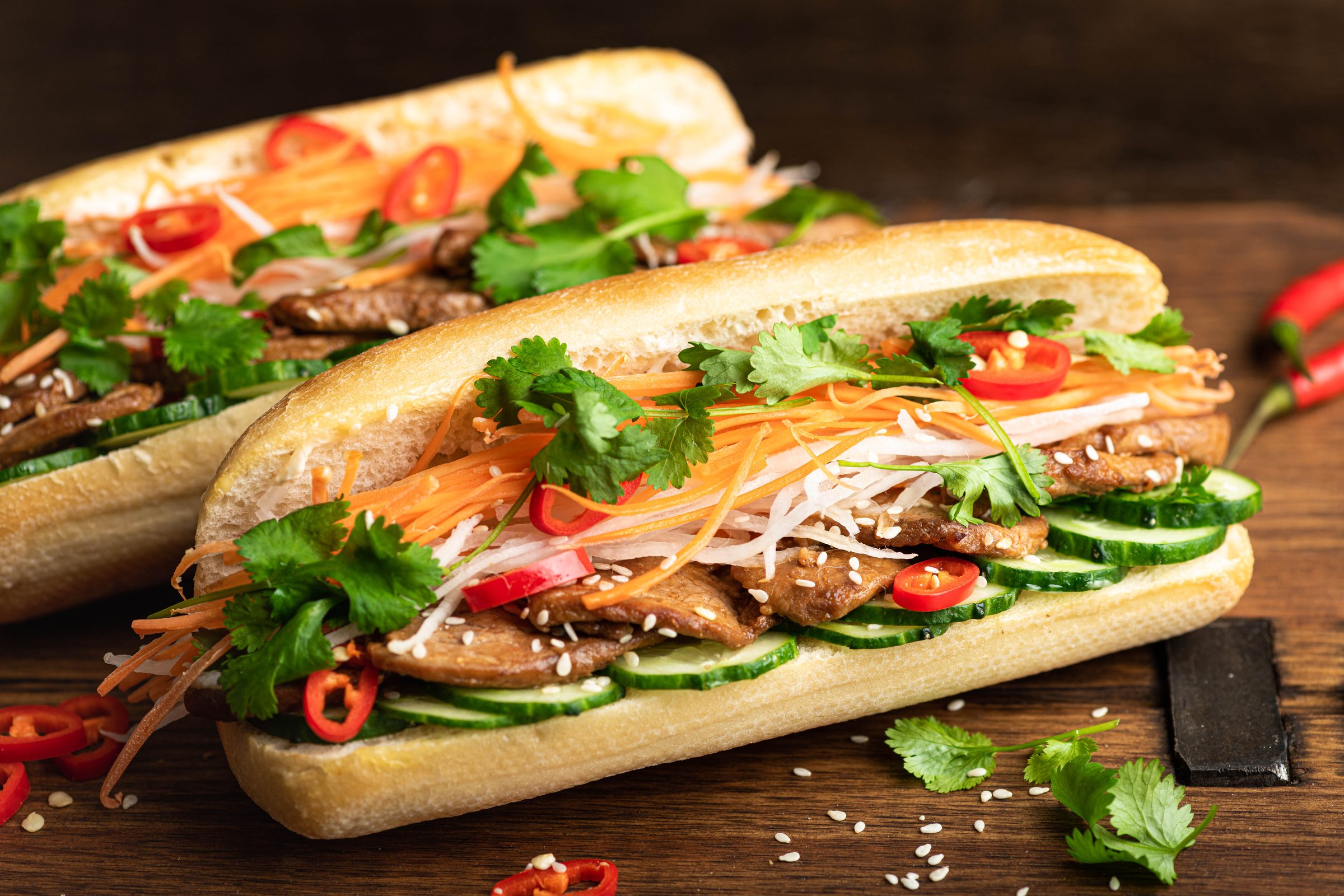
Banh miBánh mì
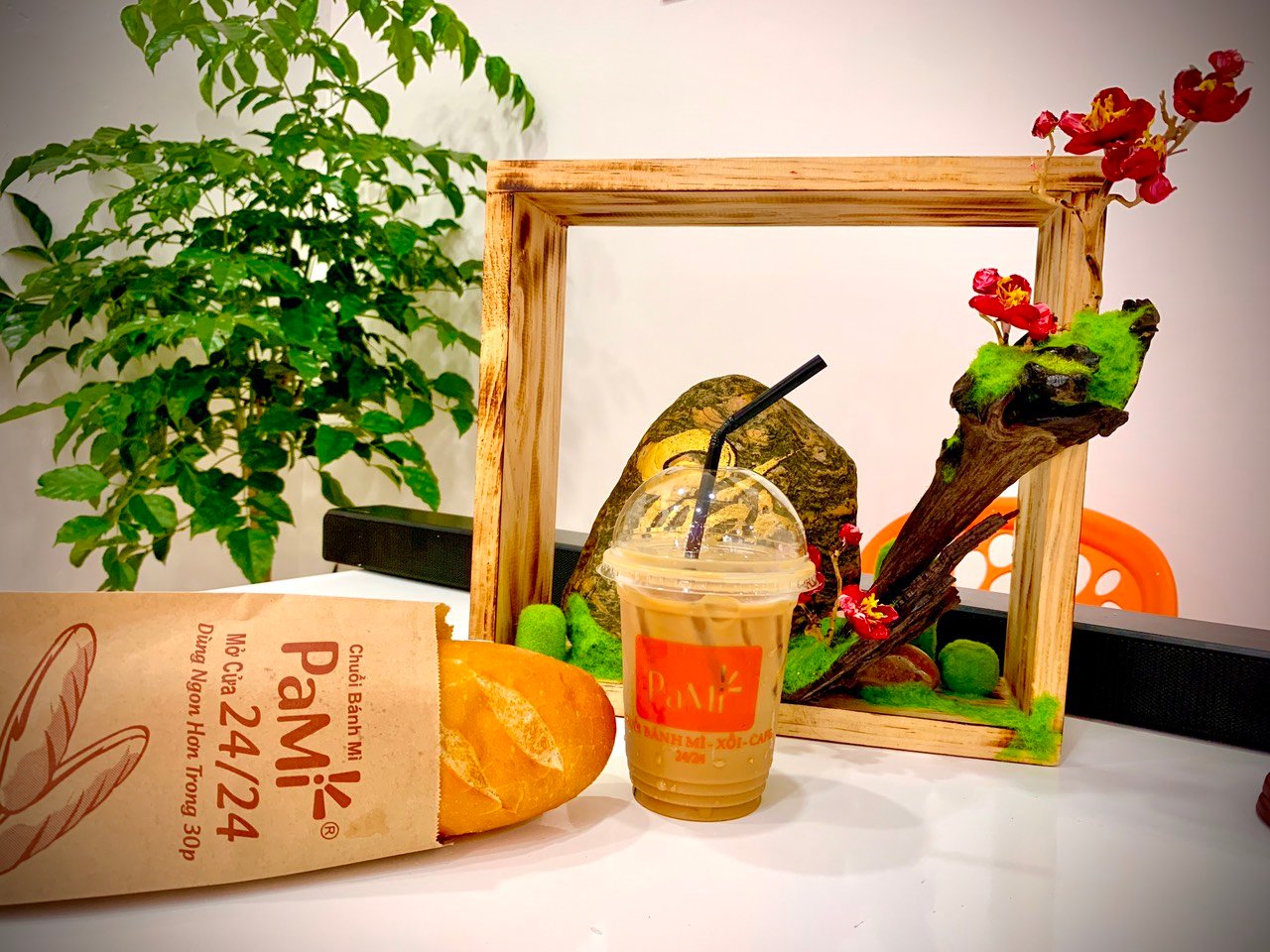
The bread
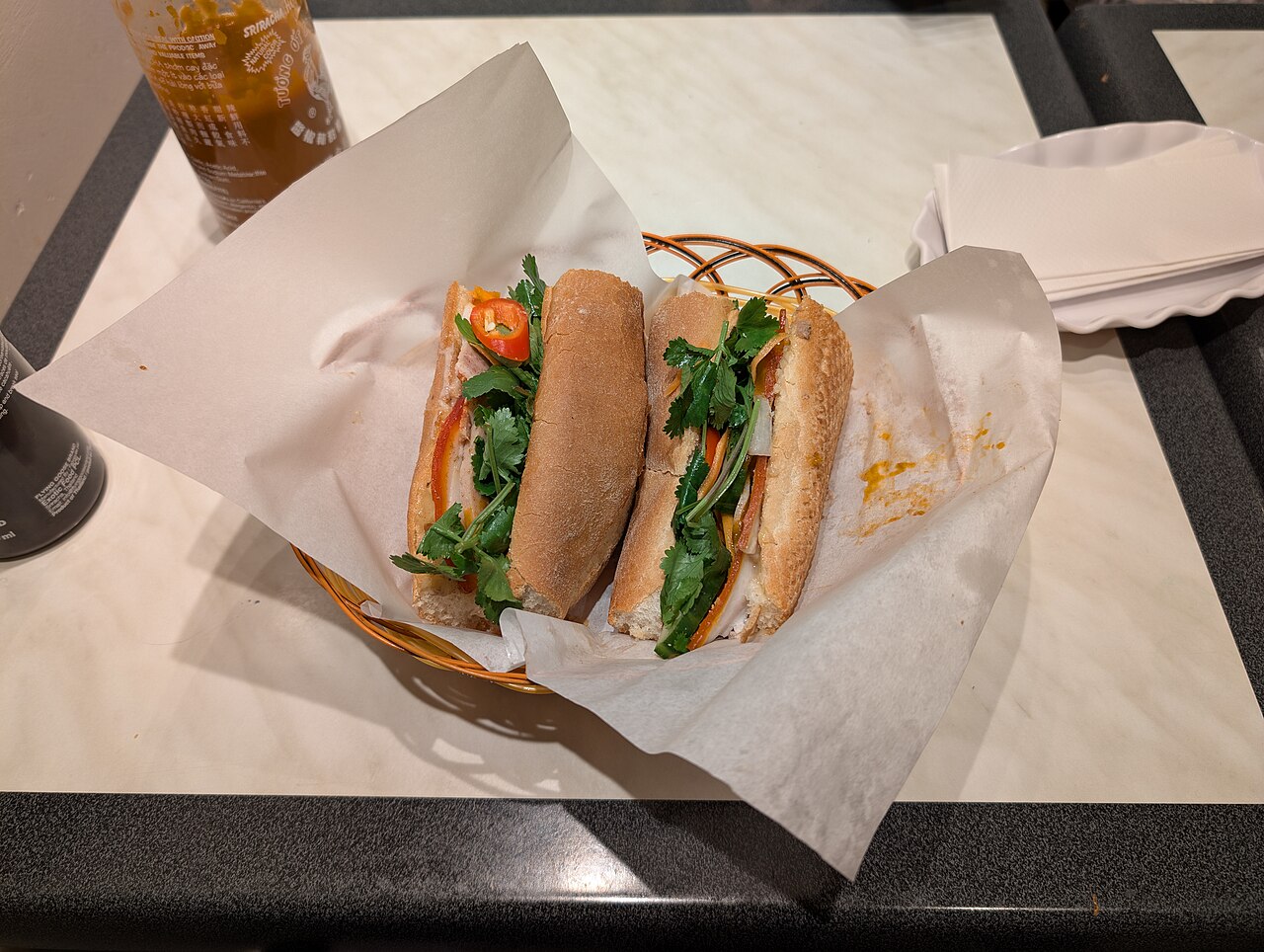
Vietnamese baguettes differ from their French predecessors in several important ways. Rice flour is blended with wheat flour in many recipes, producing a loaf that is lighter in weight and has a thinner, more shatteringly crisp crust. The crumb is less dense than a French baguette, which means the bread does not overwhelm the fillings. Loaves are typically short — around 20 to 25 centimetres — and are baked in high-heat ovens, often multiple times a day so that stock stays fresh. The texture degrades quickly once filled, so bánh mì is generally eaten immediately after assembly.
Standard fillings
The classic Saigon-style bánh mì, which became the template spread across Ho Chi Minh City and then the country, draws on southern Vietnamese cuisine's preference for fresh herbs and sweetness alongside salt. A fully loaded version typically contains:
- Pâté — usually pork liver, spread directly on the cut bread
- Chả lụa — steamed pork roll, sliced thin
- Thịt nguội — Vietnamese-style cold cuts, sometimes including head cheese
- Mayonnaise — introduced during the French period, often blended with butter
- Đồ chua — pickled daikon and carrot, julienned
- Sliced cucumber
- Fresh coriander
- Fresh or pickled chilli
Soy sauce or Maggi seasoning sauce is drizzled over before closing.
Regional variants
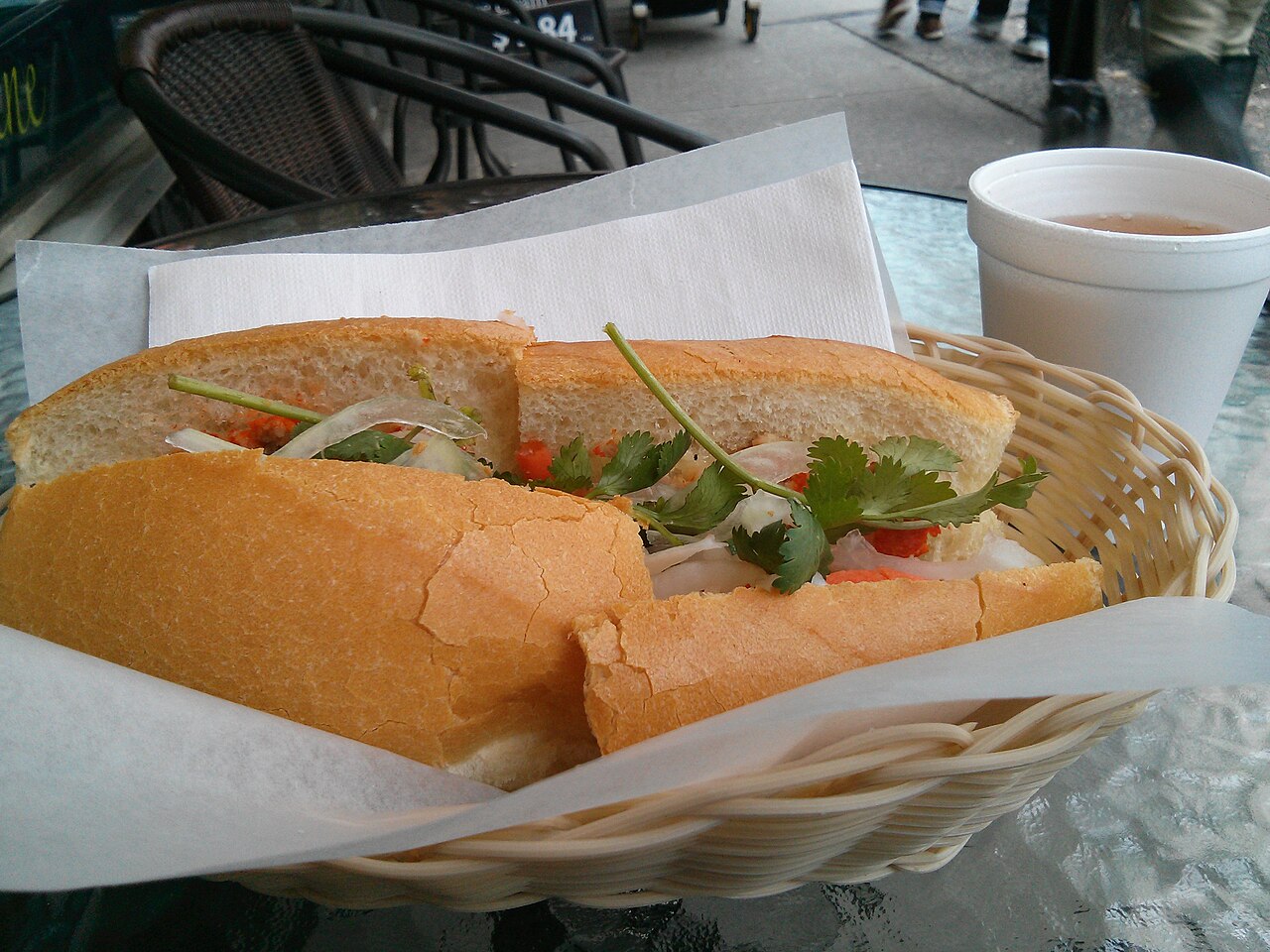
Fillings and bread style shift noticeably by region. In Hội An, bánh mì Phượng — named after the stall Bánh Mì Phượng on Phan Châu Trinh street, which became internationally noted after television coverage — uses a slightly chewier loaf and a denser filling that includes braised pork and a thicker pâté layer. The Hội An version tends to use more sauce, making it messier to handle.
In Huế, the influence of central Vietnamese cooking introduces more fermented shrimp paste and spicier condiments; some vendors use nem chua (fermented pork) as a filling. The bread itself is sometimes slightly larger.
In Ho Chi Minh City, bánh mì bì (with shredded pork skin) and bánh mì ốp la (with a fried egg) are common variations alongside the standard mixed-meat version. The Saigon style is generally considered the origin point of the modern sandwich form.
Vegetarian version
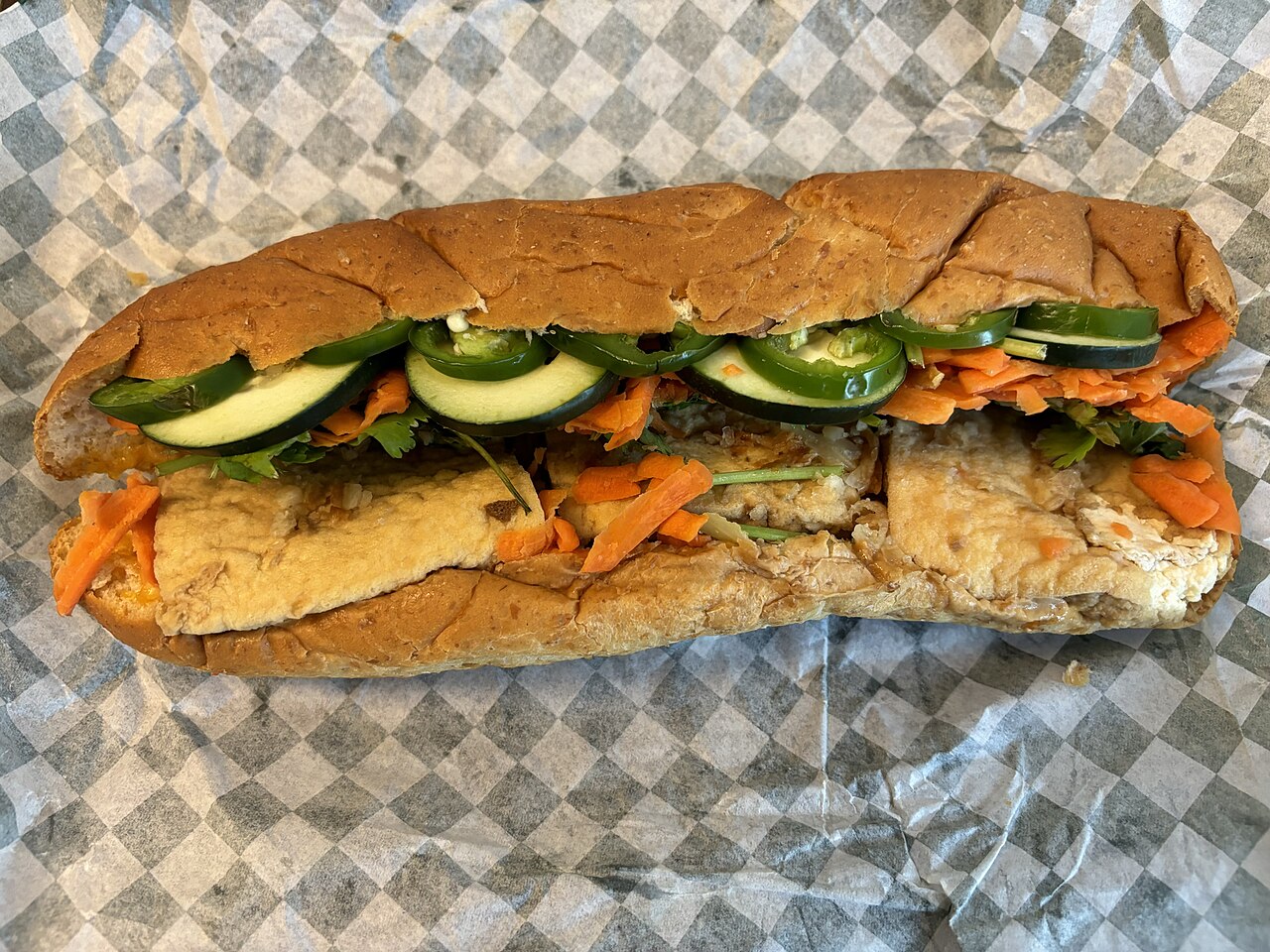
Bánh mì chay (vegetarian bánh mì) replaces animal-based fillings with combinations of mock meats made from tofu or gluten, fried tofu slices, mushrooms, and occasionally corn or avocado in more contemporary preparations. The pickled vegetables, herbs and chilli remain the same. Bánh mì chay is widely available, particularly in cities with established Buddhist communities, and is especially common on the first and fifteenth days of the lunar month when many Vietnamese observe a temporary vegetarian practice.
How it is ordered
Most bánh mì stalls operate on a self-selection or rapid verbal order system. Customers typically specify the filling type — đặc biệt (special, meaning all fillings) is the default full version — and can ask to omit items. Common requests include không hành (no spring onion) or thêm ớt (extra chilli). Payment is immediate. At busy stalls, especially during morning and midday peaks, queuing and pointing are often more practical than extended conversation. Some stalls wrap the sandwich in paper, others hand it over unwrapped. Eating on the spot or walking is the norm.
Notable stalls and context
Several stalls have accumulated significant reputations without being formally reviewed by a recognised culinary institution. Bánh Mì Phượng in Hội An and Bánh Mì Huỳnh Hoa on Lê Thị Riêng street in Ho Chi Minh City are frequently cited in food journalism for their unusually generous fillings and long-running operation. Both attract queues. The cultural status of bánh mì was formally recognised when the word entered the Oxford English Dictionary in 2011, defined specifically as the Vietnamese sandwich rather than the bread alone. Within Vietnam, the sandwich is not considered a restaurant dish but everyday street food, consumed across income levels and eaten at any time from early morning to late at night.
Comes from
Được tham chiếu bởi
Các nguồn
- Vietnam National Authority of Tourism — VNAT đã truy cập 29 August 2026
Supports: the rules and definitions on this page - Bánh mì — Wikipedia (CC BY-SA 4.0) đã truy cập 31 August 2026
Supports: background - Bánh mì Việt Nam — Wikipedia (Vietnamese) (CC BY-SA 4.0) đã truy cập 31 August 2026
Supports: background, Vietnamese edition
Current Đã xác minh lần cuối: 31 August 2026. Rules, fares and prices change — check the official source before acting on anything here. Report a mistake.
Picture credits (5)
Photo: CHZU / Adobe Stock, asset 574887935 · Special Baguette (Bánh mì) - Banh Mi Ancient Saigon 2024-12-20, Andy Li, CC0, Wikimedia Commons · Bánh mì đậu hũ, Nguyentrongphu, CC BY-SA 4.0, Wikimedia Commons · Vietnamese Bánh mì (Banh Mi) Sandwich, Jimmy Chen, CC BY-SA 4.0, Wikimedia Commons · Banh mi PaMi 1, HỒ TRỌNG BA, CC BY-SA 4.0, Wikimedia Commons