Banh khotBánh khọt
What bánh khọt are
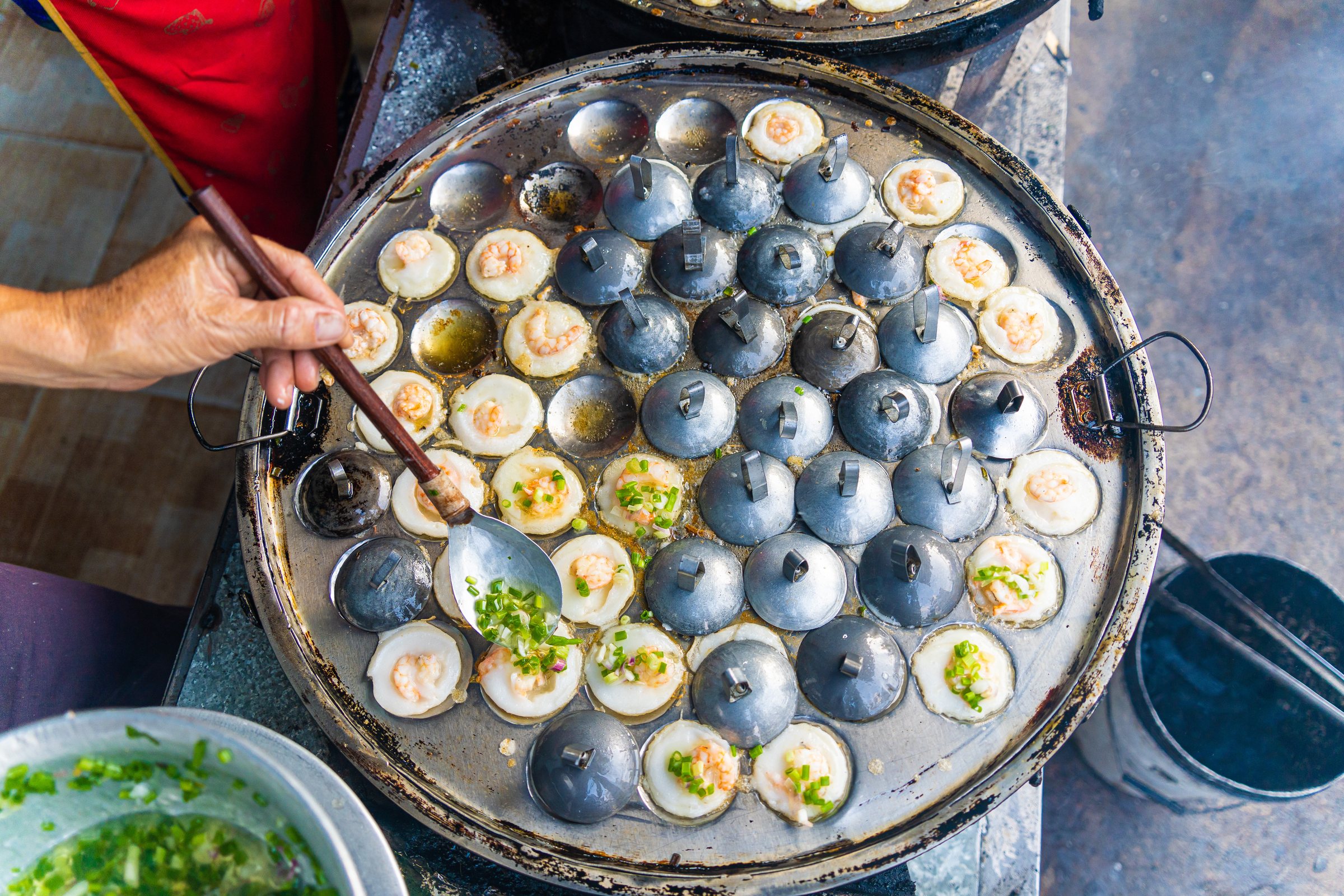
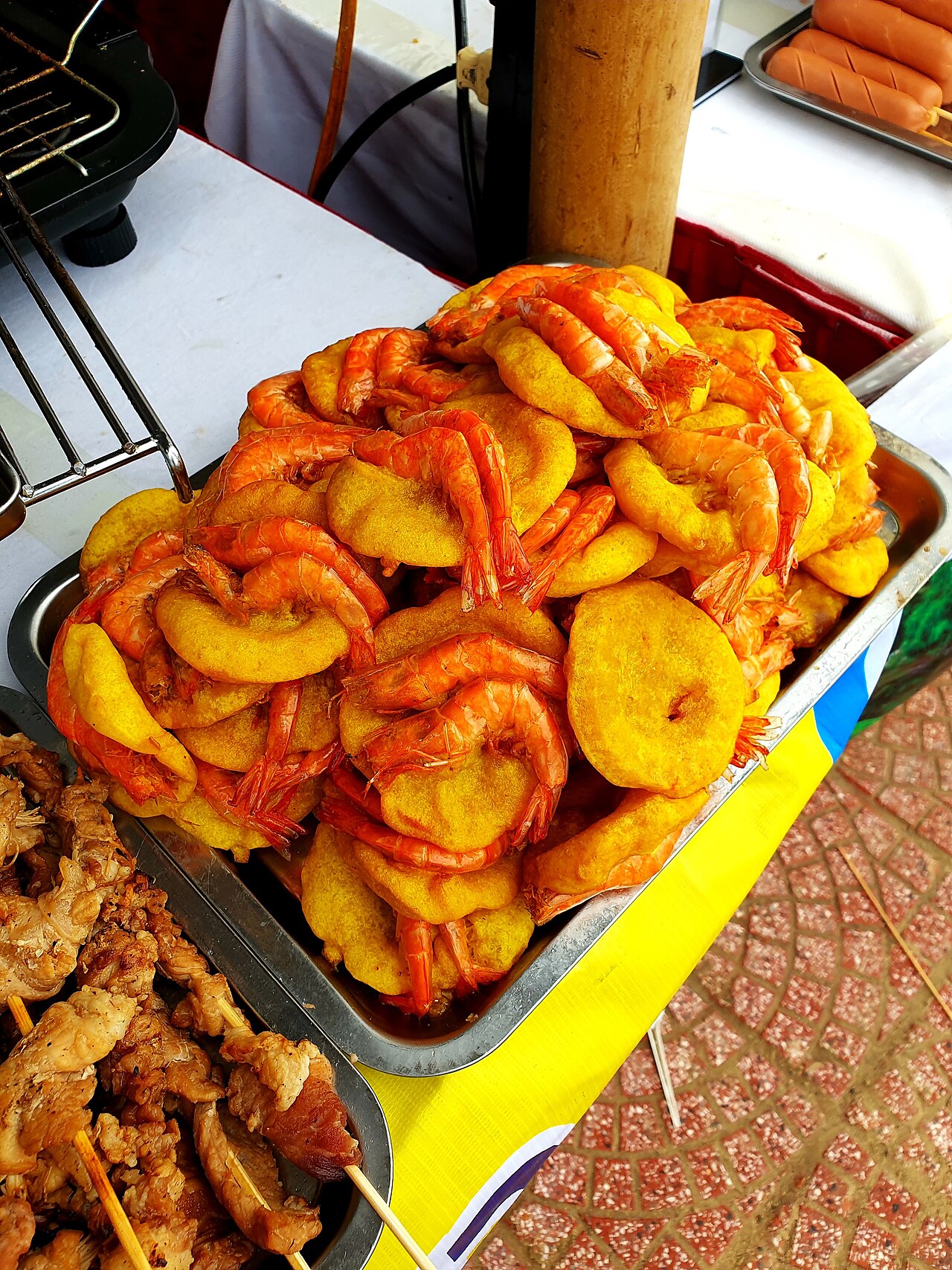
Bánh khọt are miniature savoury cakes made from a batter of rice flour, coconut milk and turmeric, which gives the cooked cake its pale yellow colour. Each cake is roughly the diameter of a large coin. The batter is ladled into individual circular depressions in a heavy cast-iron or cast-aluminium pan set over a flame, producing a cake that is soft and slightly custardy at the centre while the rim crisps in the hot oil. A whole prawn — or, in some versions, a smaller quantity of minced prawn — sits on top of each cake before a lid is placed over the pan to finish the cooking. The result is a self-contained, single-bite portion that retains heat well and arrives at the table still sizzling.
Association with Vũng Tàu
Bánh khọt is closely identified with Vũng Tàu, the coastal city south-east of Ho Chi Minh City. The dish's prominence there is attributed partly to the ready availability of fresh prawns from the South China Sea and partly to the city's long history as a domestic resort destination, where regional foods became widely known to visitors from across the south. Vendors in Vũng Tàu typically specialise in the dish to a degree less common elsewhere, operating stalls or small restaurants dedicated almost entirely to bánh khọt. The association is strong enough that the dish is often described as a Vũng Tàu specialty even when served far from the coast, and it forms part of the broader tradition of Southern Vietnamese cuisine.
Wrapping and herbs
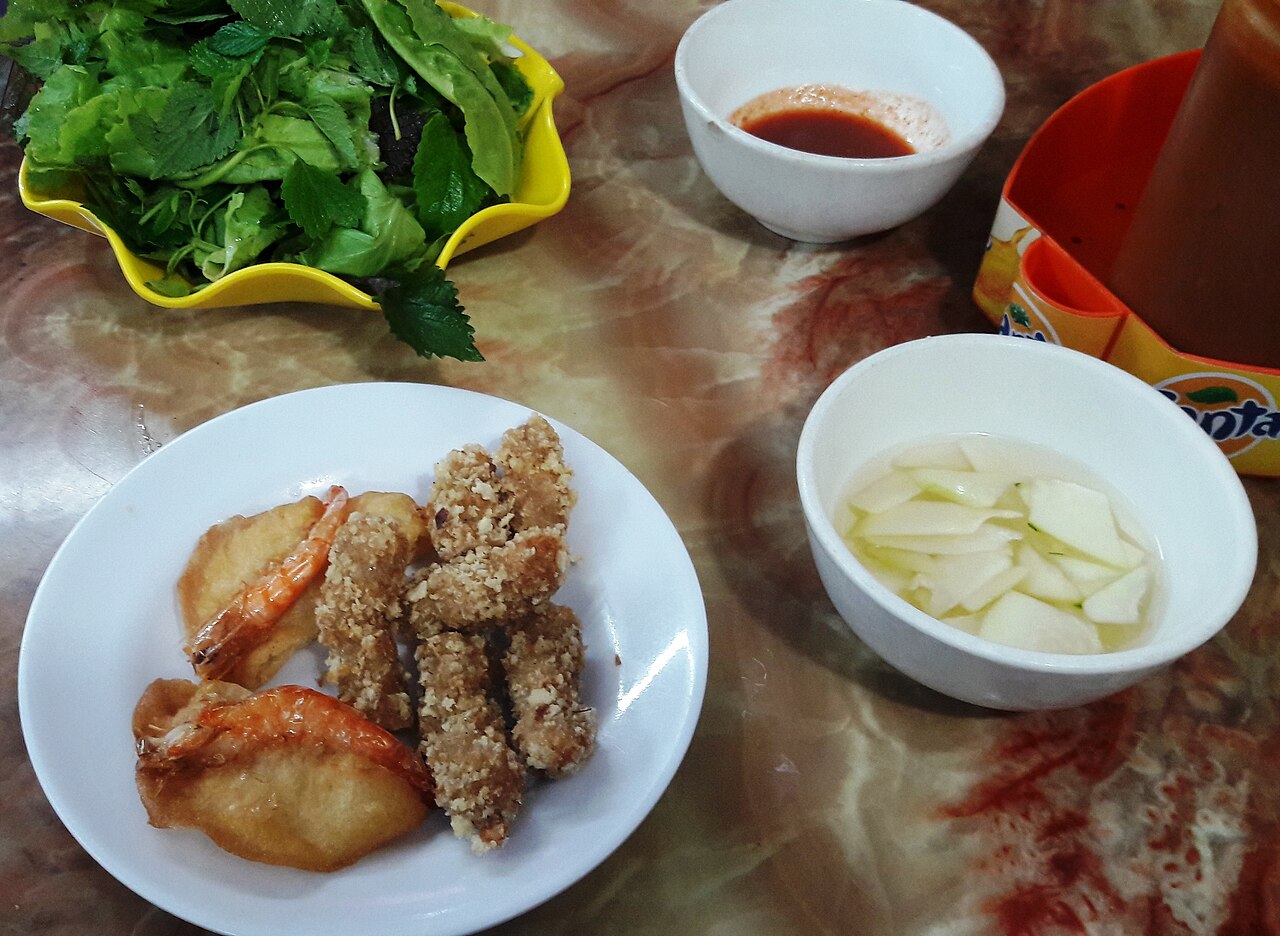
The established way to eat bánh khọt is to place a whole cake on a leaf of rau cải xanh (mustard leaf), add a selection of fresh herbs, and roll the leaf around the filling before dipping. The herbs typically offered alongside include Vietnamese perilla (tía tô), fish mint (diếp cá), Asian basil (húng quế) and various lettuce varieties. The mustard leaf introduces a mild bitterness that offsets the richness of the coconut-milk batter and the prawn. This wrapping method is not unique to bánh khọt — it recurs across several southern rice-cake dishes — but it is considered integral to the experience rather than optional.
Dipping sauce
The accompanying sauce is a version of nước chấm, the fish-sauce-based condiment central to Vietnamese table seasoning. For bánh khọt it is typically diluted with water and sweetened, then balanced with lime juice or vinegar and seasoned with fresh chilli and minced garlic. The ratio of fish sauce to water and the degree of sweetness vary between individual cooks and regions. Some versions include finely grated green papaya or carrot in the sauce bowl itself, adding texture. The sauce serves both as a dipping medium for the wrapped cakes and as a general seasoning corrective at the table.
Preparation and equipment
The specialist pan used to cook bánh khọt — called a khuôn bánh khọt — is the defining piece of equipment. The pans are made with multiple circular depressions, typically seven to twelve per pan, allowing a batch of cakes to be cooked simultaneously. Oil is heated in each depression before the batter is added, which is what produces the characteristic crisp edge. Timing is important: too short and the centre remains raw; too long and the edge burns. Experienced vendors develop a rhythm of ladling, topping with prawn, covering and uncovering the pan that allows continuous production. Home versions of the dish use the same pan type, which is sold in kitchenware markets across southern Vietnam.
Comes from
Referenziert von
Quellen
- Vietnam National Authority of Tourism — VNAT abgerufen 29 August 2026
Supports: the rules and definitions on this page - Bánh khọt — Wikipedia (Vietnamese) (CC BY-SA 4.0) abgerufen 31 August 2026
Supports: background, Vietnamese edition
Current Zuletzt geprüft: 31 August 2026. Rules, fares and prices change — check the official source before acting on anything here. Report a mistake.
Picture credits (5)
Photo: CravenA / Adobe Stock, asset 487728974 · Banhkhotomtit, Unknown, CC0, Wikimedia Commons · Shrimp cakes (20241004), Fumikas Sagisavas, CC0, Wikimedia Commons · Bánh tôm (tháng 7 năm 2018) (2), Phương Huy, CC BY-SA 4.0, Wikimedia Commons · Lễ hội ẩm thực Cửa Việt th4n2023 đặc sản bánh tôm Hồ Tây (1), Phương Huy, CC BY-SA 4.0, Wikimedia Commons