Banh cuonBánh cuốn
What bánh cuốn is
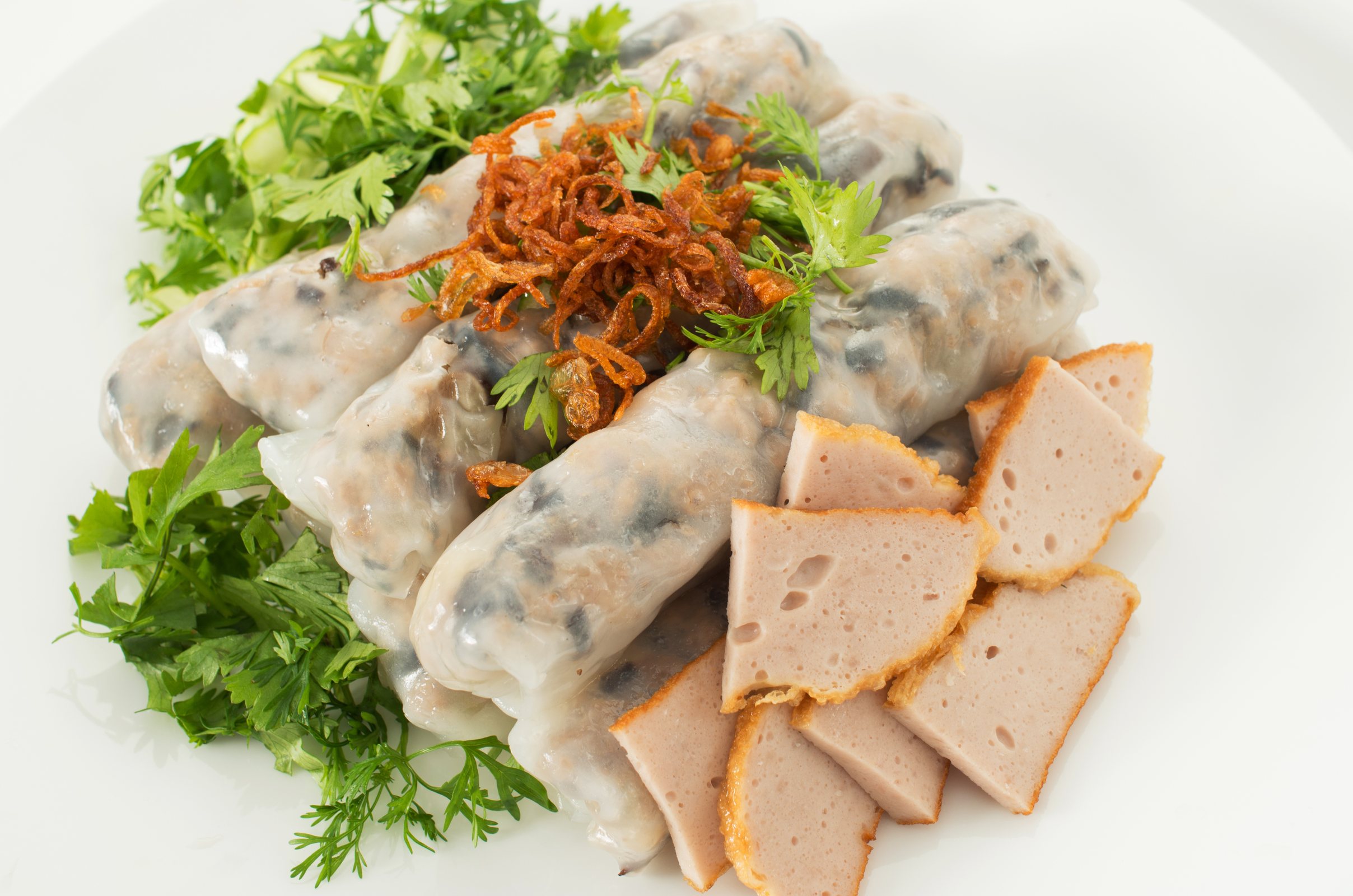
Bánh cuốn consists of delicate sheets made from a thin rice-flour batter, steamed directly over a pot on a piece of stretched muslin cloth. Once set — a matter of seconds — each sheet is lifted with a flat rod, filled, and rolled into a loose cylinder. The result is soft, slightly translucent, and markedly lighter than many other Vietnamese rice preparations. The dish belongs to the broader tradition of Northern Vietnamese cuisine and is particularly associated with Hanoi, where dedicated bánh cuốn stalls have operated for generations.
The batter and steaming technique
The batter is made from wet-milled rice flour mixed with water and a small amount of tapioca starch, which contributes elasticity and a slight sheen. Proportions vary between cooks, and many family-run stalls guard their ratios closely. The cloth steaming method — stretching a thin layer of batter over a drum of simmering water and covering it briefly — requires consistent heat and a practised hand. The sheet must be thin enough to be nearly translucent yet strong enough to hold the filling without tearing. Watching a skilled cook work the cloth is a characteristic sight at Hanoi breakfast stalls.
The filling
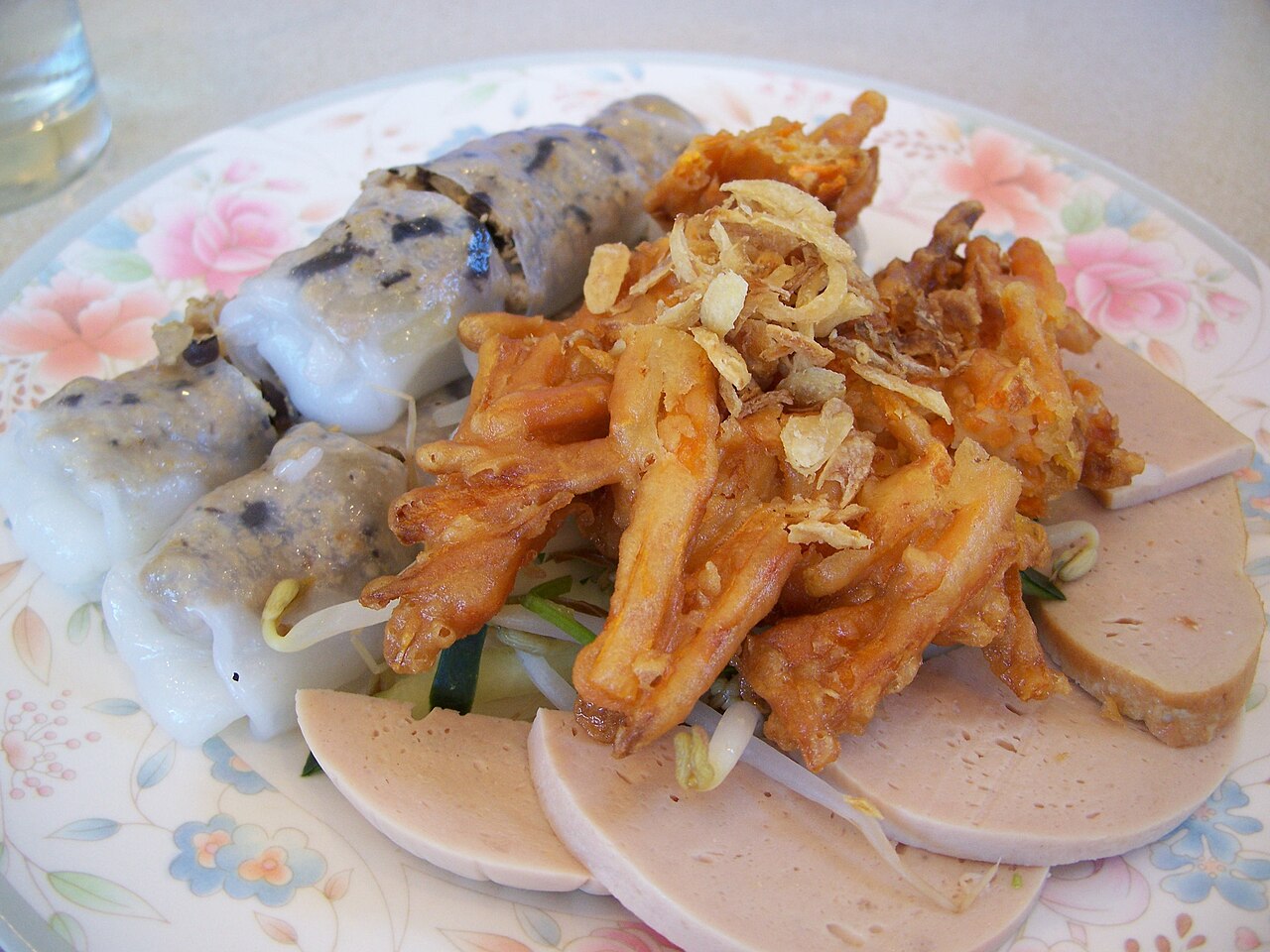
The standard filling combines minced pork with rehydrated wood-ear mushroom (nấm mèo), chopped finely and stir-fried together with shallots, fish sauce, and ground black pepper. Wood-ear mushroom contributes a firm, slightly gelatinous texture that contrasts with the softness of the rice sheet. Some cooks add dried shrimp or glass noodles, though these are regional or personal variations rather than universal practice. The filling is used sparingly — a thin layer rather than a dense stuffing — so that the flavour of the rice sheet itself remains present.
Fried shallots and accompaniments
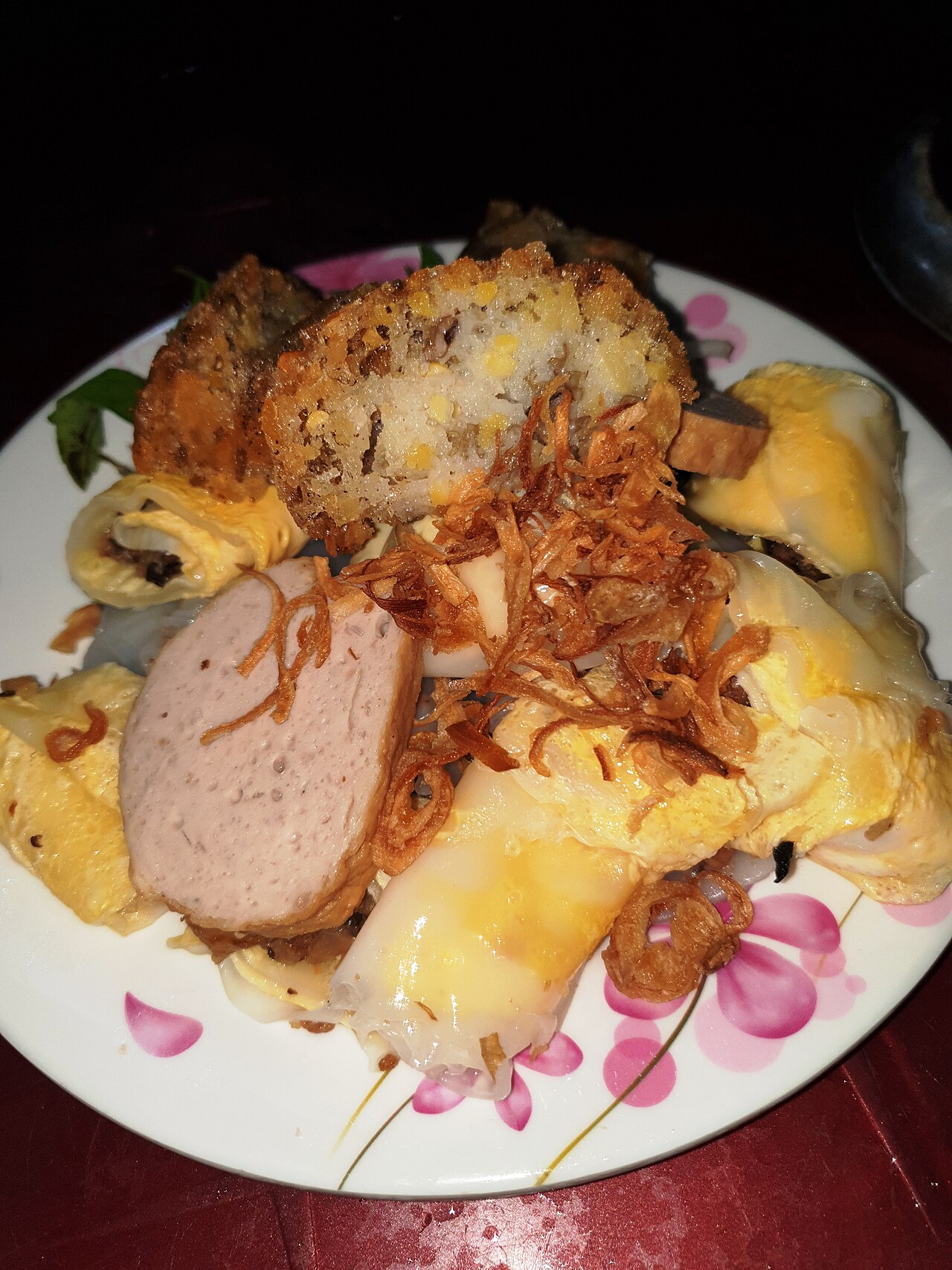
A scattering of crisp fried shallots over the finished rolls is considered essential; they provide both texture and a roasted sweetness that the dish would lack without them. Alongside the rolls, a portion of chả lụa (Vietnamese steamed pork sausage, also written giò lụa) is standard — sliced into rounds or half-moons, it adds a denser, more savoury element. The dipping sauce, nước chấm, is typically lighter and less sweet than the version used with southern dishes, and may contain a few drops of cà cuống essence — derived from a giant water bug — in traditional Hanoi preparations, though this ingredient is now uncommon and sometimes synthetic.
Breakfast role and regional context
Bánh cuốn functions primarily as a morning meal across the northern provinces. Stalls open early and often sell out before midday. In Hanoi the dish is strongly associated with the Old Quarter and with older residential neighbourhoods where multi-generational stalls have operated since at least the mid-twentieth century. Outside the north the dish exists but is less central to local breakfast culture; southern versions sometimes differ in filling composition and sauce sweetness. As part of Northern Vietnamese cuisine, bánh cuốn sits within a group of dishes defined by restraint of sweetness and a reliance on the quality of individual ingredients rather than complex layering of flavours.
Variations
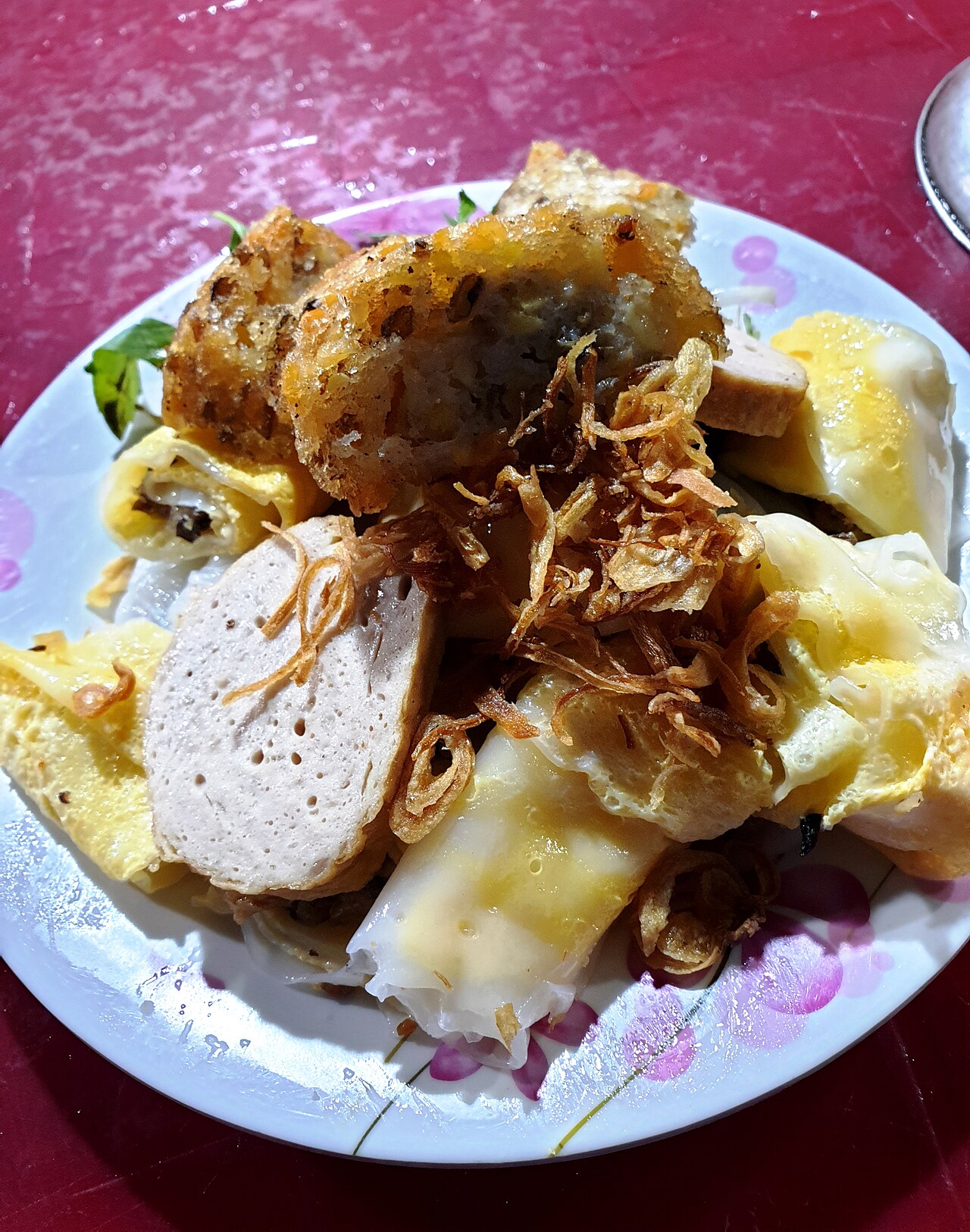
Several recognised variants exist. Bánh cuốn trần (literally "naked" or "unrolled") skips the rolling step and serves the sheets flat, layered with filling on top. Bánh cuốn Thanh Trì, named after a former village now absorbed into Hanoi's southern urban area, is famed for especially thin sheets eaten without filling — the sheets themselves, their quality, and the accompanying condiments carry the dish. Some northern localities produce versions with a higher proportion of tapioca flour, resulting in a chewier texture. None of these variants involve fundamentally different ingredients; the differences lie in technique, ratio, and presentation.
Comes from
Referenced by
Sources
- Vietnam National Authority of Tourism — VNAT accessed 29 August 2026
Supports: the rules and definitions on this page - Bánh cuốn — Wikipedia (CC BY-SA 4.0) accessed 31 August 2026
Supports: background - Bánh cuốn — Wikipedia (Vietnamese) (CC BY-SA 4.0) accessed 31 August 2026
Supports: background, Vietnamese edition
Current Last verified: 31 August 2026. Rules, fares and prices change — check the official source before acting on anything here. Report a mistake.
Picture credits (5)
Photo: DD Images / Adobe Stock, asset 66688889 · Banh cuon nhan thit, Mai Truong, aka Eistube at en.wikipedia, CC BY-SA 3.0, Wikimedia Commons · Banh mi and cuon, stu_spivack, CC BY-SA 2.0, Wikimedia Commons · Bánh cuốn trứng ở BL ng30th10n2020 (1), Phương Huy, CC0, Wikimedia Commons · Bánh cuốn trứng ở BL ng30th10n2020 (3), Phương Huy, CC0, Wikimedia Commons