The TayNgười Tày
Who Are the Tay
The Tay (self-name: Người Tày) are the largest ethnic minority group in Vietnam, numbering well over 1.5 million people according to government census data, though population figures are periodically revised. They are concentrated in the northeastern uplands, particularly in the provinces now known as Cao Bang, Ha Giang, Bac Kan and Lang Son following the 2025 provincial consolidation. The Tay are ethnically and linguistically distinct from the Kinh majority and should not be confused with the Thai groups of the northwest, despite superficial similarities in material culture. Historical records place Tay-speaking communities in the Red River basin and its northern tributaries well before the tenth century, and many Tay communities trace continuous occupation of particular valleys across dozens of generations.
Language and Script
The Tay language belongs to the Tai-Kadai family, a grouping that also includes Thai, Lao and the Zhuang languages of southern China. It is tonal and monosyllabic in structure, bearing clear resemblance to these neighbouring languages while being mutually unintelligible with Vietnamese, which belongs to the Austroasiatic family. Historically, Tay speakers used a writing system called chữ Nôm Tày, an adaptation of Chinese characters to represent Tay sounds and vocabulary, used especially in ceremonial texts, poetry and the recording of customary law. This script is no longer in everyday use, and younger generations typically read and write in Vietnamese. Efforts to document and teach the traditional script continue at a small scale through cultural associations and some provincial education initiatives, though the extent of those programmes varies.
Settlements and Stilt Houses
Tay villages (bản) are almost invariably sited in valley floors or on gentle lower slopes, positioned to command access to irrigable paddy land and fresh water. The traditional dwelling is a stilt house (nhà sàn) raised on wooden or bamboo posts, with the living quarters one storey above ground level. The space beneath the floor is used for storage, keeping livestock and working in wet weather. Interiors are typically divided into a main reception and sleeping area, with a hearth positioned centrally or to one side. Construction uses locally sourced timber, bamboo and thatch, though corrugated iron roofing has become common in recent decades for reasons of cost and durability. In well-visited areas such as the villages around Ba Be Lake, many stilt houses have been partly adapted to receive overnight guests without major structural alteration.
Wet-Rice Farming and the Agricultural Calendar
The Tay are primarily wet-rice cultivators, and the layout of their settlements reflects centuries of landscape modification for paddy agriculture. Terraced and flat irrigated fields extend through the valleys, fed by networks of bamboo aqueducts and earthen channels. The agricultural calendar structures community life: transplanting season (roughly May to June in most northeastern valleys) and harvest (September to October) involve collective labour and are marked by specific rituals and offerings. A second crop of vegetables, maize or dry rice may follow the main harvest. Buffalo remain important draught animals in many communities, though mechanised equipment has entered use where terrain and economic conditions permit. Fishing in rivers and lakes — most notably around Ba Be — supplements the diet and provides additional income. The lúa nếp (glutinous rice) varieties cultivated by Tay farmers are used in ceremonial foods as well as everyday meals.
Festivals, Music and Oral Tradition
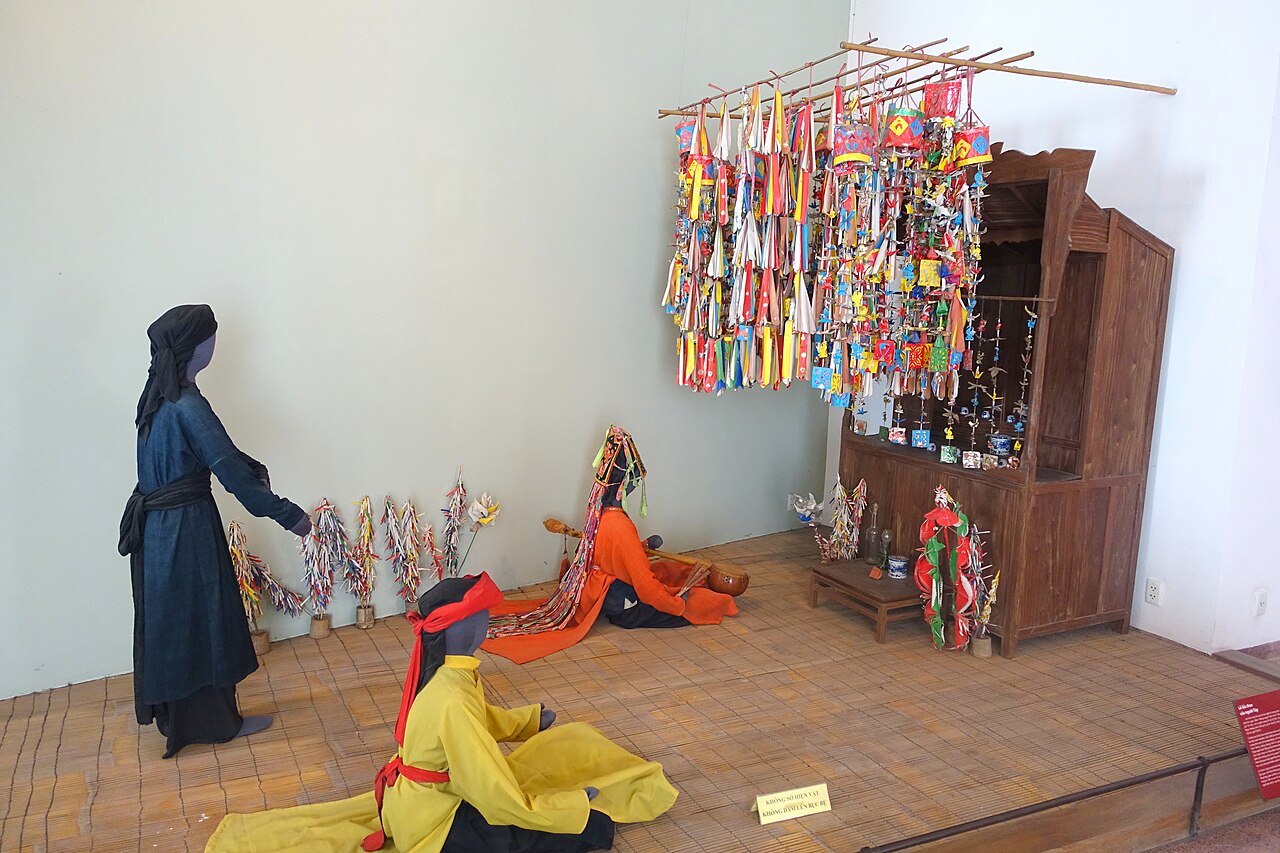
The Tay calendar includes a series of festivals tied to agricultural transitions and ancestral veneration. Lồng Tồng, the spring festival of the fields, is among the most widely observed, involving communal ceremonies to invoke a productive growing season, accompanied by folk games, music and feasting. It typically falls in the first or second lunar month. The Tay oral tradition is extensive: the then is a ritual song-and-performance tradition performed by a specialist (then practitioner) at ceremonies related to healing, funerals and life transitions, accompanied by a plucked instrument called the đàn tính. Sli and lượn are other genres of antiphonal folk song, historically performed between groups of young men and women during festivals. UNESCO inscribed then singing — shared with the Nung and Thai peoples — on the Representative List of the Intangible Cultural Heritage of Humanity in 2019.
Dress and Material Culture
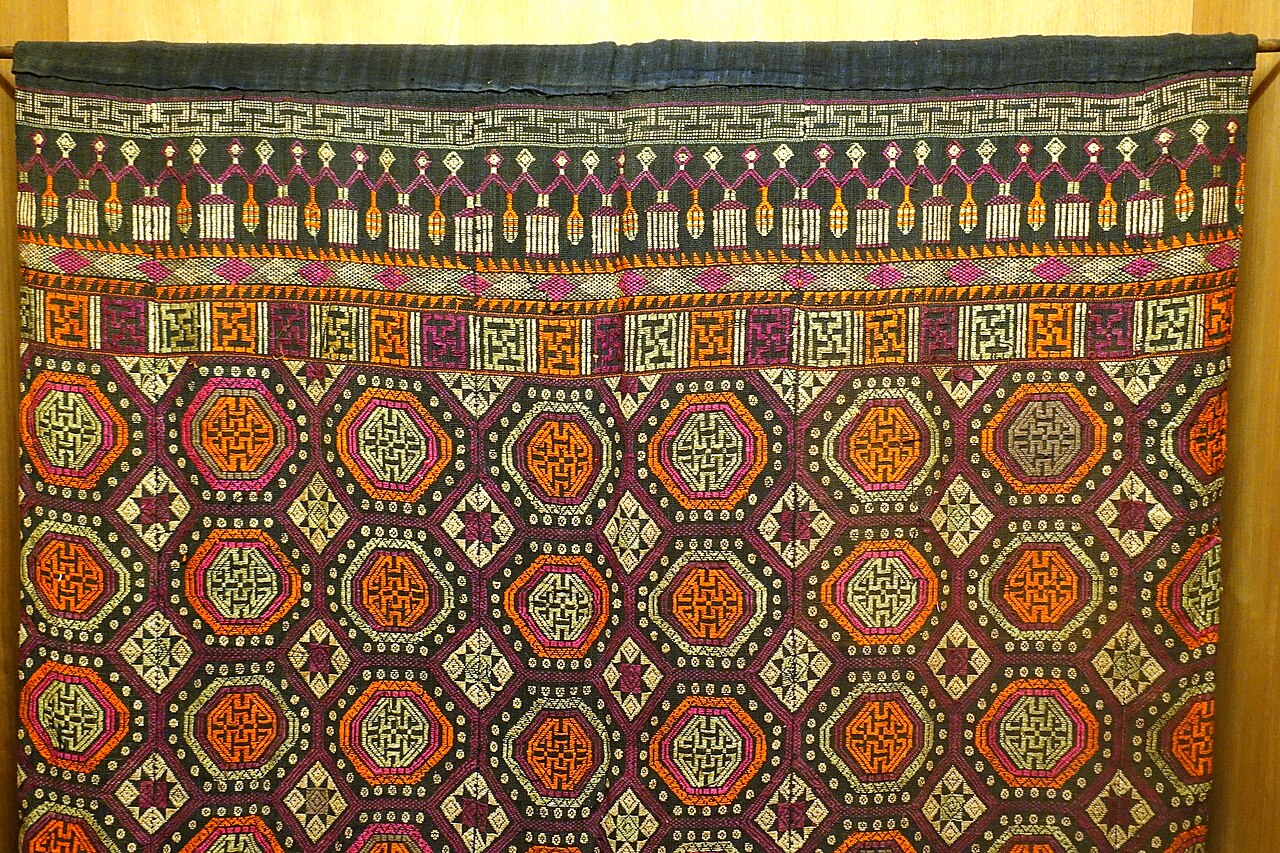
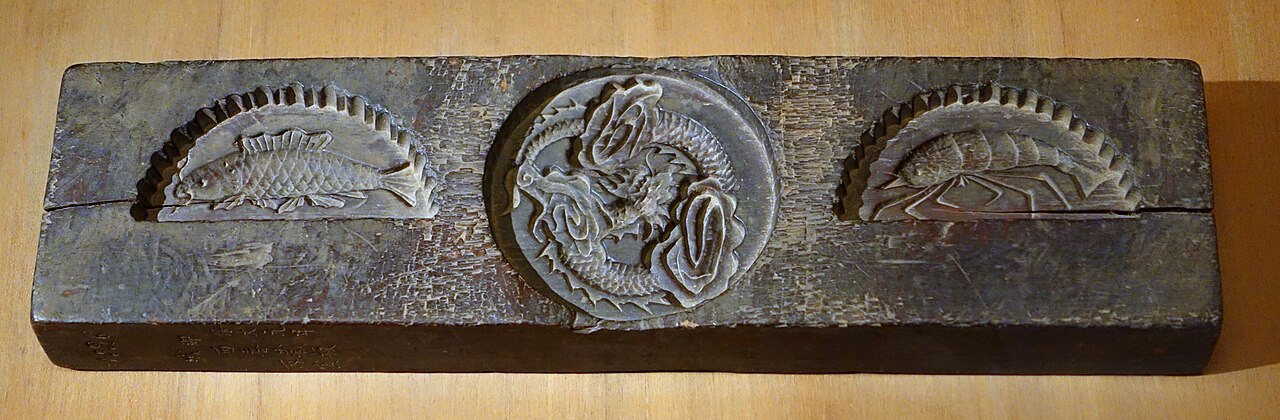
Traditional Tay dress is less elaborately embroidered than that of some neighbouring highland groups such as the Hmong or Dao, tending towards indigo-dyed cloth in deep blue or black, cut into relatively simple tunics and trousers. Women's dress may include a headscarf and a wide-sleeved top. Indigo dyeing is carried out domestically in many communities, using locally grown plants, though commercial fabric has largely replaced home-woven cloth for everyday wear. Traditional dress is most commonly worn at festivals or for ceremonial purposes. Tay craftwork includes basket weaving, the production of bánh chưng-style sticky rice cakes wrapped in leaves, and the making of musical instruments. Brocade weaving exists but is less central to Tay identity than it is for groups such as the Thai of Son La.
Homestay Tourism Around Ba Be
The area around Ba Be Lake in Bac Kan province has become one of the more established contexts for community-based tourism involving Tay villages. A number of households in villages such as Pac Ngoi offer overnight accommodation in traditional stilt houses, with guests eating with the family and, in some cases, joining agricultural or fishing activities. This form of tourism developed gradually from the late 1990s onwards, supported at various points by government rural development programmes and NGO initiatives. Quality and character differ considerably between households and villages. Tourism provides supplementary income but remains secondary to rice farming and fishing for most participating families. Visitors arriving at Ba Be independently or with organised groups will generally find Tay villages the primary cultural point of contact in the area. Prices vary by season and by the level of services offered.
Where it is
Also known as / see also
Упоминается на страницах
Источники
- Vietnam National Authority of Tourism — VNAT просмотрено 29 August 2026
Supports: the rules and definitions on this page - Người Tày — Wikipedia (Vietnamese) (CC BY-SA 4.0) просмотрено 31 August 2026
Supports: background, Vietnamese edition
Current Последняя проверка: 31 August 2026. Rules, fares and prices change — check the official source before acting on anything here. Report a mistake.
Picture credits (4)
AMS - Tay Ninh, Vietnam, Unknown author Unknown author or not provided, Public domain, Wikimedia Commons · Brocade screen, Tay - Vietnam Museum of Ethnology - Hanoi, Vietnam - DSC02822, Daderot, CC0, Wikimedia Commons · Cake mould, Tay - Vietnam Museum of Ethnology - Hanoi, Vietnam - DSC02819, Daderot, CC0, Wikimedia Commons · Lau then ceremony, Tay - Vietnam Museum of Ethnology - Hanoi, Vietnam - DSC02767, Daderot, CC0, Wikimedia Commons