Perfume Pagoda FestivalLễ hội Chùa Hương
What the festival is
Lễ hội Chùa Hương is widely considered the longest single festival in Vietnam's calendar, officially opening on the sixth day of the first lunar month — typically late January or early February — and continuing until late March. It marks the pilgrimage season to the Hương Sơn complex in what is now Hà Nội province, a cluster of Buddhist temples, shrines and cave sanctuaries set within karst limestone hills along the Yến Stream. The central destination is Hương Tích Cave, known in Vietnamese Buddhist tradition as the southern paradise, where pilgrims pray for health, fortune and the welfare of their families. The festival has documented roots going back several centuries, though the exact founding date is contested among historians.
The boat journey
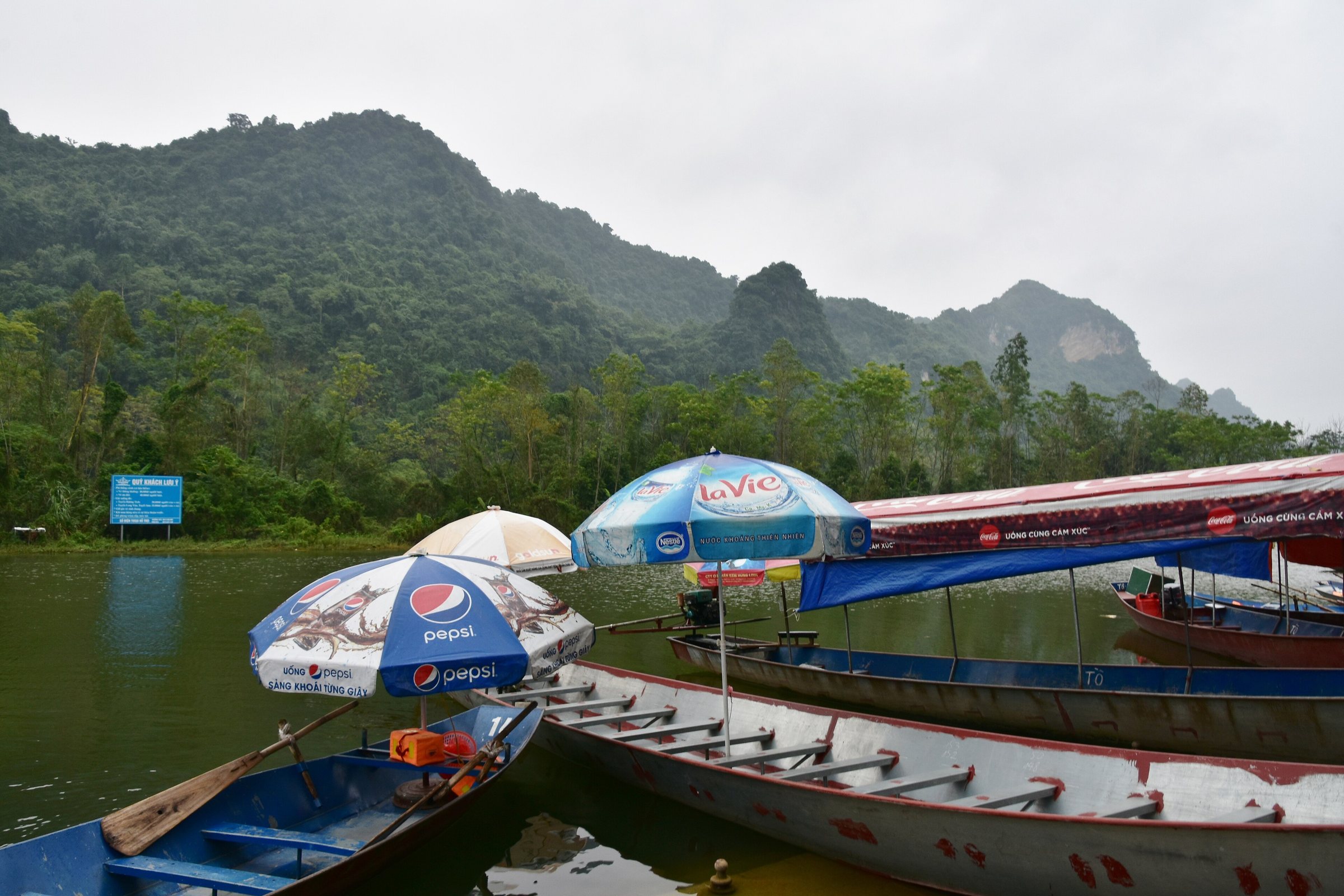
Access to the pagoda complex relies almost entirely on flat-bottomed rowing boats, each typically operated by a single rower — historically, and still predominantly, a local woman. Boats depart from Yến Vĩ village, the main embarkation point, and move along the Yến Stream through a valley of water, willow-like trees and limestone outcrops. The journey to the main landing stage takes roughly an hour each way under normal conditions. From there, pilgrims continue on foot — or by cable car, installed in the 2000s — up to Hương Tích Cave. The combination of boat, walking path and cave makes the physical journey itself a meaningful part of the ritual, not merely transport.
Scale and crowds
Attendance figures in peak years have been reported by Vietnamese authorities at over one and a half million visitors across the festival season, making crowd management a persistent logistical challenge. The heaviest congestion falls in the first two weeks after the opening ceremony, when urban families from Hanoi and surrounding provinces arrive in large groups. Queues for boats, the cable car and entry to Hương Tích Cave can extend for several hours at peak times. The site infrastructure — including floating food stalls, souvenir vendors and temporary shelters — expands substantially during this period. Litter and environmental pressure on the waterway have been noted by Vietnamese conservation bodies as ongoing concerns.
Religious and cultural character
The pilgrimage blends Mahayana Buddhist practice with Taoist elements and Vietnamese folk religion, a syncretism common to many northern Vietnamese sacred sites. Pilgrims carry offerings — incense, fruit, paper votives — and recite prayers at multiple shrines along the route before reaching the cave. The Thiên Trù complex, partway up the hill, contains some of the oldest surviving structures on the site, including the bell tower and main hall rebuilt after wartime damage. Chanting, the smell of incense and the sound of bells are continuous during peak hours. Many participants treat the journey as an act of merit-making tied to the Tết new year period rather than a standalone religious occasion.
Visiting during the festival versus after
The distinction matters practically. During the first two to three weeks of the festival, the site is at its most culturally animated — boats move in dense flotillas, vendors are numerous and the collective atmosphere of pilgrimage is fully present. However, waiting times are long, prices for boat hire and food vary considerably above off-season norms, and the physical conditions are congested. From mid-February onward, crowds thin progressively while the festival remains formally open. Visitors arriving in March encounter a quieter version of the same route, with shorter waits, more room on the water and the same physical landscape. The cave and temples remain accessible outside the festival season entirely, though boat operators are fewer and some vendors are absent.
Practical orientation
The Hương Sơn complex sits in Mỹ Đức area, roughly 60 kilometres south-west of central Hanoi. Road access leads to Yến Vĩ, from which all boat journeys begin; there is no meaningful road access beyond that point for most visitors. The site falls within Hà Nội province under the post-2025 two-tier administrative structure. Visitors should note that the Yến Stream is a working waterway and conditions — water level, current, weather — affect journey times. Rain is common during the lunar first month in northern Vietnam, and the valley can be misty or cold. Appropriate footwear for uneven stone paths inside the cave complex is relevant regardless of season.
Where it is
Also known as / see also
Referenciado por
Fuentes
- Vietnam National Authority of Tourism — VNAT consultado 29 August 2026
Supports: the rules and definitions on this page - Lễ hội chùa Hương — Wikipedia (Vietnamese) (CC BY-SA 4.0) consultado 31 August 2026
Supports: background, Vietnamese edition
Current Última verificación: 31 August 2026. Rules, fares and prices change — check the official source before acting on anything here. Report a mistake.
Picture credits (1)
Return river journey from the Perfume Pagoda (4) (38463929316), Richard Mortel from Riyadh, Saudi Arabia, CC BY 2.0, Wikimedia Commons