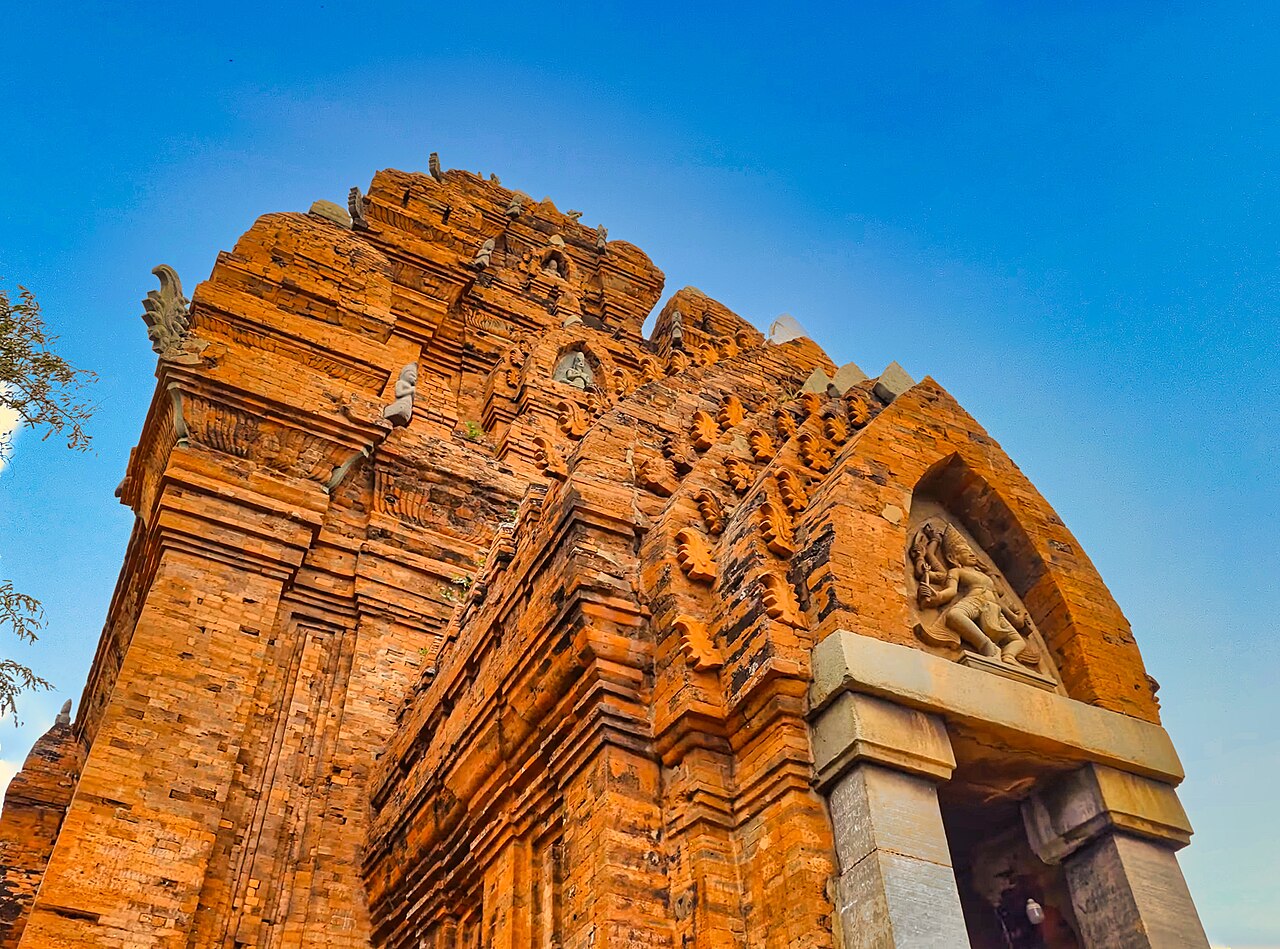
Kate FestivalLễ hội Katê
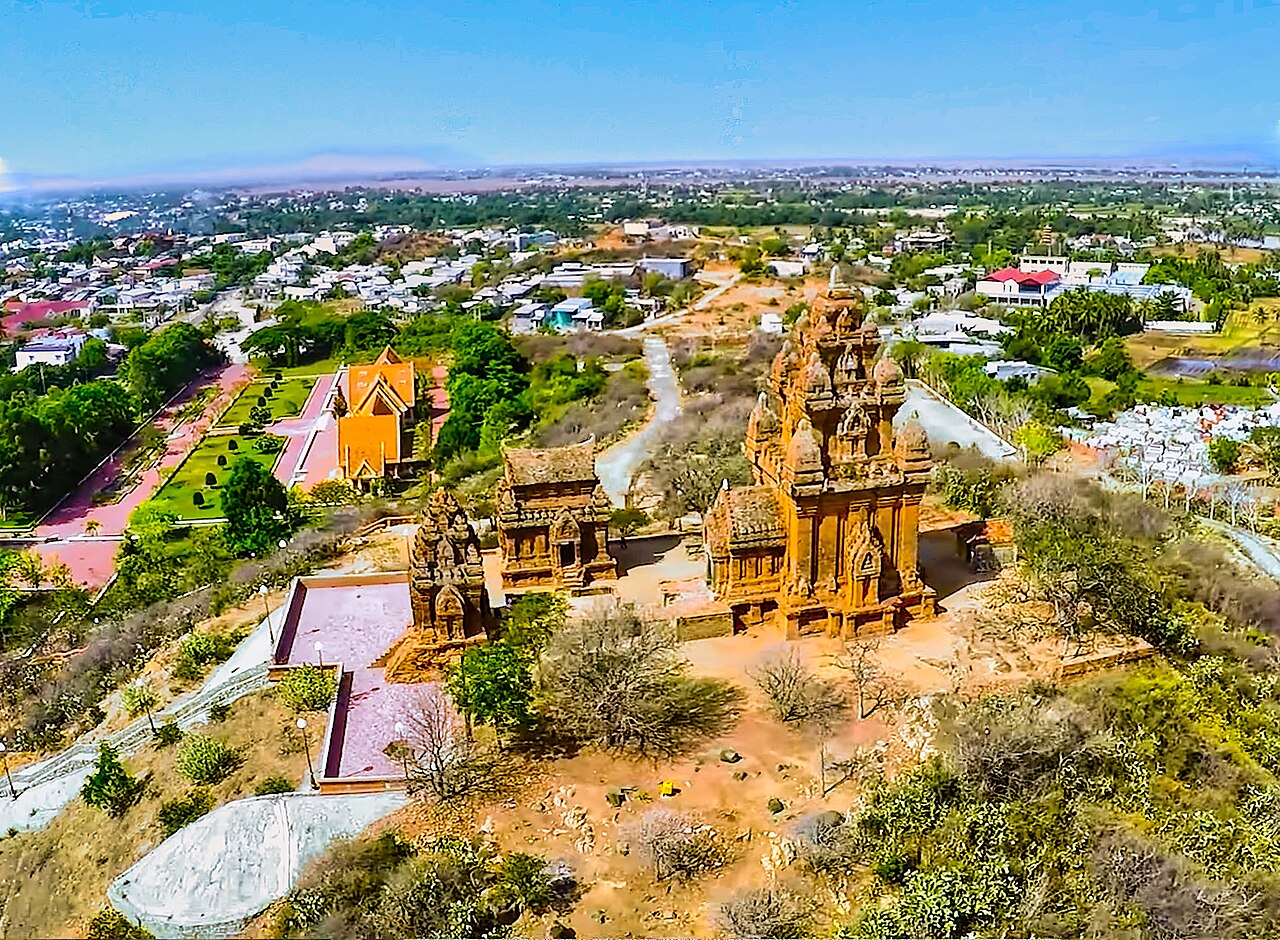
What Katê Is
Katê (written in Vietnamese as Lễ hội Katê) is the largest festival of the Cham Balamon, the community that practises a localised form of Hinduism descended from the Cham kingdom of Champa. It is observed on the first day of the seventh month of the Cham calendar, a lunisolar system that places the festival in late September or October in the Gregorian calendar, though the exact date shifts from year to year.
The festival is simultaneously a religious observance, an ancestor commemoration, and a community reunion. It honours the male deities of the Cham pantheon, principally Po Klong Garai and Po Rome, both deified Cham kings associated with irrigation and governance. Katê is distinct from Ramưwan, the festival observed by the Cham Bani, who practise a form of Islam; the two communities share geography but maintain separate ritual calendars.
Where It Is Held
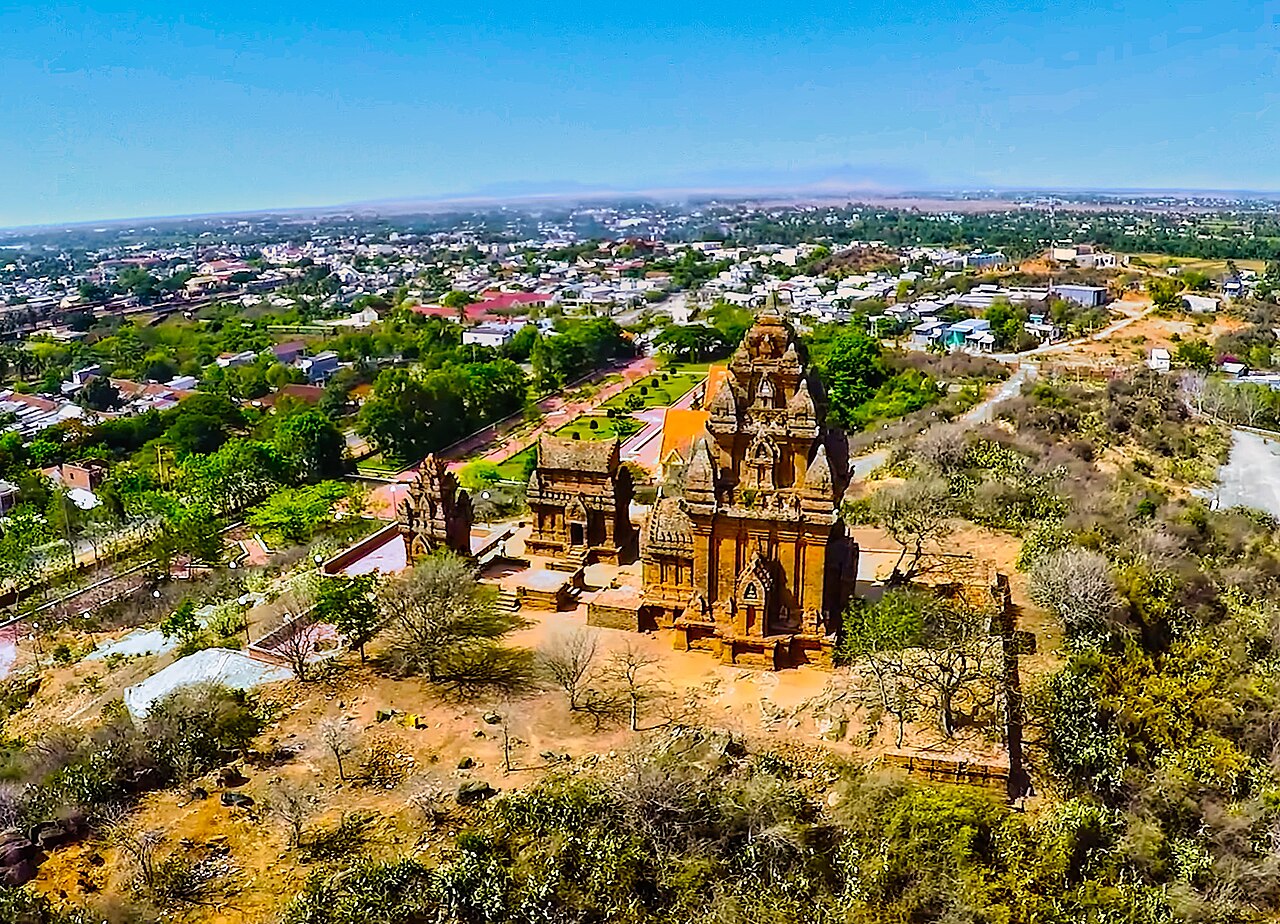
The focal points of Katê are the Cham towers that survive across what were formerly Ninh Thuan and Binh Thuan provinces, now reorganised under Vietnam's two-tier provincial system following the 2025 administrative merger. The towers are brick sanctuaries built between roughly the seventh and fifteenth centuries and remain active sacred sites rather than purely archaeological monuments.
- Po Klong Garai tower complex, on a basalt hill near Phan Rang, is the largest and most visited Katê site. It consists of a main tower (kalan), a fire tower, and a gate tower, and is associated with the deified king Po Klong Garai, credited with building irrigation canals.
- Po Rome tower, further south near the village of Hậu Sanh, commemorates a later king, Po Rome, who ruled in the early seventeenth century.
- Po Sha Inư tower complex, near Phan Thiết, is the principal Katê site in the former Binh Thuan area.
Village-level ceremonies run alongside the tower rituals, meaning the festival is distributed across many Cham communities simultaneously.

The Procession and Tower Rituals
The tower ceremonies follow a fixed sequence that opens before dawn and extends across several hours. A procession carries sacred costumes and regalia — kept by designated custodian families between festivals — up the hill or path to the tower entrance. Participants include priests (Po Adhia or Basaih), female ritual specialists (Muk Pajuw), and male chanters (Kadhar).
- The tower gate is opened ceremonially after prayers.
- Sacred garments are brought inside and used to dress the statue or linga of the deity.
- The Kadhar chant genealogies and praises of the deity in classical Cham.
- Offerings of rice cakes, fruit, and rice wine are presented.
- The congregation prays and the priests sprinkle holy water.
The clothing ritual is considered the ceremonial heart of Katê; the garments themselves, some of them old textiles, are treated as direct connections to the deified ancestors. Access to the inner sanctuary during this phase is typically limited to ritual specialists.
Music, Dance and the Arts
Cham ritual music is central to Katê. The principal instruments are the Paranưng (a double-headed drum), the Ginăng (a similar drum of different timbre), and the Saranai, a double-reed wind instrument comparable to a shawm. Their combined sound is considered inseparable from the sacred atmosphere of the tower ceremonies.
Female dancers performing Múa Chăm (Cham dance) appear during the communal portions of the festival. Cham dance is characterised by slow, precise arm and hand movements, curved finger positions, and controlled transitions of weight; it shares some structural features with classical dance traditions elsewhere in Southeast Asia, reflecting Champa's historic connections with the broader Indic cultural sphere.
Cham textile weaving, particularly the production of thổ cẩm brocade on traditional frame looms, is closely associated with the festival context. Women wear woven garments during the processions, and certain textile patterns are linked to specific ritual roles. The craft has been recognised as facing transmission pressures as the number of practising weavers declines.
Village Celebrations and Food
After the tower ceremonies conclude, Katê continues at the village level for several days. Families gather for communal meals, and the atmosphere shifts from strictly ritual to social. Rice wine served from tall ceramic jars with bamboo straws is conventional at these gatherings.
Foods associated with Katê include bánh gừng (ginger-shaped fried cakes), bánh tét Chăm (sticky rice parcels with fillings specific to Cham preparation), and dishes made from the sticky rice varieties grown in the irrigated fields of the region. The preparation of these foods is typically a collective activity involving extended family groups in the days before the festival.
Katê is also an occasion for the Cham diaspora — community members living in Ho Chi Minh City and other parts of Vietnam — to return to their home villages, functioning similarly to Tết for the Kinh majority population in terms of its role as a homecoming event.
The Cham Balamon Community Today
The Cham Balamon number in the low hundreds of thousands and are concentrated in the coastal and inland areas of what were Ninh Thuan and Binh Thuan provinces. They are one of Vietnam's 54 officially recognised ethnic groups. The Cham language belongs to the Malayo-Polynesian branch of the Austronesian family and is written in a distinctive Indic-derived script, though literacy in the traditional script is limited and largely confined to ritual specialists and scholars.
The community maintains a degree of endogamy and a matrilineal kinship system in which property and clan identity pass through the female line, a social structure that distinguishes the Cham Balamon from the Kinh majority. Priests and ritual roles are, however, patrilineally inherited.
Relations between the Cham Balamon and the Vietnamese state have been formally cooperative: Katê is listed on Vietnam's national intangible cultural heritage register, and provincial cultural authorities participate in some tower ceremonies. At the same time, questions of land around sacred sites, language education, and the sustainability of ritual knowledge transmission are subjects of ongoing discussion within the community. The number of fully trained Basaih priests is reported to be declining, though the extent and implications of this are contested.
Attending as an Outsider
The tower processions and outdoor portions of Katê at Po Klong Garai and Po Rome are generally accessible to visitors who are not Cham. The inner sanctuary rituals are conducted by priests and designated participants; observers are expected to remain outside the main tower chamber during the dressing ceremony.
Modest dress is appropriate at the tower sites. The festival draws both domestic tourists and Cham community members returning home, so the area around the towers can be crowded on the main festival day. Village-level celebrations are family occasions; attendance at these requires a personal connection or invitation rather than general visitor access.
The Cham calendar date is announced each year by community religious authorities, and the Gregorian equivalent can vary by several weeks between years. Confirming the date before travel is advisable, as the tower ceremonies are concentrated into a single morning.
Where it is
Also known as / see also
Referenciado por
Fuentes
- Vietnam National Authority of Tourism — VNAT consultado 29 August 2026
Supports: the rules and definitions on this page - Lễ hội Katé — Wikipedia (Vietnamese) (CC BY-SA 4.0) consultado 31 August 2026
Supports: background, Vietnamese edition
Current Última verificación: 31 August 2026. Rules, fares and prices change — check the official source before acting on anything here. Report a mistake.
Picture credits (4)
Po Klong Garai, Champa Hindu temples complex 02, Ms Sarah Welch, CC0, Wikimedia Commons · Po Klong Garai, Champa Hindu temples complex 03, Ms Sarah Welch, CC0, Wikimedia Commons · Po Klong Garai, Champa Hindu temples complex 04, Ms Sarah Welch, CC0, Wikimedia Commons · Fishermen Show Theatre - Huyền Thoại Làng Chài, Cuongthienpham, CC BY-SA 4.0, Wikimedia Commons