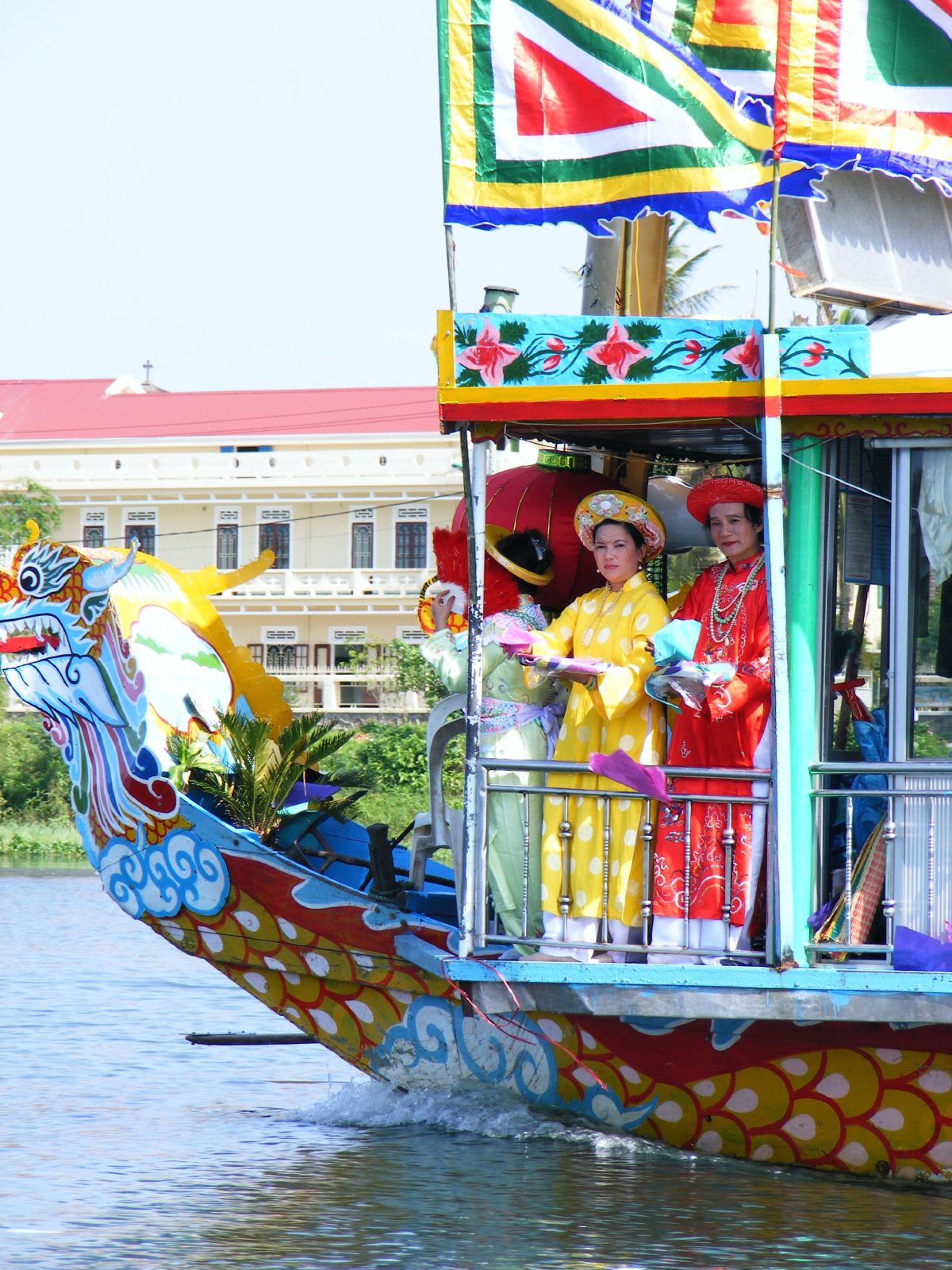
Hue FestivalFestival Huế
Overview
Hue Festival (Festival Huế) is a periodic cultural event held in Hue, the former seat of the Nguyen dynasty and the country's one-time imperial capital. The festival draws on the city's position as the custodian of Vietnamese court culture, using the Citadel, the Imperial Enclosure, and surrounding monuments as both backdrop and performance venue. Since its early editions in the late 1990s it has grown into one of the larger arts gatherings in Southeast Asia, attracting performers and companies from dozens of countries alongside Vietnamese ensembles. The event is organised on a broadly biennial rhythm, though scheduling has shifted at times; the confirmed programme for any given year should be verified through official channels before travel is planned around it.
Royal Court Music and Nhã Nhạc
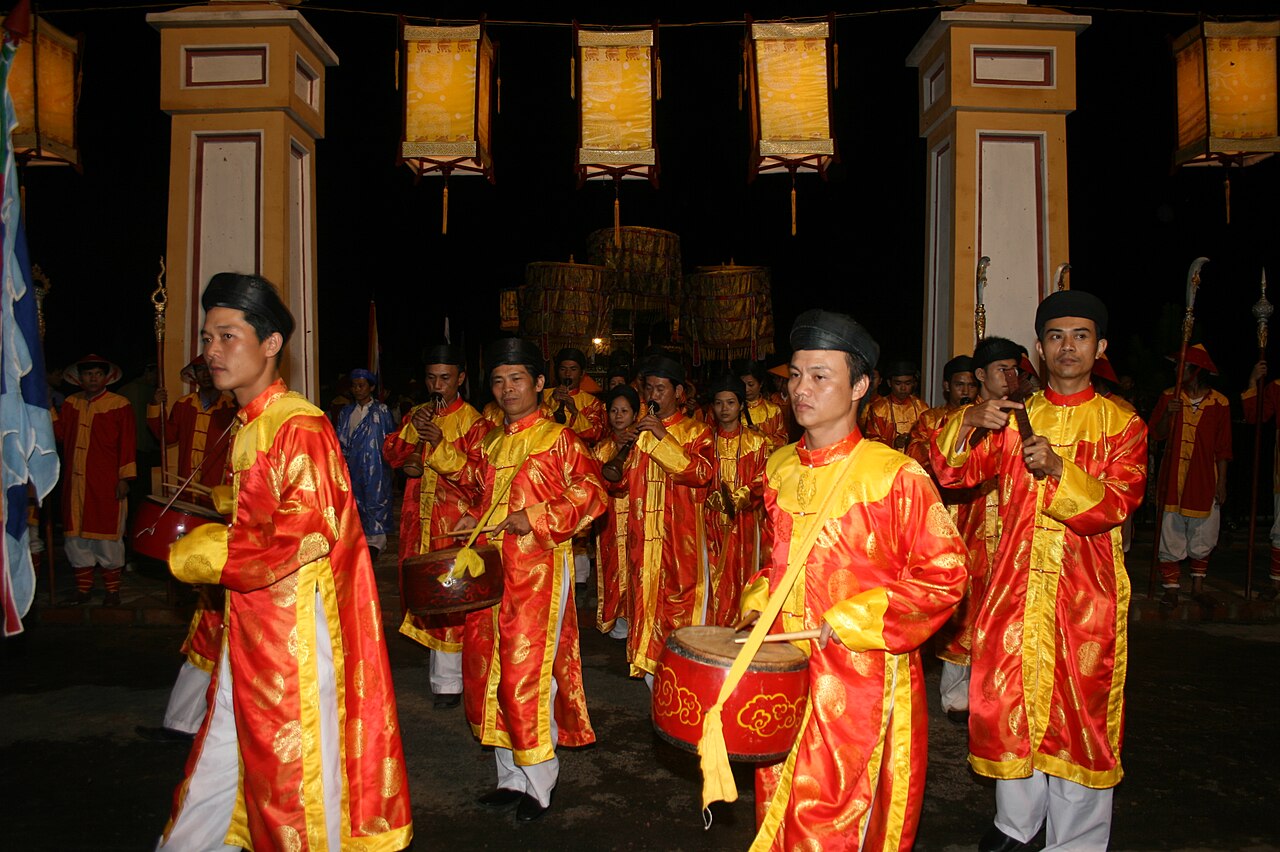
Nhã nhạc, the Vietnamese royal court music tradition, sits at the ceremonial heart of the festival. Recognised by UNESCO in 2003 as an Intangible Cultural Heritage of Humanity, nhã nhạc was performed at Nguyen-dynasty rites, banquets, and seasonal ceremonies between the early nineteenth century and 1945, when the last emperor, Bảo Đại, abdicated. The festival provides one of the most sustained public platforms for this repertoire, performed by ensembles trained through the Hue College of Arts and associated institutions.
Performances typically take place inside the Imperial Enclosure and at the Duyet Thi Duong, the restored royal theatre within the Citadel grounds, which was built in 1826 under Emperor Minh Mang. The acoustics and setting of the Duyet Thi Duong are considered particularly suited to court repertoire.
Re-enactments and Ceremonial Events
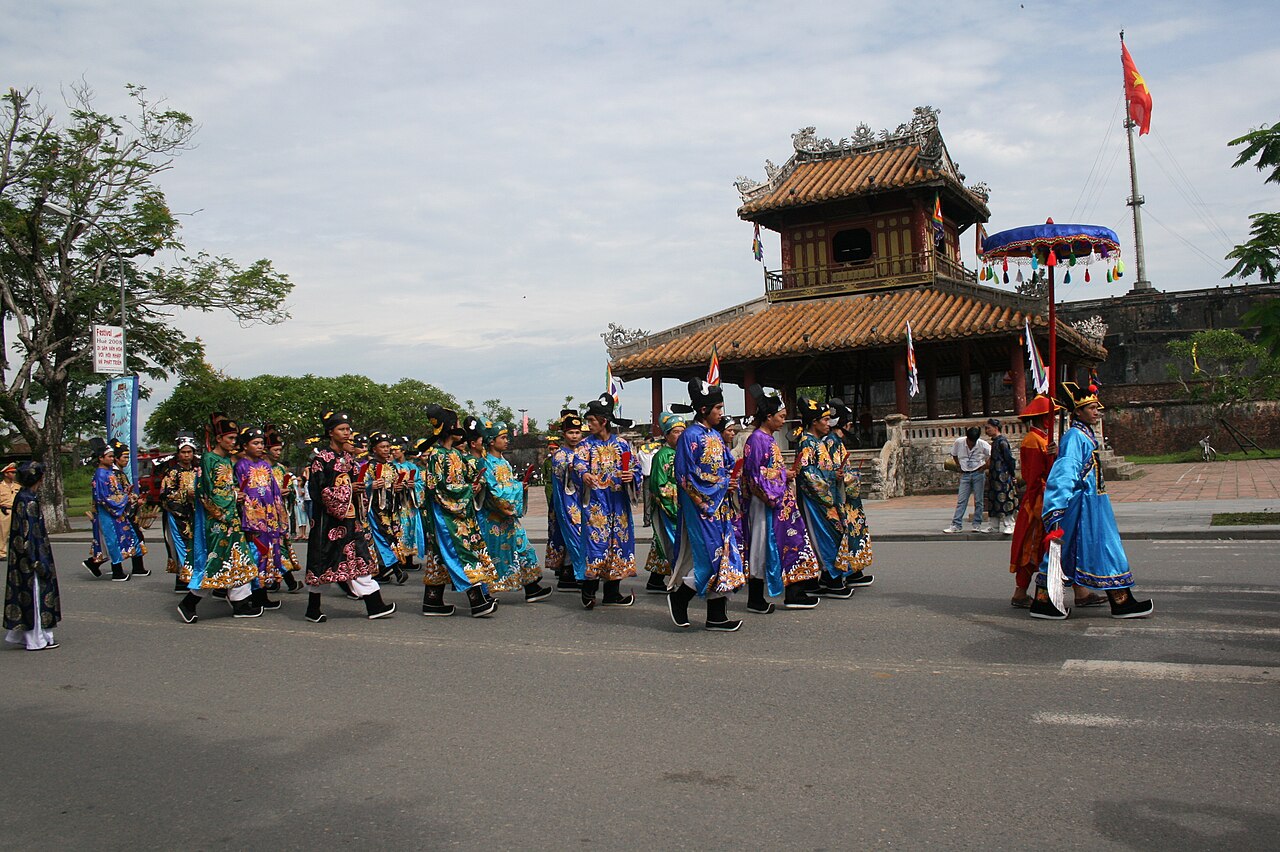
A distinctive element of the festival is its programme of historical re-enactments. These draw on documented Nguyen court protocols to reconstruct ceremonies such as the royal procession along the Perfume River, the Nam Giao sacrificial rite (held at the Esplanade of Heaven and Earth south of the city centre), and various dynastic anniversary observances. Participants in period costume move through the Citadel's Noon Gate and along the principal ceremonial axis of the Imperial Enclosure.
The degree of historical fidelity in these re-enactments is a subject of ongoing discussion among Vietnamese historians and heritage practitioners. Some elements have been reconstructed from court records and surviving regalia; others involve interpretive choices where documentation is incomplete or lost.
International Programme
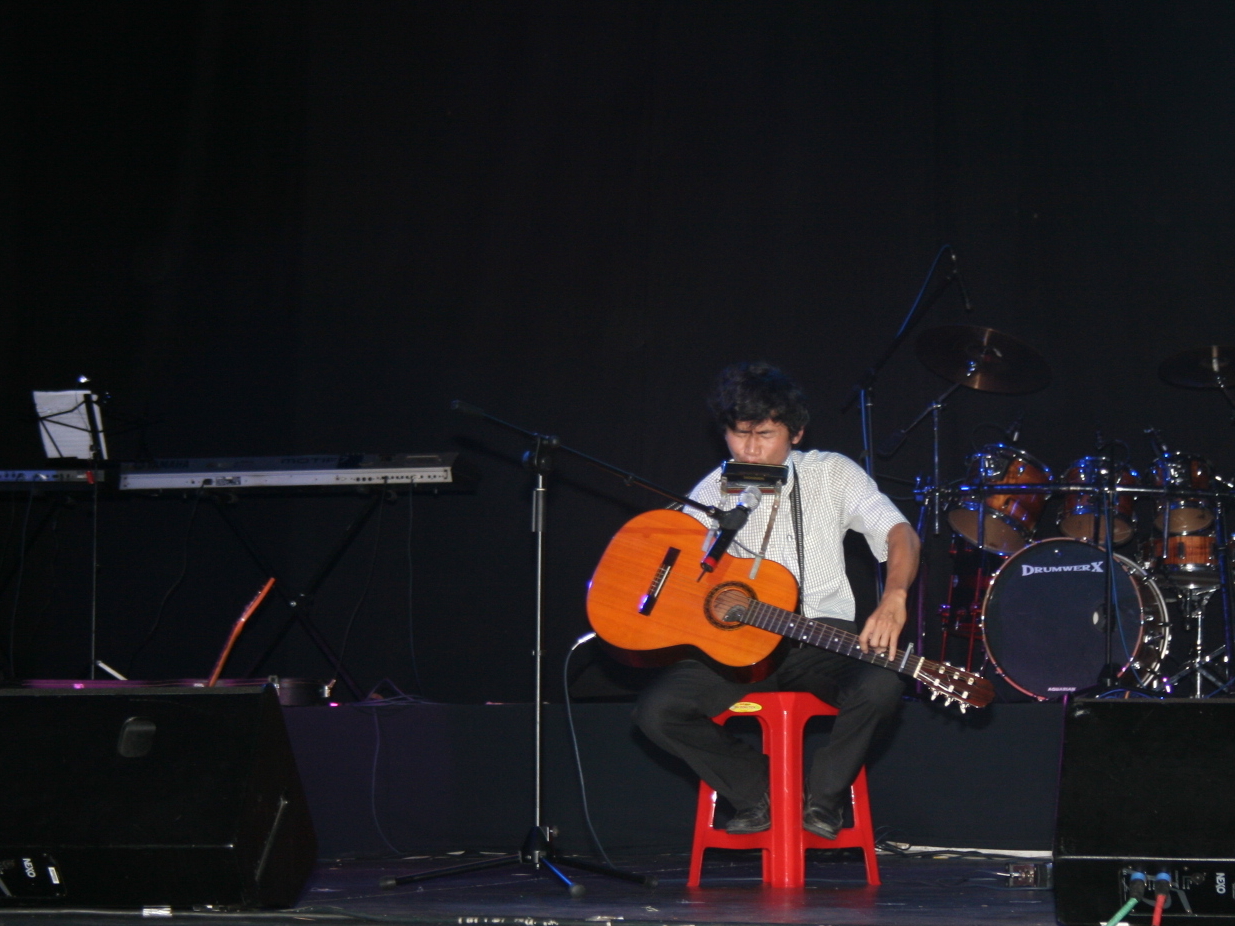
Alongside the Vietnamese court programme, the festival hosts an international strand that has included theatre companies, orchestras, dance troupes, and street performance groups from Europe, East Asia, and other parts of Southeast Asia. Performances take place at multiple sites across Hue: indoor venues such as the Hue Cultural Centre, outdoor stages in Ngo Mon Square in front of the Citadel, and various riverside locations along the Perfume River.
The international programme varies considerably from edition to edition. Some years have featured prominent European opera or contemporary dance productions; others have foregrounded Asian traditional arts. The mix reflects both artistic direction and the practical considerations of international touring schedules and bilateral cultural agreements.
Effect on Accommodation
The festival has a pronounced effect on accommodation availability and pricing across Hue. Hotels, guesthouses, and homestays in the city centre, particularly those close to the Citadel and along Le Loi and Hung Vuong streets, fill well in advance of the main programme dates. The effect extends to accommodation in Lang Co and other nearby areas used as overflow by visitors.
Prices vary by season, and festival periods represent one of the most demand-intensive windows of the year for Hue. Travellers intending to attend specific performances should confirm bookings as early as the programme is announced. Those visiting Hue for reasons unrelated to the festival may find the period less convenient.
Practical Orientation
Hue sits in what is now Thua Thien Hue province following the administrative consolidation of 1 July 2025, which merged Vietnam's 63 provincial-level units into 34. The city is served by Phu Bai International Airport and lies on the main north–south railway line, making it accessible from both Hanoi and Ho Chi Minh City. Festival events are spread across a relatively compact historic core, and most principal venues are reachable on foot or by bicycle from central accommodation.
The official festival programme, when published, is the only reliable source for confirmed dates, ticket availability, and venue assignments. Programme details, ticketing arrangements, and the scope of free versus ticketed events have differed across editions.
Where it is
Also known as / see also
Referenziert von
Quellen
- Vietnam National Authority of Tourism — VNAT abgerufen 29 August 2026
Supports: the rules and definitions on this page - Festival Huế — Wikipedia (Vietnamese) (CC BY-SA 4.0) abgerufen 31 August 2026
Supports: background, Vietnamese edition
Current Zuletzt geprüft: 31 August 2026. Rules, fares and prices change — check the official source before acting on anything here. Report a mistake.
Picture credits (4)
Festival Huế, AJ Oswald, CC BY-SA 2.0, Wikimedia Commons · Festival Huế 2008-4, Lưu Ly, Public domain, Wikimedia Commons · Nhã nhạc cung đình Huế, Lưu Ly ( thảo luận ), Public domain, Wikimedia Commons · Nguyễn Thế Vinh, Lưu Ly ( thảo luận ), Public domain, Wikimedia Commons