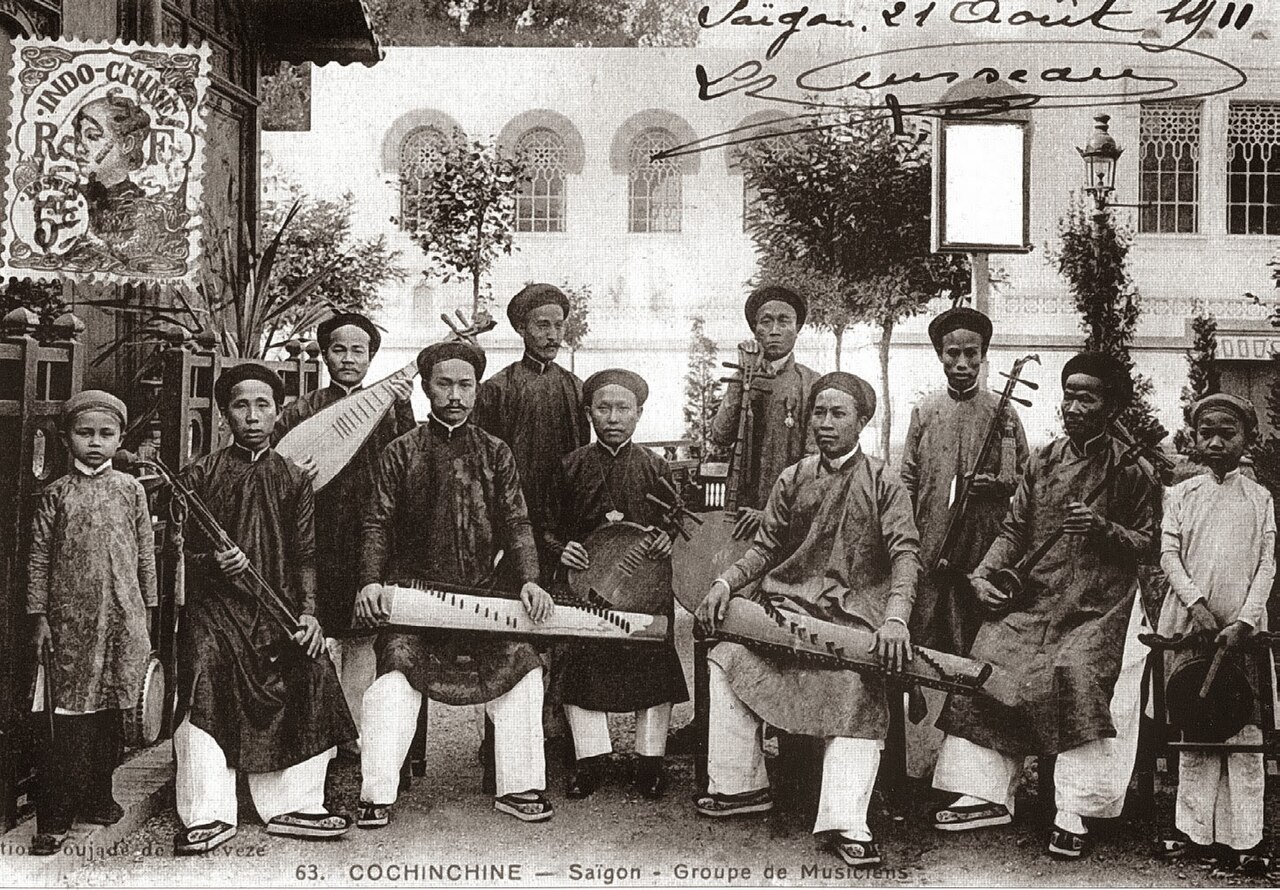
Don ca tai tuĐờn ca tài tử
What don ca tai tu is
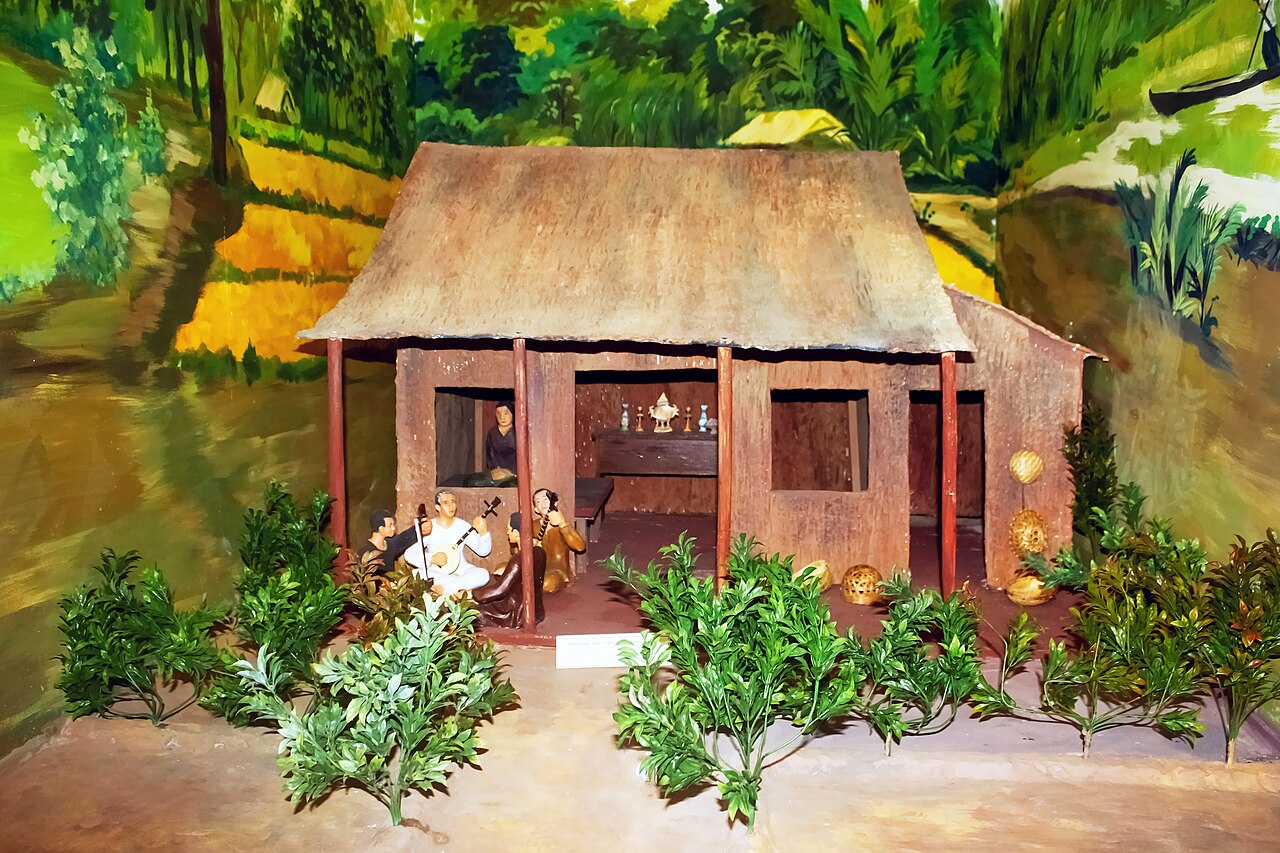
Don ca tai tu — literally rendered as music of talented amateurs — is a genre of southern Vietnamese chamber music combining instrumental performance (don) with song (ca). It is not staged theatre, nor festival ritual; it is music made among friends, at family gatherings, on riverbanks, and in private homes. The word tai tu implies cultivated enthusiasm rather than professional obligation, and that amateur spirit remains central to how practitioners and audiences understand the form.
The genre draws on a repertoire of roughly twenty core melodic frameworks called bai ban, grouped into four principal modes: bac (northern, bright), nam (southern, melancholic), ha (descent, sorrowful) and oan (grievance). Musicians and singers are expected to know these frameworks and improvise ornamentation within them, so no two performances are identical.
Historical origins
Don ca tai tu crystallised in the provinces of southern Vietnam — then part of French Cochinchina — during the latter decades of the 19th century. It grew from older court and folk music traditions that migrated southward with Vietnamese settlers into the Mekong Delta, absorbing local Cham and Khmer influences along the way. The scholar and musician Nguyen Quan Trieu is frequently credited as an early systematiser of the repertoire, working in the region around what is now the province of Ba Ria - Vung Tau.
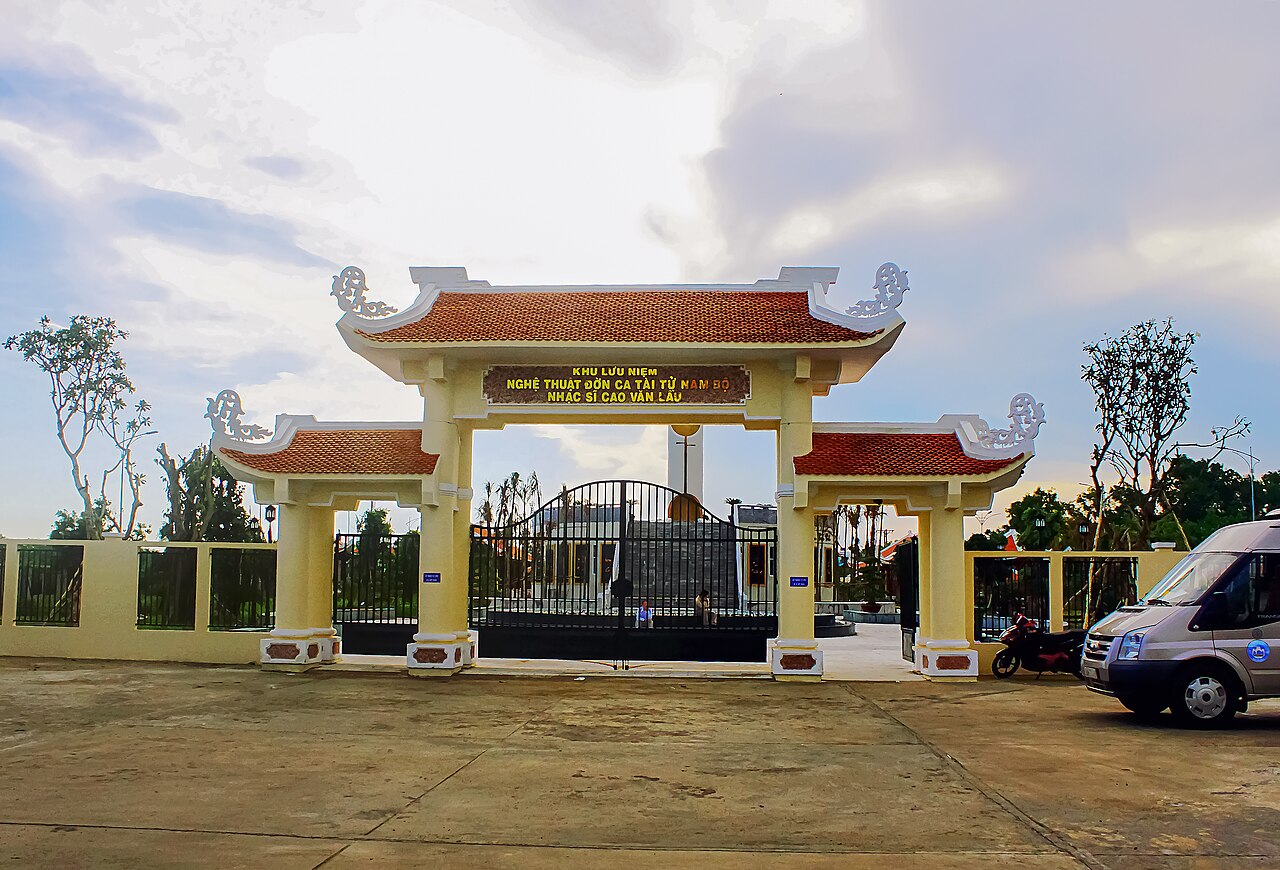
The genre spread rapidly through the delta's network of waterways and market towns, finding particular strongholds in the provinces that now form part of merged units such as Long An, Tien Giang, Ben Tre and Bac Lieu. Bac Lieu is especially associated with the legendary figure Cao Van Lau, who composed Da Co Hoai Lang (Hearing the Night Drum, Longing for a Husband) around 1919 — a piece that became foundational to both don ca tai tu and its theatrical descendant, cai luong.
Instruments and ensemble
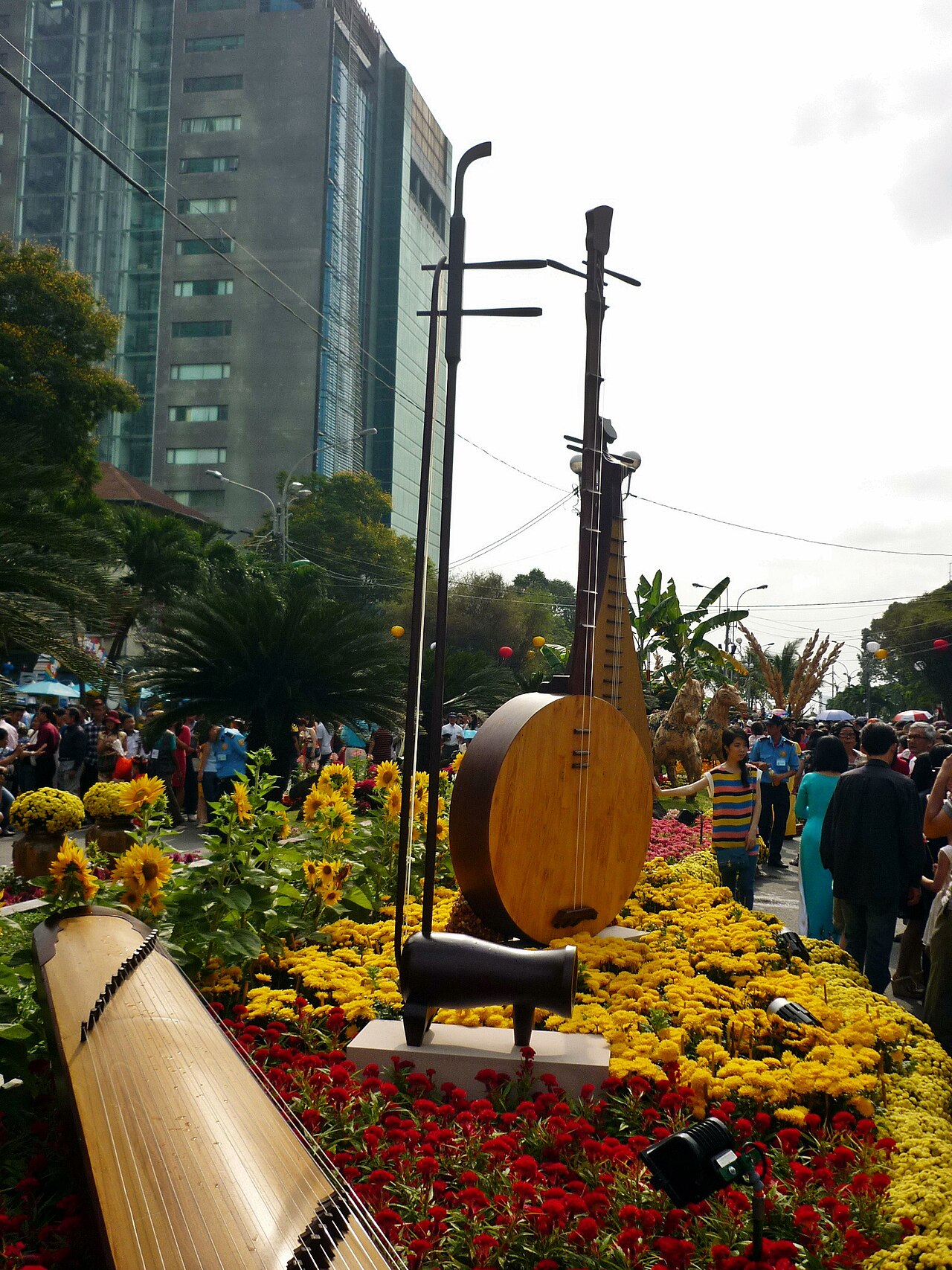
A don ca tai tu ensemble is flexible in size, often comprising as few as three or four performers, and the combination of instruments shifts depending on who is present. The following are the most commonly encountered:
- Dan tranh: a sixteen- or seventeen-string zither plucked with metal fingerpicks, capable of wide expressive bends.
- Dan kìm (also called dan nguyet): a two-string moon-shaped lute with a long neck, providing rhythmic and melodic punctuation.
- Dan co or co cam: bowed two-string fiddles that follow the vocal line closely.
- Dan bau: a monochord played with a flexible rod, producing an ethereal, wavering timbre distinctive to Vietnamese music.
- Trong nhac: small percussion instruments, including wooden clappers and hand drums, marking rhythm without dominating the texture.
- Sao or tiêu: end-blown flutes, sometimes added for colour.
Western instruments, particularly the guitar adapted with a raised nut and scalloped frets to produce Vietnamese microtonal inflections, have been incorporated since the early 20th century and are now considered standard within the tradition.
UNESCO recognition and living practice
In December 2013, UNESCO inscribed don ca tai tu on its Representative List of the Intangible Cultural Heritage of Humanity. The nomination covered twenty-one provinces and cities across southern Vietnam, acknowledging that the tradition is geographically dispersed rather than tied to a single locality or institution.
The form is not confined to performance stages or tourist venues. It is transmitted informally through apprenticeship and family lineage, with experienced musicians (thay, meaning teacher) passing melodic frameworks and performance etiquette to younger players over months or years. Amateur clubs and associations exist throughout the delta, meeting regularly in members' homes or at communal houses. These clubs are the primary mechanism by which the tradition sustains itself between public events.
There is ongoing discussion among practitioners and cultural authorities about the tension between formalised preservation — through music schools and competition circuits — and the spontaneous, non-commercial character that the word tai tu implies.
Relationship to cai luong opera
Cai luong, the reformed opera that became southern Vietnam's dominant theatrical form in the 20th century, grew directly out of don ca tai tu in the 1910s and 1920s. The melodic modes, the core repertoire pieces, and many of the instruments passed from chamber music into theatre as practitioners began staging performances with costumes, dialogue and narrative.
The critical difference is context and intent: don ca tai tu is participatory and informal, with performers and listeners often switching roles; cai luong is a spectator art with scripted roles, theatrical staging and professional troupes. Both traditions share the vong co melody — an extended, emotionally freighted piece derived from Cao Van Lau's Da Co Hoai Lang — as their most recognisable common ground. A musician trained in don ca tai tu can generally read and perform cai luong accompaniment, and vice versa, though the two communities are socially and institutionally distinct.
Where visitors encounter the tradition
Don ca tai tu is most accessible to visitors travelling through the Mekong Delta. Mekong Delta boat tours operated from towns such as My Tho (in Tien Giang province) and Ben Tre frequently include a session of don ca tai tu performed on a river island or in a riverside garden, typically during a midday meal stop. These performances vary considerably in character: some involve practising amateur musicians; others are staged for tourist groups on a more commercial basis.
In Bac Lieu, the house of Cao Van Lau functions as a memorial site where the composer's life and the history of the genre are presented, and occasional performances take place in the surrounding grounds. The city also hosts periodic festivals dedicated to don ca tai tu drawing ensembles from across the southern region.
Ho Chi Minh City has several cultural centres and restaurants where regular evening sessions are scheduled, though the atmosphere differs from delta performances. The Bac Lieu and Soc Trang areas, where Khmer and Viet communities have long coexisted, offer contexts in which the music's multi-ethnic roots remain tangible.
Where it is
Also known as / see also
Được tham chiếu bởi
Các nguồn
- Vietnam National Authority of Tourism — VNAT đã truy cập 29 August 2026
Supports: the rules and definitions on this page - Đờn ca tài tử — Wikipedia (CC BY-SA 4.0) đã truy cập 31 August 2026
Supports: background - Đờn ca tài tử Nam Bộ — Wikipedia (Vietnamese) (CC BY-SA 4.0) đã truy cập 31 August 2026
Supports: background, Vietnamese edition
Current Đã xác minh lần cuối: 31 August 2026. Rules, fares and prices change — check the official source before acting on anything here. Report a mistake.
Picture credits (4)
Ban nhạc đờn ca tài tử Sài Gòn (1911), không rõ, Public domain, Wikimedia Commons · Khu lưu niệm Đờn ca tài tử Nam Bộ, Bùi Thụy Đào Nguyên, CC BY-SA 3.0, Wikimedia Commons · Mô hình đờn ca tài tử, Bùi Thụy Đào Nguyên, CC BY-SA 3.0, Wikimedia Commons · Nhạc cụ Đờn ca tài tử, Ngô Trung, CC BY-SA 4.0, Wikimedia Commons