The ChamNgười Chăm
Origins and the Champa Kingdom
The Cham trace their origins to the Indianised kingdom of Champa, which occupied much of what is now central and southern Vietnam from roughly the 2nd century CE until its final dissolution in the late 17th century. At its height, Champa controlled trade routes along the South China Sea and maintained cultural ties with Cambodia, Java and India.
The kingdom's capital shifted several times — from Trà Kiệu to Đồng Dương to Vijaya (present-day Bình Định) — as it contracted under pressure from the northward expansion of Đại Việt. The fall of the citadel at Vijaya in 1471 under Emperor Lê Thánh Tông is regarded as the decisive turning point. A reduced Cham polity persisted in Panduranga, centred on present-day Ninh Thuận and Bình Thuận provinces, until it was formally absorbed into Vietnamese administration in 1832.
This long history left two broad Cham populations: those of the south-central coast, who maintained Hindu and syncretic Muslim traditions, and those who migrated earlier to the Mekong Delta and Cambodia, who are predominantly Sunni Muslim.
The Balamon and Bani Communities
Cham religious identity today divides primarily into two groups. The Balamon Cham practise a localised form of Hinduism shaped by Brahmanical ritual, venerating deities including Shiva, Vishnu and the goddess Po Nagar. They are concentrated in Ninh Thuận and Bình Thuận. Their priesthood — the basaih — performs ceremonies tied to an agricultural calendar, and religious authority is hereditary along matrilineal lines.
The Bani Cham follow a syncretic tradition that incorporates Islamic elements alongside older Cham beliefs. Unlike Sunni practice, Bani Cham do not pray five times daily, and fasting during Ramadan is observed collectively and ritually rather than individually. Bani mosques, called sang mưgik, serve a ceremonial rather than a daily congregational function.
A third group, the Cham Islam (or Chăm An Giang), live mainly in An Giang province in the Mekong Delta and along the Cambodian border. They observe mainstream Sunni Islam, maintain closer links with Muslim communities in Cambodia and Malaysia, and are culturally distinct from the Balamon and Bani communities of the coast.
The Katê Festival
Katê is the most important annual celebration for Balamon Cham and is observed on the first day of the seventh month of the Cham calendar, falling in late September or October by the Gregorian calendar. The festival honours Cham kings and deities, particularly Po Klong Garai and Po Rome, who are venerated as sacred ancestors.
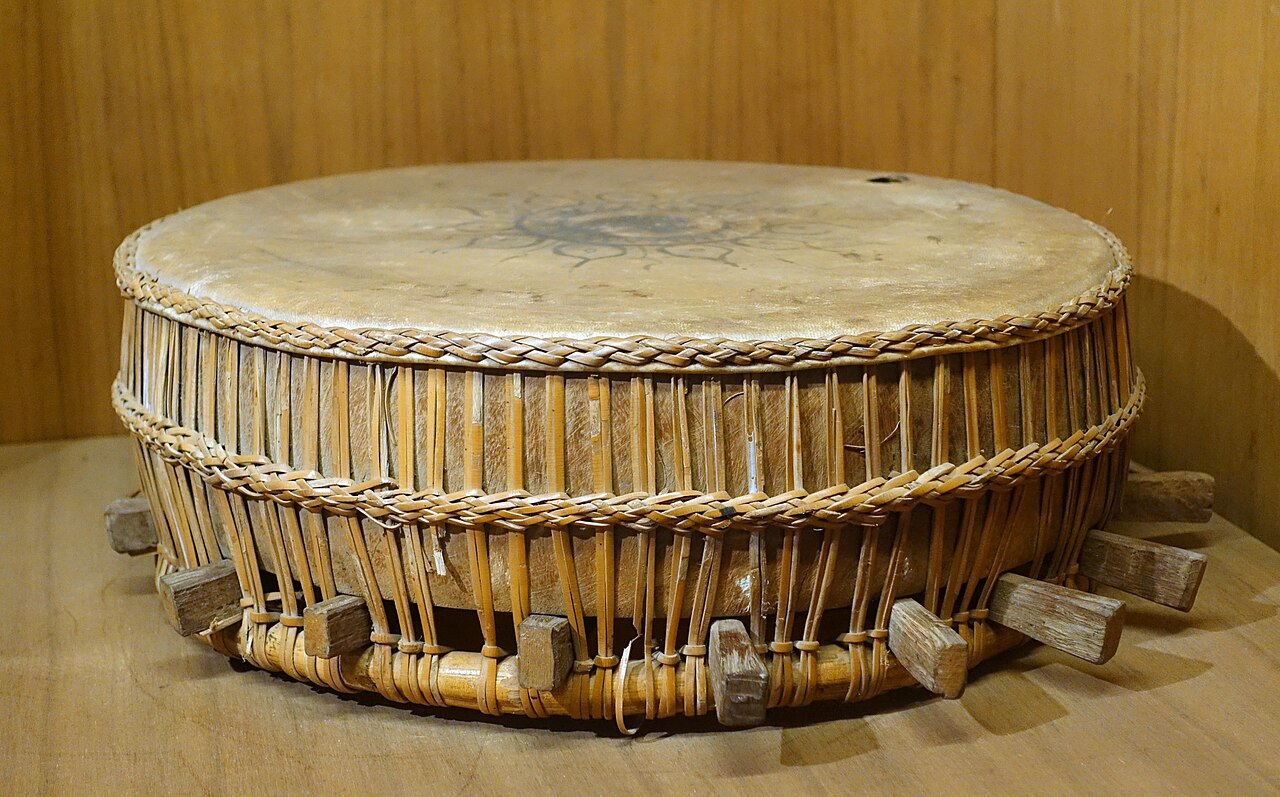
Ceremonies begin at the tower temples on the hills above Phan Rang–Tháp Chàm, where priests, musicians and dancers perform rituals of cleansing and dressing the deity statues. Processions carry royal costumes and regalia up to the towers, accompanied by the ginăng drum and saranai oboe — instruments central to Cham ceremonial music.
After the tower rituals, celebrations continue at village communal houses and family homes, where younger generations perform traditional dances and families share meals. Katê has grown in visibility in recent decades and draws both Cham participants from across the region and outside visitors. The festival is listed among Vietnam's national intangible cultural heritage.
Weaving and Pottery
Cham craft traditions are sustained primarily by women in a small number of specialist villages. Weaving is centred in Mỹ Nghiệp village in Ninh Phước, Ninh Thuận. Cham textiles are characterised by geometric patterns — lozenges, stepped motifs, stylised animals — worked in silk or cotton on traditional frame looms without mechanical aids. Colour combinations are often bold: deep red, black, yellow and white appear in combinations that carry ceremonial significance. Specific cloth patterns are associated with social rank and ritual occasions.
Pottery is produced in Bàu Trúc village, also in Ninh Thuận, and is considered one of the oldest pottery traditions in Southeast Asia still in active production. Bàu Trúc potters, traditionally women, do not use a wheel. Instead, the potter walks around the clay, shaping it by hand and using a paddle and anvil technique. Vessels are fired in open-air kilns using rice straw and wood. The resulting ware has an unglazed, reddish-ochre surface with natural smoke markings.
Both Mỹ Nghiệp and Bàu Trúc are open to visitors, and working potters and weavers can be observed during production hours.
Cham Tower Temples
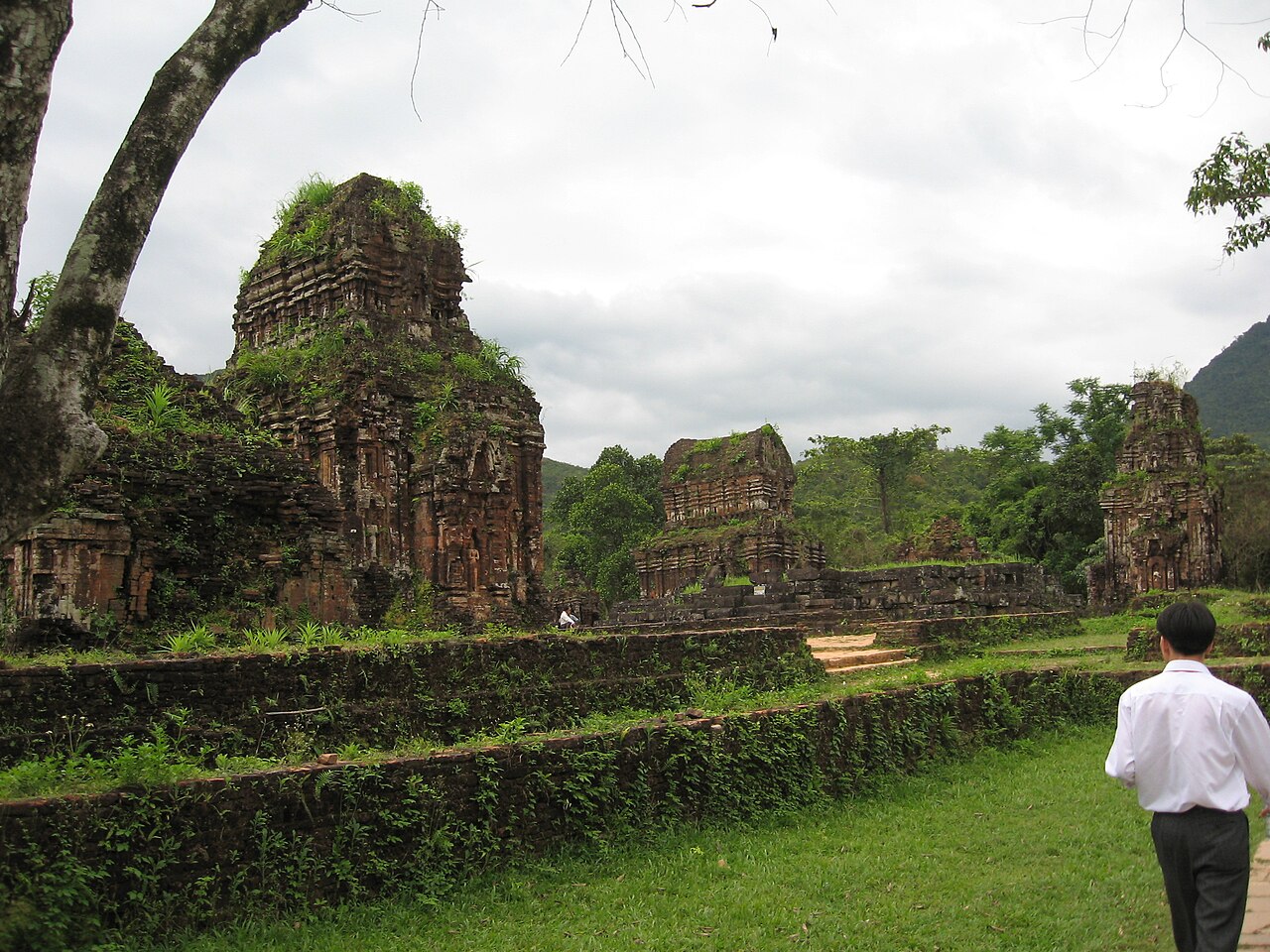
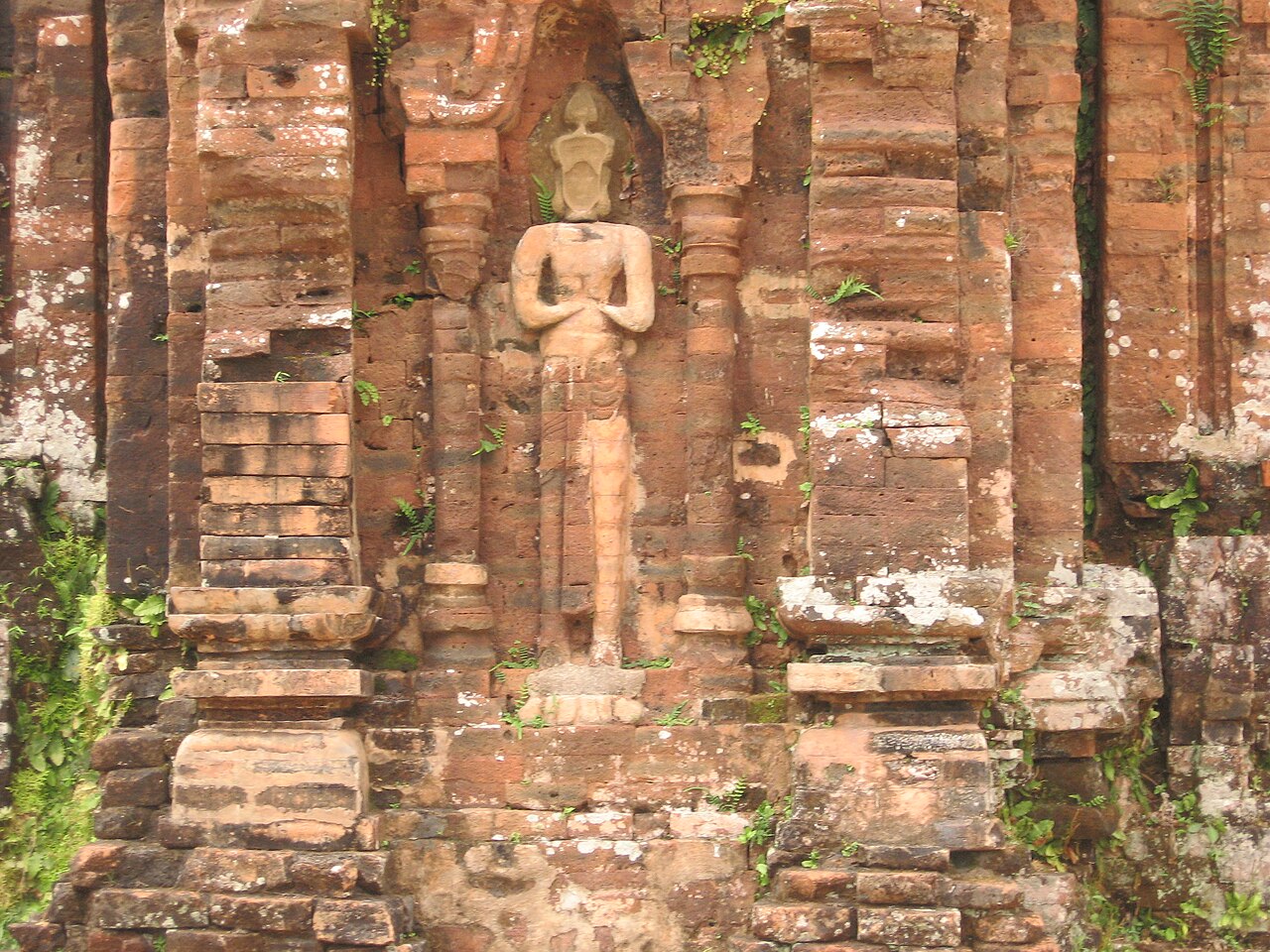
The most visible surviving monuments of Champa are the brick tower temples scattered along the south-central coast. Built between roughly the 7th and 13th centuries CE, they served as Hindu sanctuaries and were dedicated primarily to Shiva in the form of lingam worship. Construction used fired brick with extremely fine jointing; the technique by which Cham builders achieved such precision remains a subject of scholarly debate.
The largest and best-preserved complexes include Mỹ Sơn, a UNESCO World Heritage Site in Quảng Nam, which contains dozens of structures across multiple sanctuary groups spanning several centuries of construction. Po Nagar near Nha Trang retains four towers on a hilltop above the Cái River and remains an active place of worship for both Cham and ethnic Vietnamese devotees. Po Klong Garai above Phan Rang–Tháp Chàm comprises three towers from the 13th–14th centuries and is the site of Katê ceremonies. Po Rome, south of Phan Rang, honours a 17th-century Cham king regarded as a saint.
Many smaller towers exist in varying states of preservation across Bình Định, Phú Yên and Quảng Ngãi.
Where Cham Heritage Is Visible Today
The largest concentrations of Cham people in Vietnam are in Ninh Thuận and Bình Thuận provinces on the south-central coast, with significant communities also in An Giang in the Mekong Delta. Cham villages in Ninh Thuận tend to be compact and identifiable by the distinct architecture of communal ritual spaces.
The Cham Museum in Đà Nẵng holds the world's largest collection of Cham sculpture, with pieces dating from the 7th to 15th centuries recovered from sites across the former Champa territory. It is an essential reference for understanding the artistic evolution of the civilisation.
In the Mekong Delta, Cham Islam villages along the Mekong River near Châu Đốc in An Giang retain a distinct streetscape of wooden stilt houses beside small mosques. The community there has maintained links with Muslim networks in Cambodia and has periodically sent students to study in Malaysia and the Middle East.
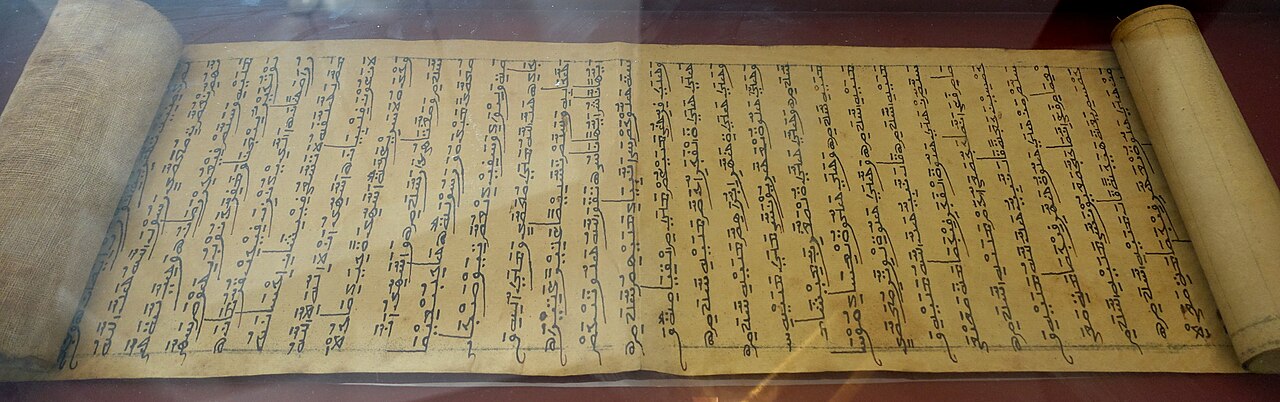
Cham language — a Malayo-Polynesian language unrelated to Vietnamese — is still spoken within communities, and there are ongoing efforts to document and teach the traditional Cham script, which is written in an Indic-derived abugida.
Where it is
Also known as / see also
संदर्भित
स्रोत
- Vietnam National Authority of Tourism — VNAT accessed 29 August 2026
Supports: the rules and definitions on this page - Người Chăm — Wikipedia (Vietnamese) (CC BY-SA 4.0) accessed 31 August 2026
Supports: background, Vietnamese edition
Current अंतिम सत्यापन: 31 August 2026. Rules, fares and prices change — check the official source before acting on anything here. Report a mistake.
Picture credits (4)
Drum, Cham - Vietnam Museum of Ethnology - Hanoi, Vietnam - DSC03385, Daderot, CC0, Wikimedia Commons · Koran, Cham - Vietnam Museum of Ethnology - Hanoi, Vietnam - DSC03373, Daderot, CC0, Wikimedia Commons · Architectural treasures and sculptures of Cham culture dating from the 7th to the 13th century in My Son, Vietnam 01, amukamraz, CC BY-SA 4.0, Wikimedia Commons · Architectural treasures and sculptures of Cham culture dating from the 7th to the 13th century in My Son, Vietnam 02, amukamraz, CC BY-SA 4.0, Wikimedia Commons