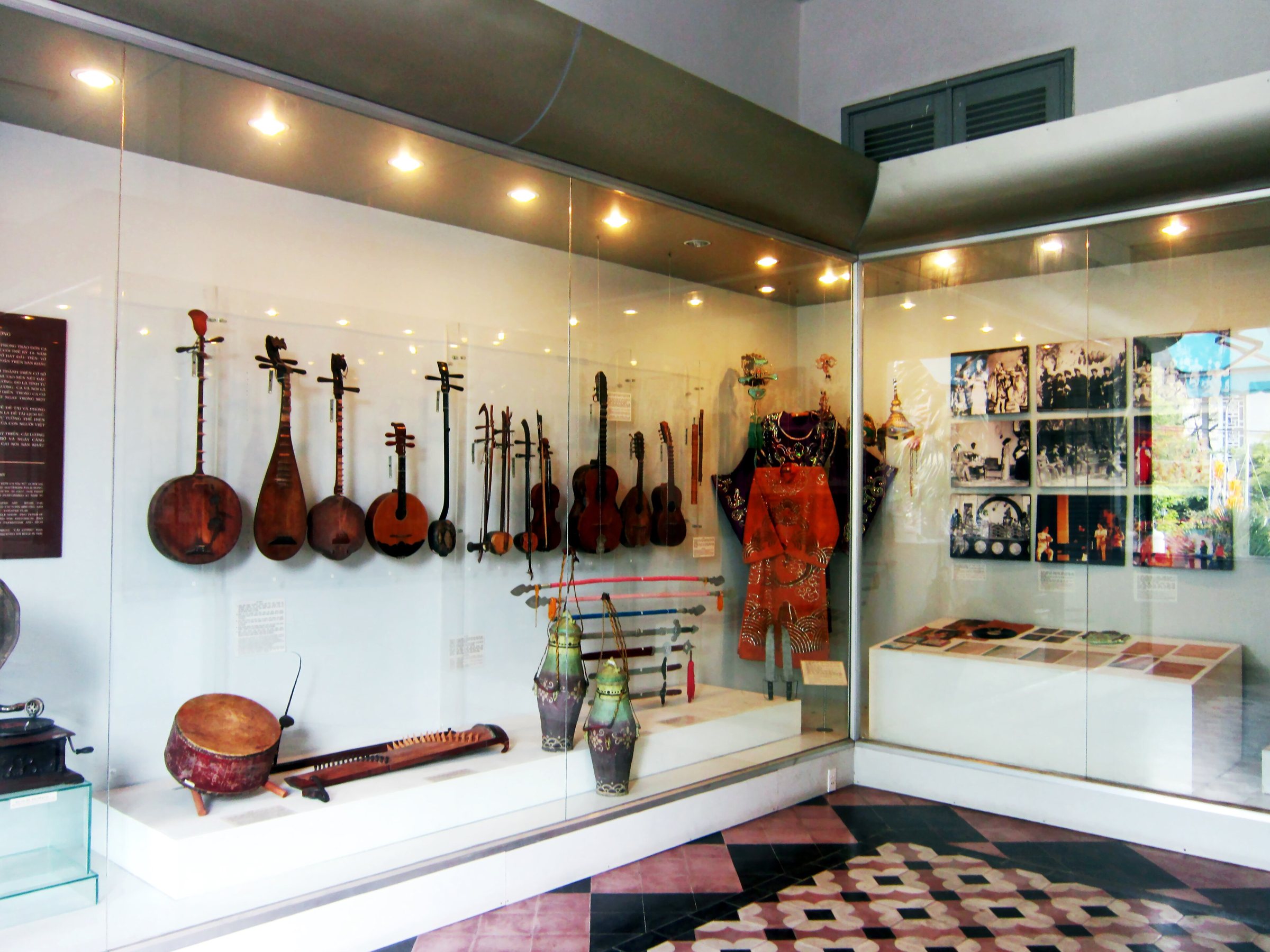
Cai luong and traditional theatreCải lương
Cải lương: reformed opera of the south
Cải lương — literally 'reformed and improved' — emerged in the Mekong Delta in the early twentieth century, drawing on the six-stringed đàn kìm lute tradition and the chamber music genre known as đờn ca tài tử. By the 1920s it had absorbed elements of French theatre, including a raised proscenium stage and painted backdrops, which distinguished it from older Vietnamese forms.
Its heartland is the south, particularly Hồ Chí Minh City, where dedicated theatres such as the Trần Hữu Trang Cải Lương Theatre have staged productions for decades. Storylines span historical romance, moral allegory and tales drawn from Chinese classical literature. Performers are trained in a distinctive vocal style involving ornamental slides and microtonal inflection that cannot be reduced to standard Western notation.
Tuồng: classical court theatre of the centre
Tuồng (also called hát bội in the south) is the oldest of the three major forms, with roots traceable to Chinese opera influences absorbed during the Trần dynasty period. It reached its peak under the Nguyễn emperors in Huế, where royal patronage sustained elaborate performances at the imperial citadel. The Duyệt Thị Đường theatre within the Huế Imperial Enclosure, built in 1826, is among the oldest surviving theatre buildings in Southeast Asia and still hosts occasional performances.
Tuồng is distinguished by its rigid system of facial make-up colours — red for loyalty, black for integrity, white for treachery — and by exaggerated, codified gesture. Stories are drawn overwhelmingly from the Chinese and Vietnamese historical canon, with heroes, generals and villains in elaborate silk costume. The form demands years of specialised training and its repertoire is regarded as difficult for uninitiated audiences.
Chèo: folk theatre of the north
Chèo is a northern form with origins in the Red River Delta, associated historically with village communal houses (đình) rather than royal courts. It draws on agricultural cycles, Buddhist moral tales and the everyday life of rural communities. Unlike tuồng's elevated diction, chèo scripts incorporate spoken comedy, improvisation and direct audience address, making it more immediately accessible.
Hanoi's Chèo Theatre on Đường Thành Street is the principal venue for professional productions, though performances also appear at festival periods in villages across the northern delta provinces. Signature stock characters include the comic fool (hề), the faithful wife and the corrupt official. The accompanying ensemble uses the trống chèo drum, đàn nguyệt moon lute and various wind instruments to mark emotional transitions within the drama.
Decline and the pressures on traditional performance
All three forms contracted sharply during the latter decades of the twentieth century. The causes overlap but differ by form. Cải lương faced direct competition first from cinema, then from television soap opera, and its southern commercial theatre circuit collapsed in stages from the 1980s onward. Tuồng lost imperial patronage after 1945 and its specialist audiences along with it. Chèo, though promoted by the state as an expression of northern folk culture, struggled to retain younger audiences in urbanising society.
The number of practitioners able to transmit codified techniques fell alongside audience numbers, creating a compounding problem: fewer masters to teach, fewer students motivated to learn a form without a reliable commercial future. Several regional troupes were merged, reduced or dissolved between the 1990s and 2010s. The situation is contested and variable — some practitioners argue state support stabilised the forms; others say it institutionalised them in ways that removed creative vitality.
Revival and preservation efforts
Since the 2010s a range of initiatives has attempted to address declining audiences. The Vietnamese government has designated elements of all three forms as national intangible cultural heritage, and UNESCO recognised đờn ca tài tử — the musical root of cải lương — on its Representative List of Intangible Cultural Heritage in 2013. Tuồng and chèo are under active discussion for similar international recognition, though processes are slow and contested.
Younger practitioners in Hồ Chí Minh City have experimented with shorter formats, contemporary storylines and digital distribution, producing brief cải lương clips for social-media platforms that have reached audiences far larger than any theatre. Critics disagree about whether this constitutes genuine transmission of the form or a popularised fragment of it. Arts schools in Hanoi and Hồ Chí Minh City continue to run formal programmes, though enrolment varies year to year.
Where to see traditional theatre
In Hanoi, the Vietnam Tuồng Theatre on Đường Nguyễn Đình Chiểu and the Chèo Theatre on Đường Thành both stage regular productions, with schedules varying by season. The Thăng Long Water Puppet Theatre on the shore of Hoàn Kiếm Lake offers a related but distinct northern folk form — water puppetry — that runs nightly and is more consistently accessible to visitors.
In Huế, the Duyệt Thị Đường theatre within the Imperial Enclosure stages tuồng excerpts tied to tourism programming; schedules are irregular and depend on the broader Huế festival calendar. In Hồ Chí Minh City, the Trần Hữu Trang Theatre and the smaller Nhà hát Bến Thành stage cải lương, though weekend and evening schedules shift seasonally. Asking at a hotel or cultural centre for current listings is the most reliable method, as published timetables are rarely up to date.
Where it is
Also known as / see also
संदर्भित
स्रोत
- Vietnam National Authority of Tourism — VNAT accessed 29 August 2026
Supports: the rules and definitions on this page - Cải lương — Wikipedia (CC BY-SA 4.0) accessed 31 August 2026
Supports: background - Cải lương — Wikipedia (Vietnamese) (CC BY-SA 4.0) accessed 31 August 2026
Supports: background, Vietnamese edition
Current अंतिम सत्यापन: 31 August 2026. Rules, fares and prices change — check the official source before acting on anything here. Report a mistake.
Picture credits (1)
Phòng trưng bày nghệ thuật cải lương, Bùi Thụy Đào Nguyên, CC BY-SA 3.0, Wikimedia Commons