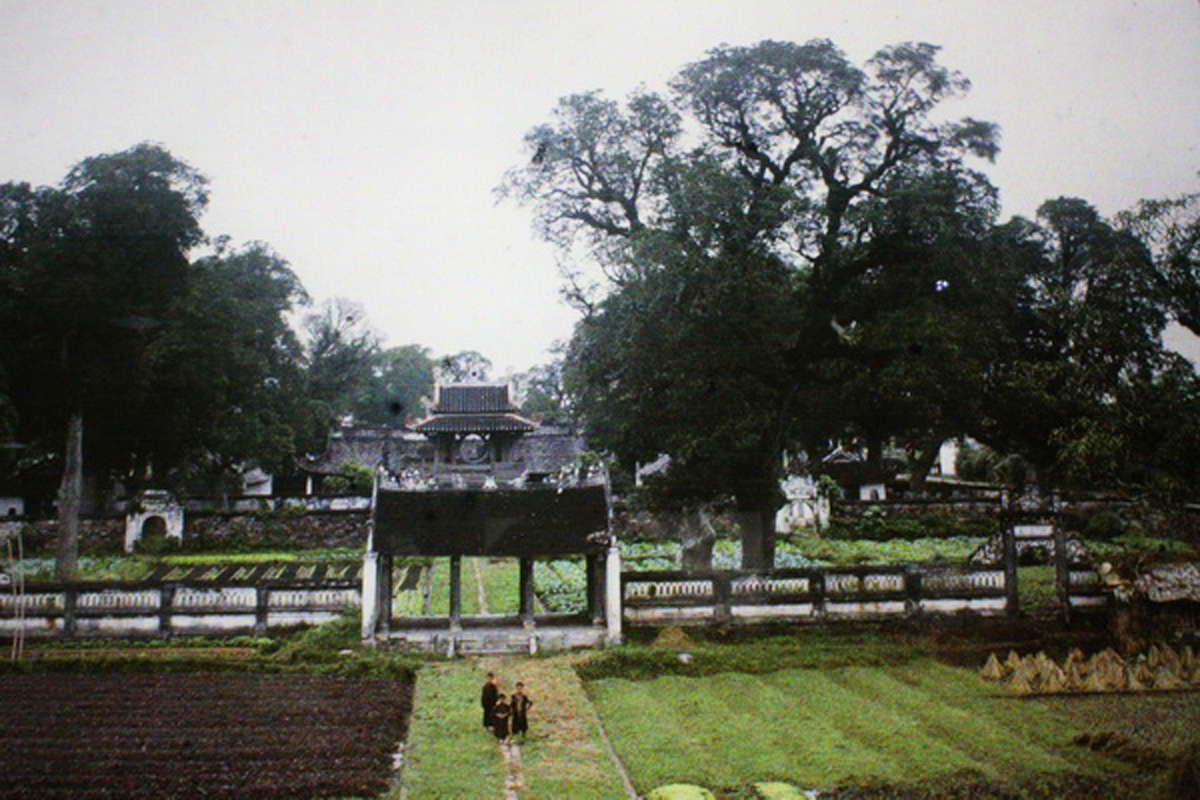
Religion and belief in VietnamTín ngưỡng
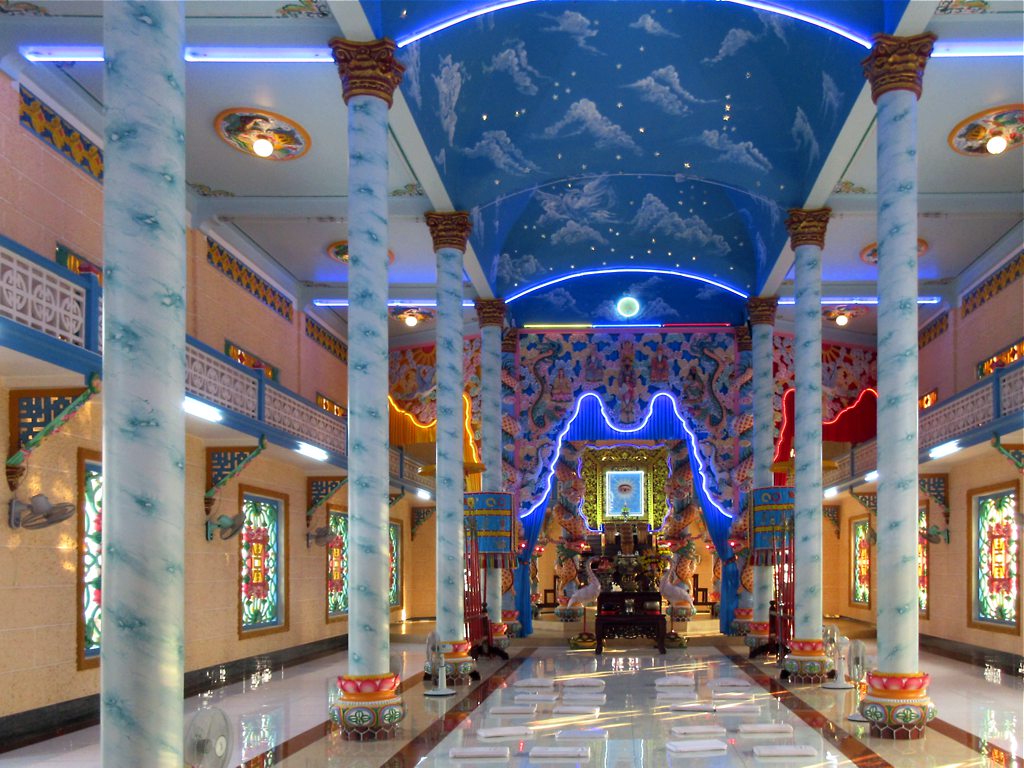
A layered religious landscape
Vietnamese belief rarely maps neatly onto Western categories of exclusive religious membership. The most common pattern is simultaneous practice: a household maintains an ancestor altar, visits a Buddhist pagoda on lunar festivals, observes Confucian family hierarchies, and may also call on Taoist spirit-figures for protection. Scholars often describe this as tam giáo, the Three Teachings — Buddhism, Confucianism and Taoism — blended over roughly two thousand years of exchange with China.
The Vietnamese state recognises eighteen religions formally, administered through the Government Committee for Religious Affairs. In practice, the boundary between organised religion and folk belief (tín ngưỡng dân gian) is contested and the subject of ongoing scholarly debate. Surveys measuring religious affiliation vary significantly in their findings, partly because many Vietnamese do not identify with a single tradition.
Mahayana Buddhism
The dominant Buddhist tradition in Vietnam is Mahayana, which arrived primarily through China rather than through the Theravada routes that shaped neighbouring Cambodia and Thailand. The most visible expression is the pagoda (chùa), found in virtually every village and urban ward. Key bodhisattvas venerated in Vietnamese pagodas include Quan Âm (Guanyin, the bodhisattva of compassion) and Di Lặc (Maitreya, the future Buddha).
The monk Thích Nhất Hạnh, born in Thừa Thiên in 1926 and deceased in 2022, brought Vietnamese Zen (Thiền) to international attention through his writings and the Plum Village community he founded in France. The Trúc Lâm school, a specifically Vietnamese Zen lineage dating to the Trần dynasty in the thirteenth century, has seen a revival since the 1990s, with Trúc Lâm Yên Tử monastery in what is now Quảng Ninh province considered its spiritual centre.
Theravada Buddhism is practised by the Khmer Krom community concentrated in the Mekong Delta provinces.
Ancestor veneration
Ancestor veneration (thờ cúng tổ tiên) is the most widely observed practice in Vietnam, cutting across Buddhist, Catholic, Cao Dai and secular households alike. It centres on the domestic altar (bàn thờ), a dedicated space bearing photographs or tablets of the deceased, incense holders, and offerings of fruit, food or flowers.
The ritual calendar marks death anniversaries (ngày giỗ) as occasions for family gatherings and offerings. These dates, calculated by the lunar calendar, are often treated as more significant family events than birthdays. At Tết Nguyên Đán, the lunar new year, the spirits of ancestors are symbolically invited back to share the celebration with living family members before being ceremonially seen off on the fifth day.
The concept underlying the practice is that the dead continue to exist in a parallel state and retain an interest in family affairs, and that proper ritual attention maintains a reciprocal relationship of protection and blessing.
Mother-goddess worship: Đạo Mẫu
Thờ Mẫu, the worship of mother goddesses, is a distinctly Vietnamese tradition that UNESCO inscribed on its Representative List of the Intangible Cultural Heritage of Humanity in 2016, under the name Tín ngưỡng thờ Mẫu Tam phủ — the belief in the Three Palaces.
The system venerates a pantheon of mother goddesses presiding over the realms of heaven, water, mountains and earth, with Thánh Mẫu Liễu Hạnh — one of Vietnam's Four Immortals — as the central figure. Phủ Giầy in Nam Định province and Phủ Tây Hồ in Hà Nội are among the most important pilgrimage sites.
The associated ritual practice is lên đồng, a mediumship ceremony in which a spirit medium (đồng) is possessed sequentially by spirits of the pantheon, changing elaborate costumes and performing music and dance for each. The ceremonies involve the genre of ritual music called chầu văn. For much of the twentieth century lên đồng was officially suppressed as superstition; it was rehabilitated from the late 1980s and is now legally practised.
Cao Dai and Hoa Hao
Two religious movements with significant followings in southern Vietnam emerged in the early twentieth century during the French colonial period.
Cao Dai (Cao Đài) was formally established in 1926 following a séance in which the supreme deity — addressed as Cao Đài, meaning High Tower or High Palace — revealed a new religion to Ngô Văn Chiêu and a circle of civil servants in Cochinchina. Its theology explicitly synthesises Buddhism, Taoism, Confucianism and elements of Christianity and Spiritism. The faith venerates an eclectic pantheon that includes Victor Hugo, Sun Yat-sen and Joan of Arc as divine teachers. Its architectural centre is the Great Divine Temple (Tòa Thánh) at Tây Ninh, a flamboyant structure begun in 1933. Cao Dai maintains its own clergy with a hierarchy modelled partly on the Catholic church, including a pope-like figure. Current membership estimates vary, with figures of several million adherents cited; the numbers are contested.
Hoa Hao (Phật Giáo Hòa Hảo) was founded in 1939 by Huỳnh Phú Sổ in An Giang, in the Mekong Delta. It reformulates Theravada-inflected Buddhism to strip away elaborate temple ritual, emphasising instead simple personal piety, charity and ancestor veneration practised at home. Huỳnh Phú Sổ was killed in 1947 under disputed circumstances. The movement remains concentrated in the former An Giang and Đồng Tháp areas of the Mekong Delta and is estimated to have several million followers.
Catholicism and other Christianity
Roman Catholicism has been present in Vietnam since Jesuit missionaries arrived in the early seventeenth century. The Frenchman Alexandre de Rhodes (1593–1660) is credited with systematising chữ Quốc ngữ, the romanised Vietnamese script still in use, partly as a tool for evangelism. Under French colonial rule from the mid-nineteenth century Catholicism was closely associated with the colonial administration, a historical entanglement that shaped later political tensions.
The partition of Vietnam in 1954 prompted a large southward migration of Catholics from the north. Today Catholic communities are found throughout the country, with notable concentrations in Hồ Chí Minh City, parts of the central coast including the diocese of Xuân Lộc, and highland areas. Phát Diệm Cathedral in what is now Ninh Bình province, built in the late nineteenth century in a hybrid Vietnamese-Gothic style, is an architecturally significant example of Vietnamese Catholic heritage.
Protestant Christianity, introduced primarily by the Christian and Missionary Alliance in the early twentieth century, has a smaller but growing presence, with the Evangelical Church of Vietnam (North) and (South) as the main registered bodies. Indigenous highland ethnic minority communities account for a significant share of Protestant membership.
Temple and pagoda etiquette
The distinction between a chùa (Buddhist pagoda), a đền (spirit or deity temple), a đình (communal house honouring a village guardian), and a miếu (small roadside shrine) matters: they house different kinds of worship and follow different protocols, though some rules apply broadly.
- Footwear: Remove shoes before entering the main worship hall. A rack or a clear tile threshold normally marks where.
- Dress: Shoulders and knees should be covered. Loose outer garments are sometimes available to borrow at major sites.
- Incense: Lighting incense and making offerings is welcome. Hold incense sticks with both hands and bow before placing them.
- Photography: Permitted in courtyards at most sites; inside the main hall, look for signs or follow the lead of worshippers present. Photographing people mid-prayer without permission is considered intrusive.
- Behaviour: Loud conversation, pointing feet toward altars, and turning one's back to the altar while bowing are all regarded as disrespectful.
- Positioning: At a busy pagoda, move to the side rather than standing directly in front of the main altar if others are praying.
During major festivals — particularly the first and fifteenth of the lunar month, Tết, and site-specific festivals — crowds can be large and the atmosphere more animated than on ordinary days.
Where it is
Also known as / see also
Citato da
Fonti
- Vietnam National Authority of Tourism — VNAT consultato 29 August 2026
Supports: the rules and definitions on this page - Tín ngưỡng — Wikipedia (Vietnamese) (CC BY-SA 4.0) consultato 31 August 2026
Supports: background, Vietnamese edition
Current Ultima verifica: 31 August 2026. Rules, fares and prices change — check the official source before acting on anything here. Report a mistake.
Picture credits (2)
The Temple of Literature - Léon Busy (1874-1951), Léon Busy, Public domain, Wikimedia Commons · Cao Dai Temple at Tan Chau, David Stanley, CC BY 4.0, Wikimedia Commons