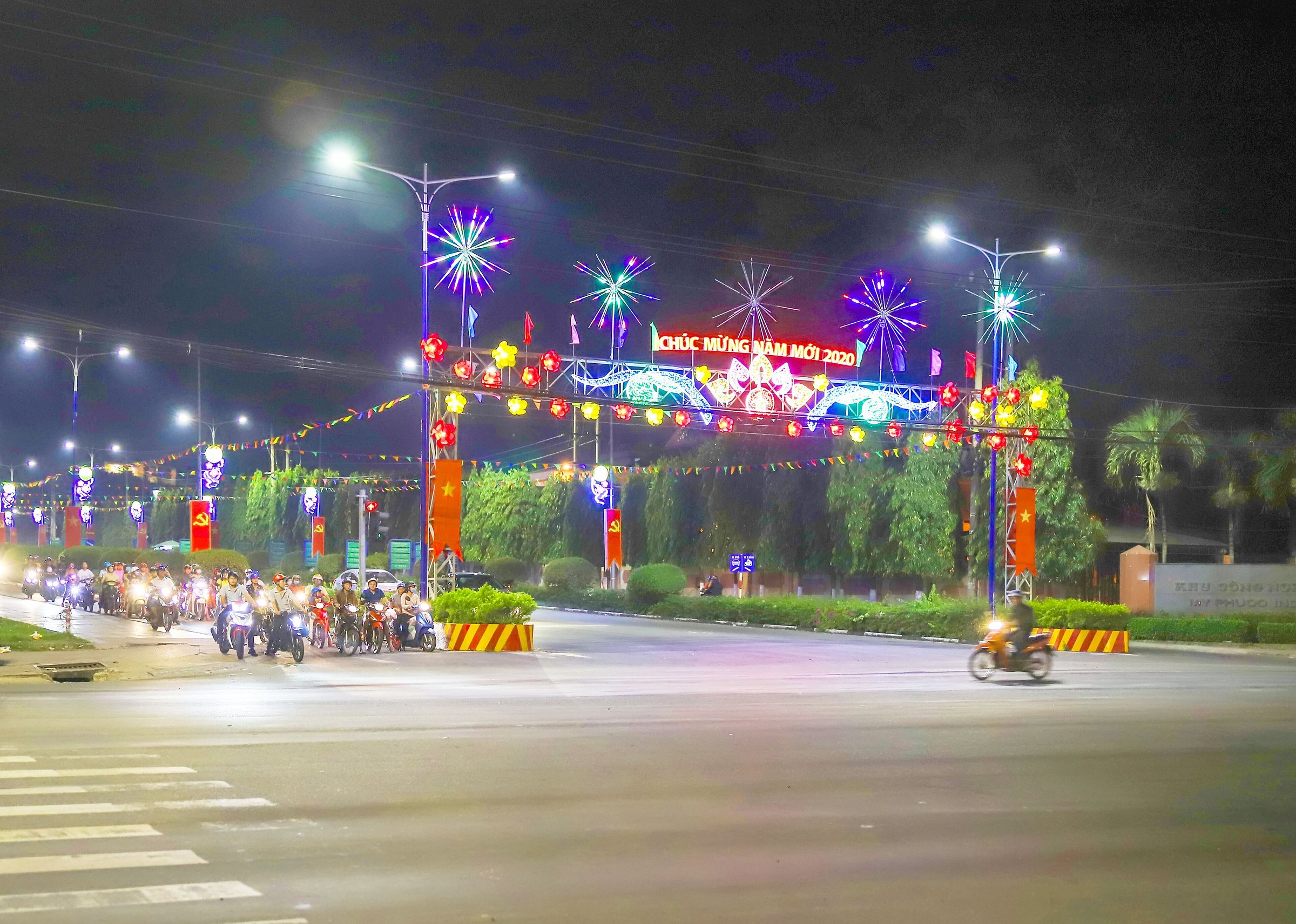
Industrial parks and economic zonesKhu công nghiệp
What industrial parks and economic zones are
Vietnam distinguishes between several overlapping designations. A khu công nghiệp (KCN, industrial park) is a defined land area developed for manufacturing and related services, typically with shared utilities, internal roads and a single management board. An export processing zone (khu chế xuất) is a variant where tenants must export all output and operate under bonded-warehouse customs rules. A khu kinh tế (economic zone, or EZ) is a larger, often coastal area that may contain residential zones, ports and tourism facilities alongside industry, governed by a provincial-level authority with broader policy discretion.
All three types operate under licences issued by provincial People's Committees and are subject to national frameworks set by the Ministry of Planning and Investment. Since the administrative restructuring of 1 July 2025, management boards report within the two-tier province/commune system, which is still being consolidated in practice.
- Industrial parks focus on manufacturing tenants sharing infrastructure costs.
- Export processing zones apply a separate customs boundary and suit export-only producers.
- Economic zones offer wider incentives but also greater regulatory complexity.
Northern clusters
The north is anchored around Hanoi and the Red River Delta provinces. Bắc Ninh and Bắc Giang host some of Vietnam's highest-value electronics production, anchored by major Samsung and Foxconn facilities that have drawn dense supplier networks into their surrounding parks. Hải Phòng is home to the DEEP C industrial complex and the Đình Vũ–Cát Hải Economic Zone, valued for its deep-water port access. Hưng Yên and Hải Dương fill the corridor between Hanoi and Hải Phòng and offer relatively lower land costs than the two anchor cities.
Hanoi itself retains older parks such as Thăng Long and Nội Bài, the latter adjacent to Nội Bài International Airport. The north benefits from proximity to southern China and is the preferred location for electronics, auto parts and precision engineering. Labour supply is generally tighter here than in the south, and worker retention can be a persistent challenge in peak industrial seasons.
Southern and central clusters
The south is anchored by Ho Chi Minh City and the surrounding provinces of Bình Dương, Đồng Nai and Long An. Bình Dương alone contains dozens of parks including the long-established VSIP (Vietnam Singapore Industrial Park) estates, which are part of a joint-venture model replicated at several sites nationally. Đồng Nai's Biên Hòa industrial zones are among Vietnam's oldest, with mature infrastructure but limited remaining greenfield land.
Central Vietnam hosts the Chu Lai Economic Zone in Quảng Nam, oriented towards automotive assembly and logistics, and the Dung Quất Economic Zone in Quảng Ngãi, home to the country's first oil refinery and a growing petrochemical cluster. Đà Nẵng operates its own high-tech park targeting IT and electronics assembly. The south draws from a larger and historically more mobile labour pool, though wages have risen steadily as the industrial base has matured.
Tenancy and land access
Foreign investors cannot own land in Vietnam; instead, tenants lease land-use rights from the park developer, who holds a master lease from the state. Lease terms vary but commonly run to the end of the park's operating licence, which may be up to 70 years from the park's original approval date. Prospective tenants negotiate directly with the developer for land area, ready-built factory units or build-to-suit arrangements.
The investment registration process involves two main steps: an Investment Registration Certificate (IRC) and an Enterprise Registration Certificate (ERC), both processed through the provincial Management Board or the Department of Planning and Investment. Industrial parks are intended to offer a streamlined single-window service, though processing times in practice vary by province and the complexity of the project.
- Ready-built factory units offer faster entry but less customisation.
- Build-to-suit arrangements require longer lead times and higher upfront planning effort.
- Sub-leasing rules differ between parks; some developers restrict or prohibit it.
Incentives and tax framework
Vietnam's incentive framework for industrial park tenants operates through the corporate income tax (CIT) system and land-related concessions. Eligible projects may receive a preferential CIT rate and an initial exemption period followed by a reduced-rate period; the exact schedule depends on the location of the park, the sector of investment and the scale of the project. Parks in economically disadvantaged provinces or in designated high-tech zones attract stronger incentives than those in developed urban areas.
Import duties on machinery, equipment and raw materials used in production for export may be exempted or suspended under specific conditions. Export processing zone tenants benefit from a bonded-customs environment that simplifies duty treatment on inputs. Value-added tax (VAT) treatment also differs depending on whether output is sold domestically or exported.
The incentive framework is actively contested and subject to change: Vietnam's adoption of the OECD global minimum tax (15% effective rate for large multinationals) from 2024 has altered the calculus for companies that previously benefited most from low CIT rates, and the government has been developing supplementary support mechanisms in response. Investors are advised to obtain current legal advice rather than rely on generalised summaries.
Infrastructure and power reliability
Infrastructure quality varies considerably between parks. Established parks in Bình Dương, Bắc Ninh and Hải Phòng generally offer reliable internal road networks, treated water supply and wastewater treatment plants. Newer or smaller parks in secondary provinces may have gaps, particularly in wastewater treatment capacity, which has been a source of regulatory scrutiny.
Power reliability is a known risk. Vietnam's electricity grid is managed by state utility EVN (Electricity of Vietnam) and has faced capacity shortfalls during peak demand periods, most acutely in the north during hot-season months. Unannounced load-shedding disrupted production in several northern industrial parks in 2023. Many tenants in power-sensitive industries install backup diesel generation or, increasingly, rooftop solar under the government's on-site renewable energy frameworks, though regulations on self-generation have shifted several times and remain a point of uncertainty.
Logistics connectivity matters as much as internal infrastructure. Parks near deep-water ports (Hải Phòng, Cái Mép–Thị Vải in Bà Rịa–Vũng Tàu) or major airports offer direct export routing, while inland parks depend on road or rail links whose quality varies.
Labour supply and workforce considerations
Vietnam's industrial workforce is large and relatively young, with a strong tradition of technical and vocational education in manufacturing provinces. However, labour dynamics differ sharply by region and sector. Electronics assembly in Bắc Ninh and Bắc Giang draws workers from across the northern highlands and delta provinces, and competition between large employers can produce seasonal turnover spikes around Tết.
Minimum wages are set annually at the national level across four regional zones, with Zone 1 covering major urban centres and Zone 4 covering rural areas. Industrial parks in border provinces or less-developed areas can benefit from lower minimum wage zones, though the effective wage needed to attract and retain workers often exceeds the legal minimum in competitive labour markets.
Strikes, while technically subject to a complex legal procedure before they are lawful, occur in practice as spontaneous work stoppages, most commonly over wage disputes or bonus structures. Labour relations management is widely regarded by operators as a significant operational variable. The trade union system is dominated by the Vietnam General Confederation of Labour (VGCL), a state-affiliated body, though the 2019 Labour Code opened limited space for independent worker representative organisations, a development that is still unfolding.
Where it is
Also known as / see also
被以下页面引用
来源
- Khu công nghiệp — Wikipedia (Vietnamese) (CC BY-SA 4.0) 访问于 31 August 2026
Supports: background, Vietnamese edition - Vietnam country data — World Bank 访问于 31 August 2026
Supports: the rules and definitions on this page
This server cannot reach the domain; the link was not confirmed from here.
Current 最后核实: 31 August 2026. Rules, fares and prices change — check the official source before acting on anything here. Report a mistake.
Picture credits (1)
Cổng khu công nghiệp Mỹ Phước I, Mong muốn giới thiệu hình ảnh về TX. Bến Cát, CC BY-SA 4.0, Wikimedia Commons