Coffee, rice and agricultureCà phê và nông nghiệp
Coffee: robusta dominance and global scale
Vietnam is the world's second-largest coffee exporter by volume, behind Brazil, and the largest producer of robusta (Coffea canephora). Robusta accounts for the overwhelming majority of output, prized by instant-coffee and espresso-blend manufacturers for its high soluble-solids content and caffeine level. A smaller but growing share is arabica, concentrated around Son La and Lam Dong provinces in cooler highland terrain.
The harvest runs roughly from October to January. Coffee cherries are predominantly processed using the dry (natural) method, though wet-hulled and fully washed processing have expanded as specialty demand grows. Most beans are exported as green (unroasted) commodity coffee through brokers tied to the London futures market for robusta. Domestic roasting and branded export remain a smaller share of total value, though companies such as Trung Nguyen and Highlands Coffee have built recognisable names.
The Central Highlands growing belt
The five provinces that form the Central Highlands — Dak Lak, Dak Nong, Gia Lai, Kon Tum and Lam Dong — account for the vast majority of Vietnam's coffee area. Buon Ma Thuot, in Dak Lak, functions as the commercial hub: it hosts the annual Vietnam Coffee-Cocoa Trade Festival and is surrounded by the densest concentration of plantations. Elevations across the plateau generally range from 400 to 900 metres, with the volcanic basalt soils and distinct dry season creating conditions well-suited to robusta.
Pepper, cashew and avocado are also cultivated across the same provinces, often intercropped or rotated with coffee. Ethnic minority communities — including Ede, Mnong and Jarai peoples — form a significant part of the agricultural labour force and have their own traditions of small-holder cultivation. Land tenure arrangements in the highlands remain a sensitive and contested issue, with ongoing disputes over forest conversion that have direct relevance to international compliance requirements.
Rice and the Mekong Delta
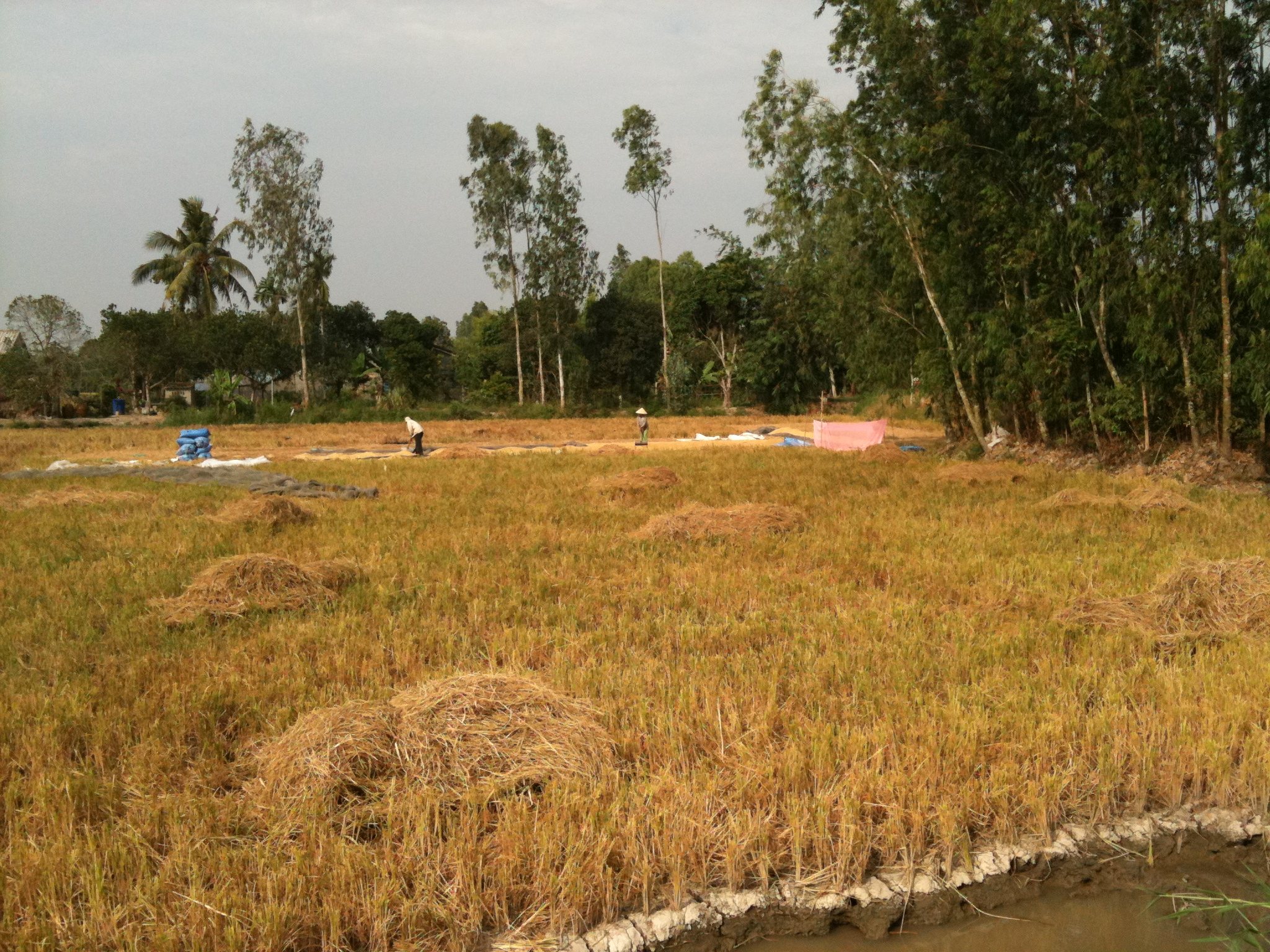
The Mekong Delta — a broad, flat alluvial plain in southern Vietnam — produces more than half of the country's rice and generates the bulk of its rice export volume. Vietnam consistently ranks among the world's top three rice exporters. The delta's system of canals, some colonial-era and some dug more recently, enables irrigation across multiple growing seasons; many areas yield two or three crops per year of varieties including jasmine (ST25), OM and IR lines.
Beyond rice, the delta is a major producer of pangasius (basa/tra catfish), shrimp, tropical fruit — notably durian, mango, longan and dragon fruit — and coconut. An Giang, Dong Thap and Can Tho are among the most productive provinces. The city of Can Tho functions as the delta's commercial and logistics centre, with river ports connecting to Ho Chi Minh City and onward to export terminals.
Pepper, cashew and diversified export crops
Vietnam is a leading global exporter of both black pepper and cashew kernels. Pepper cultivation is concentrated in Binh Phuoc, Dak Lak and Ba Ria–Vung Tau, with the Phu Quoc island variety carrying a protected geographical indication. Cashew is grown across the southeast and parts of the Central Highlands; Vietnam processes raw nuts imported from West Africa in addition to domestic production, making it the world's largest cashew kernel exporter by processed volume.
Fruit exports have grown substantially. Durian from the Central Highlands and Mekong Delta has become a high-value export crop, with China the dominant market. Mango, dragon fruit, lychee, longan and rambutan are exported fresh and processed. The volatility of Chinese import demand — subject to phytosanitary rejections and border bottlenecks — is a recurring concern for growers and traders.
Climate pressure and Mekong salinity intrusion
The Mekong Delta faces compounding environmental stresses. Saltwater intrusion from the South China Sea advances further upstream during dry seasons, damaging rice crops and freshwater aquaculture. The phenomenon has worsened as upstream dams — particularly in China and Laos — alter seasonal flow volumes, reducing the freshwater flush that historically kept salinity at bay. The 2015–16 and 2019–20 dry seasons produced particularly severe intrusion events affecting multiple delta provinces.
Land subsidence, driven by decades of groundwater extraction, is lowering parts of the delta faster than sea level is rising — some studies suggest rates of several centimetres per year in heavily pumped areas, though measurements vary. Flooding risk is therefore rising even without changes in rainfall. The Vietnamese government has promoted salinity-tolerant rice varieties and a shift toward higher-value aquaculture in the most affected zones, but the structural transition is slow and contested among farming communities dependent on rice income.
In the Central Highlands, irregular rainfall and prolonged dry seasons have increased irrigation demand for coffee, straining groundwater reserves and river flows that also supply hydropower reservoirs.
EUDR and the deforestation compliance challenge
The EU Deforestation Regulation (EUDR), adopted in 2023, requires exporters of coffee, cocoa, soy, palm oil, cattle, wood and rubber to demonstrate that their products were not grown on land deforested after 31 December 2020. For Vietnamese coffee exporters shipping to the European Union, this creates a significant traceability burden: buyers must be able to plot the geolocation of the farm plots supplying each shipment.
The challenge is acute because the Vietnamese supply chain is fragmented. Millions of small-holder plots, many under one hectare, feed into a chain of local collectors (đại lý), processors and exporters. Assembling georeferenced, plot-level data across this system is technically and logistically demanding. Industry groups, the government's Ministry of Agriculture and Rural Development, and international development agencies were all developing traceability frameworks as of the regulation's transition period — but the process remains incomplete and the compliance landscape continues to shift.
The regulation's enforcement timeline has been subject to political negotiation between the EU and producer countries, so the effective dates for full compliance should be verified against current official sources before any business decision is made.
Trade structure and market concentration
Agricultural exports flow through a mix of state-linked enterprises, large private trading houses and foreign-invested processors. The Vietnam Food Association (VFA) coordinates rice export quotas and negotiations, while the Vietnam Coffee and Cocoa Association (Vicofa) plays a similar representative role for coffee. Both bodies engage with government ministries on pricing floors, export licencing and quality standards.
Market concentration in export destinations is a persistent risk factor. China absorbs a large share of fruit, rice and cashew exports; the EU is a major coffee destination; the United States takes cashews and seafood. Any trade friction, food-safety rejection or currency shift in a dominant market creates immediate price and volume pressure on Vietnamese producers. Diversification into Middle Eastern, South Asian and African markets is a stated policy goal but remains unevenly realised across commodities.
Where it is
Also known as / see also
Dirujuk oleh
Các nguồn
- Ministry of Industry and Trade — MOIT đã truy cập 3 September 2026
Supports: the rules and definitions on this page
This server cannot reach the domain; the link was not confirmed from here. - Vietnam country data — World Bank đã truy cập 31 August 2026
Supports: the rules and definitions on this page
This server cannot reach the domain; the link was not confirmed from here.
Current Terakhir diverifikasi: 31 August 2026. Rules, fares and prices change — check the official source before acting on anything here. Report a mistake.
Picture credits (1)
Rice harvesting in Can Tho, Dragfyre, CC BY-SA 3.0, Wikimedia Commons